Lyman Returns (September 28, 1864)

Theodore Lyman

Theodore Lyman

Theodore Lyman returns to the army. He had gone back home on leave and almost immediately fell ill. Upon his return, he noted in his journal, “Gen. Meade received me very kindly.” Lyman also mentioned the reason why the two French observers who were with the army when he left were no longer around. “The fact is, old De Chanal wrote some pretty Union letters, officially, whereof one fell into the paws of the Minister of Marine, who married a secesh,” he observed. “Thereat he raised a row and it was implied to M. le Colonel that he might as well inspect the gun manufacturies, and not write so much of politics.” It will be good to have Lyman back to share his inimitable observations about General Meade and the Army of the Potomac.

It is late; I am somewhat tired and sleepy; I must be up early to-morrow, and many friends keep coming in to say “How are you?” So you will let me off from a long letter till to-morrow. It is as “nat’ral as the hogs” here. I have just taken my supper in a tent as gravely as if I never ate in a room. I got here without delay or accident and am stronger than when I started.

Theodore Lyman’s letter is from Meade’s Headquarters, 1863-1865: Letters of Colonel Theodore Lyman from the Wilderness to Appomattox, p. 229. Edited by George R. Agassiz. Boston, Massachusetts Historical Society, 1922. Available via Google Books.

Reappraisal (September 27, 1864)

Philip Sheridan and his generals, Henry E. Davies, David McMurtrie Gregg, Wesley Merritt, Alfred Torbert, and James H. Wilson. Tis Brady photograph was probably taken in July 1864 near City Point (Llibrary of Congress).

Philip Sheridan and his generals, Henry E. Davies, David McMurtrie Gregg, Wesley Merritt, Alfred Torbert, and James H. Wilson. Tis Brady photograph was probably taken in July 1864 near City Point (Llibrary of Congress).

Meade takes a second look at Philip Sheridan’s success and the Shenandoah Valley and decides it hasn’t been so brilliant after all. He was correct that Sheridan had the advantage of numbers. At Winchester (Opequon Creek) the Union had about 35,000 troops to Early’s 12,000. At Fisher’s Hill, Early’s force had been reduced to around 9,500 and he faced Sheridan’s 29,000. So this is not entirely sour grapes on Meade’s part and he does graciously acknowledge the importance of Sheridan’s activities in the valley.

Sheridan’s victories are undoubtedly important, as all victories are; but it now turns out Early was preparing to leave the Valley, and a considerable part of his force had already gone, so that Sheridan when he attacked had greatly superior numbers. This is the secret of a great many brilliant victories. Nevertheless, the destruction of a part of Early’s forces, and the number of prisoners taken, are matters of great importance, sure to inspirit our army and people, and depress the enemy. These are points gained.

Meade’s correspondence taken from The Life and Letters of George Gordon Meade, Major-General United States Army, Vol. 2, (New York: Charles Scribner’s Sons, 1913), pp. 230-31. Available via Google Books.

Visitors (September 25, 1864)

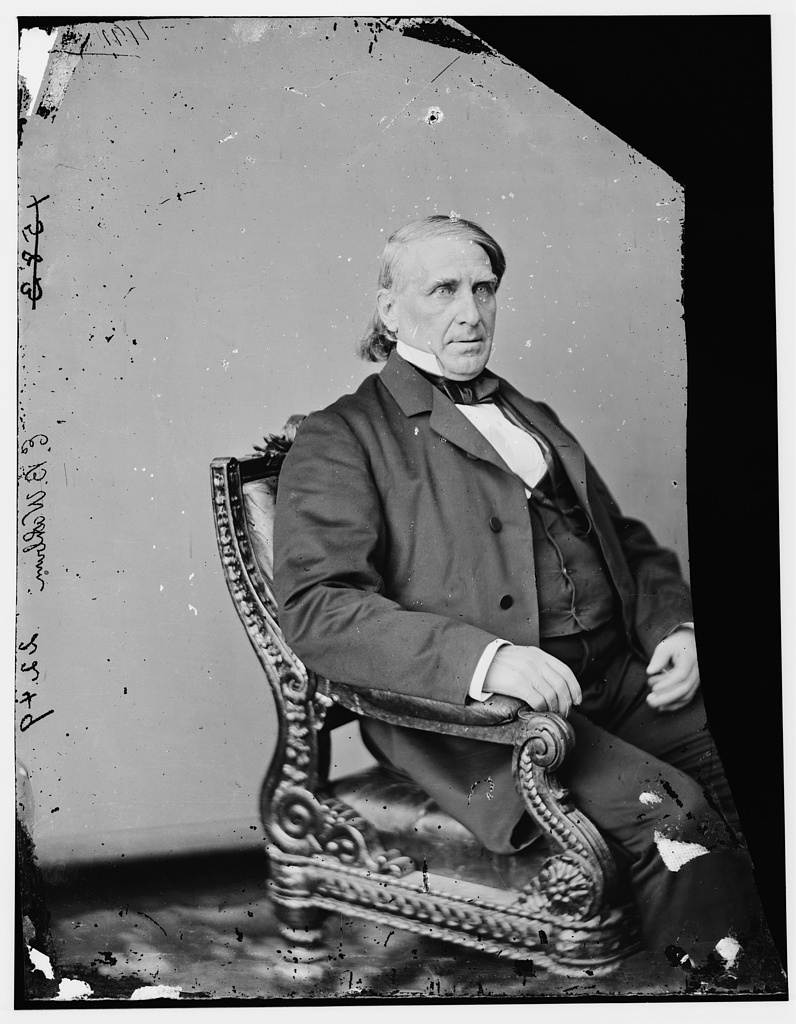
Congressman Eli Washburne of Illinois, a great supporter of Ulysses S. Grant (Library of Congress).

Congressman Eli Washburne of Illinois, a great supporter of Ulysses S. Grant (Library of Congress).

Secretary of State William Seward and Congressman Elihu Washburne drop in on the Army of the Potomac. I would like to hear more about Meade’s reactions to Washburne. The Illinois congressman was Ulysses S. Grant’s political patron and Meade suspected that Washburne had been responsible for spreading the rumor—reported by Edward Crapsey (or Cropsey)—that the commander of the Army of the Potomac had wanted to retreat after the Battle of the Wilderness but Grant had overruled him. When he saw Crapsey’s article, Meade had thrown the reporter out of the army and vowed to his wife that he would show Washburne “no quarter” if the rumor of his involvement turned out to be true.

To-day we had a visit from Mr. Secretary Seward and Mr. Congressman Washburn. I had some little talk with Mr. Seward, who told me that at the North and at the South, and everywhere abroad, there was a strong conviction the war would soon terminate, and, said he, when so many people, influenced in such different ways, all unite in one conviction, there must be reason to believe peace is at hand. He did not tell me on what he founded his hopes, nor did I ask.

Sheridan’s defeat of Early will prove a severe blow to the rebs, and will, I think, compel them to do something pretty soon to retrieve their lost prestige. There have been rumors they were going to evacuate Petersburg, and I should not be surprised if they did contract their lines and draw in nearer Richmond. I never did see what was their object in defending Petersburg, except to check us; it had no other influence, because, if we were able to take Richmond, we could take Petersburg; and after taking the one when resisted, the other would be more easily captured.

Meade’s correspondence taken from The Life and Letters of George Gordon Meade, Major-General United States Army, Vol. 2, (New York: Charles Scribner’s Sons, 1913), p. 230. Available via Google Books.

Very Great News (September 23, 1864)

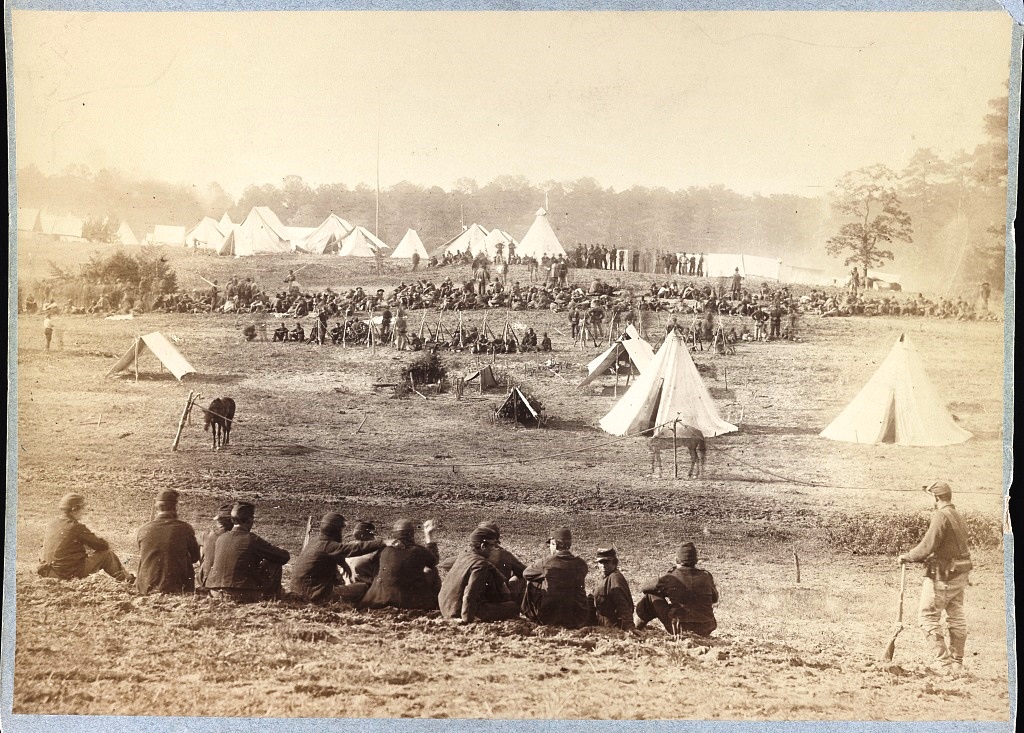
"Confederate prisoners captured at the battle of Fisher's Hill, VA. Sent to the rear under guard of Union troops" (Library of Congress).

“Confederate prisoners captured at the battle of Fisher’s Hill, VA. Sent to the rear under guard of Union troops” (Library of Congress).

Once again Meade must acknowledge a victory by Philip Sheridan over Jubal Early in the Shenandoah Valley. Although Meade graciously salutes Sheridan’s accomplishments, they were a bitter pill for him to swallow. He felt that Grant had promised him the position Sheridan now holds, and while Sheridan was collecting the glory Meade was still stuck with the thankless task of commanding the Army of the Potomac with Grant looking over his shoulder.

To-night we have the news of Sheridan’s second victory at Fisher’s Hill, near Strasburg. This is very great news. The destruction and dispersion of Early’s army is a very great feat, and at once relieves Maryland and Pennsylvania of any fears of more invasion this year. If now we are only rapidly reinforced, we may be enabled to give Lee some hard blows before he can recruit and increase his army.

I feel quite unhappy about Sergeant having to go away, though I have the highest hopes of the good effect of the change of climate.

Meade’s correspondence taken from The Life and Letters of George Gordon Meade, Major-General United States Army, Vol. 2, (New York: Charles Scribner’s Sons, 1913), p. 230. Available via Google Books.

Enough Human Weakness (September 22, 1884)

Philip Sheridan (Library of Congress).

Philip Sheridan (Library of Congress).

The victory of Sheridan’s to which Meade refers in this letter is Third Winchester, a.k.a. the Battle of Opequon Creek, in which Philip Sheridan and his men repulsed Jubal Early’s II Corps. In this letter Meade refers to Ulysses S. Grant’s indications that Grant was going to assign Meade to the command that he eventually gave to Sheridan. Meade and Sheridan had a mutual dislike that dated back to at least the Wilderness in May. During the Union army’s movement towards Spotsylvania Sheridan and Meade had held a heated conversation about the cavalry’s activities. Since then, Sheridan’s star—aided by Grant—had risen while Meade’s had, at best, remained static.

To-day we have Mr. Stanton’s despatch announcing Sheridan’s brilliant victory. I am very glad for the cause and glad for Sheridan’s sake; but I must confess to enough human weakness to regret this opportunity of distinction was denied me, who was, I think, from previous service and present position, entitled to it. It is all settled, however, now, as I see Mr. Stanton announces Sheridan has been permanently assigned to the Middle Military Division, and that he has been made a brigadier general in the regular army. This last piece of disingenuous news will be amusing to those who know he was appointed to this place six weeks ago, in advance of his present well-merited laurels. My time I suppose has passed, and I must now content myself with doing my duty unnoticed.

George and I both continue very well. I did not intend to alarm you about the health of the army. I only meant to say we were beginning to experience in a slight degree the effects of a residence in this not very healthy location. Still, taking all things into consideration, the health of the army is wonderful. The enemy predicted we would never be able to pass the summer here, and counted largely on the fevers of the country driving us away.

Meade’s correspondence taken from The Life and Letters of George Gordon Meade, Major-General United States Army, Vol. 2, (New York: Charles Scribner’s Sons, 1913), pp. 229-30. Available via Google Books.

And Now for a Word from Our Sponsor

SearchingGGMeadeWith no letters to post today (Meade is silent and Theodore Lyman is still back in Boston), it seems like a good time for a commercial message.

If you enjoy this blog you will certainly enjoy Searching for George Gordon Meade: The Forgotten Victor of Gettysburg. Here’s what the critics have said:

“[I]t’s the rare reader who will not enjoy accompanying Huntington on his search for Meade.” (America’s Civil War, July 2013)

“[A] compulsively readable book of history, biography, travel and journalism.” (Civil War Roundtable of Gettysburg)

“[A] refreshingly readable and well-researched book . . . . Searching for George Gordon Meade should be required reading for all those interested in Civil War history.”–Civil War News

“Huntington writes accessibly about Meade’s progress in the Civil War, offering quotes from contemporaries and vivid primary details that will draw readers in through the great descriptions and rich character studies.” (Library Journal 2012-11-15)

I’m blushing! You can order the book from Amazon or Barnes and Noble.

meade calendar coverAlready have the book? Then buy the calendar! Yes, Virginia (and all the other states of the Confederacy), there is indeed a 2015 George Gordon Meade calendar. As Shakespeare said, “Oh, brave new world, that has such calendars in it!” You can get your own Meade calendar right here. Don’t be the only one on your block without one!

Politics (September 17, 1864)

The more things change, the more they stay the same. People remain baffled by politics and politicians today, even as George Meade was 150 years ago. No doubt he is responding to some comment of his wife’s about the upcoming presidential election, in which Abraham Lincoln is battling Democratic candidate George McClellan.

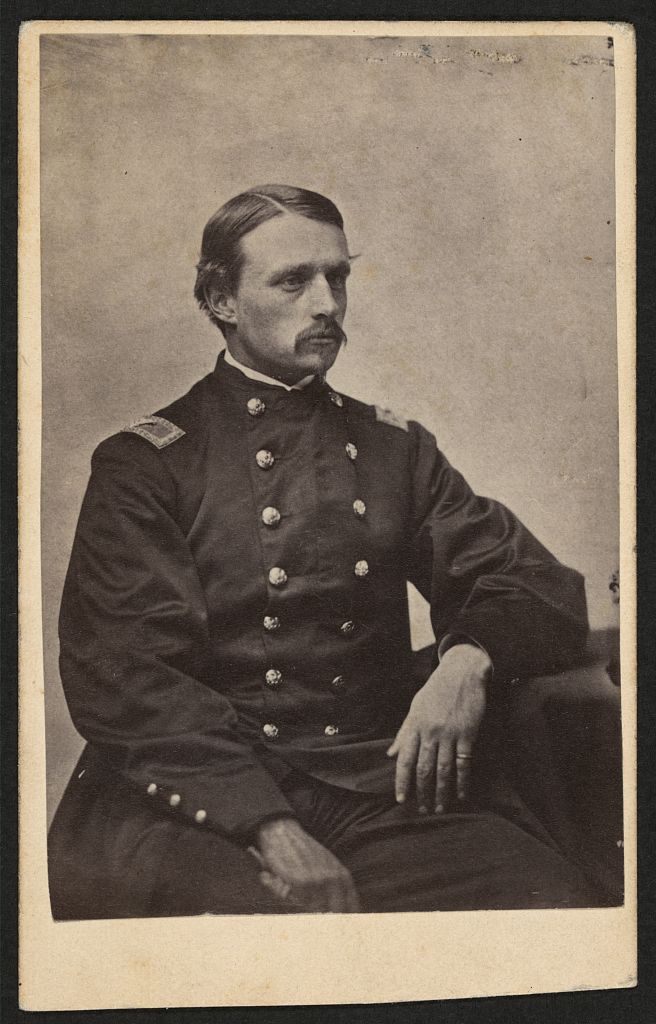
Robert Gould Shaw, who was related to Theodore Lyman by marriage (Library of Congress).

Robert Gould Shaw, who was related to Theodore Lyman by marriage (Library of Congress).

Theodore Lyman is sending notes and cigars to Meade because he remains in Boston on leave, where he has fallen ill. Lyman’s sister was married to Rowland Shaw, whose nephew was Robert Gould Shaw, commander of the 54th Massachusetts Infantry. Shaw had been killed the previous July leading his African-American soldiers into battle outside Charleston, South Carolina.

I wish you would dismiss all politics from your mind; I think you allow yourself to be unnecessarily harassed about such matters. I fancy we shall be happy, never mind who is President, if God will only spare my life, restore me to you and the children, and graciously permit dear Sergeant’s health to be re-established. Besides, politics are so mixed up that, thinking about them, and trying to unravel their mysteries, is enough to set a quiet person crazy.

I got a nice note last evening, and a box, from Lyman. The box had five hundred cigars in it, which he said were a present from his patriotic sister, Mrs. Rowland Shaw, and his wife, so you see how I am honored. By-the-by, talking of presents, I have never suitably acknowledged Mr. Tier’s handsome present of a box of tea. I wish you would tell him it is most excellent, just the kind I like, and that all the members of my mess, including the French officers, one of whom served in China and is therefore a judge, are equally with myself delighted with the flavor and hold him in most honorable and grateful remembrance. Poor Colonel de Chanal has received letters from the Minister of War, who does not seem to be oversatisfied with his reports from the field, and wants more information about our arsenals and manufacture of arms and munitions; so the colonel is going to leave us, to travel; which I regret very much, as he does, for I believe he has become quite attached to our service and the officers of my staff.

Meade’s correspondence taken from The Life and Letters of George Gordon Meade, Major-General United States Army, Vol. 2, (New York: Charles Scribner’s Sons, 1913), pp. 228-29. Available via Google Books.

The Beefsteak Raid (September 16, 1864)

"Cattle Raid" by Alfred Waud. The artist described it as, "Confederate cattle raid Sept. 16th 1864. Genl. Wade Hampden [sic] suddenly appeared at Coggins point in the rear of the army, on the James river, and carried off the entire beef supply, about 2500 head of cattle. The rebel soldiers were much inclined to joke with the pickets on the loss of their meat rations; the Union men, on the other hand, thanked them heartily for removing the tough remnants of herds that had been driven behind the army all summer and which were at once replaced by a fresh stock much fitter for the table." Click to enlarge (Library of Congress).

“Cattle Raid” by Alfred Waud. The artist described it as, “Confederate cattle raid Sept. 16th 1864. Genl. Wade Hampden [sic] suddenly appeared at Coggins point in the rear of the army, on the James river, and carried off the entire beef supply, about 2500 head of cattle. The rebel soldiers were much inclined to joke with the pickets on the loss of their meat rations; the Union men, on the other hand, thanked them heartily for removing the tough remnants of herds that had been driven behind the army all summer and which were at once replaced by a fresh stock much fitter for the table.” Click to enlarge (Library of Congress).

In this letter George Meade comments on an event that we remember as the Beefsteak Raid, in which Confederate cavalryman Wade Hampton and a force of about 4,500 men md their way behind the Union lines and captured about 2,500 cattle. Union cavalry went in pursuit, but their numbers were too small to do much. It was a brilliant raid, and one that brought much needed supplies back to the Confederates.

“Mr. Cropsey” (or Crapsey) is the reporter that Meade had ordered run out of camp back at Cold Harbor. The fair Meade mentions, held that spring in New York, was another fair to raise money for the U.S. Sanitary Commission.

Enclosed is a receipt of Adams & Co.’s Express for a small box containing the beautiful pistol presented to me by the New York Metropolitan Fair, which I send home for safe-keeping.

Yesterday General Grant took his departure, and to-day my ill luck has brought a rebel cavalry raid, in which they dashed into our lines and succeeded in driving off about two thousand head of cattle that had been, contrary to my judgment, sent down the James River for grazing, to a point just inside our cavalry pickets, and where they were exposed at any moment to be run off, as they have been by a coup-de-main. Grant’s absence, and the usual friendly spirit of the press, will undoubtedly attribute this loss to my negligence, and I really had as much to do with it as you had, except that I had called attention to the danger of having the cattle there. The cattle were not under my control, or that of my commissary, but under a commissary serving on Grant’s staff.

I have this evening a letter from Mr. Cropsey, asking permission to return to the army. I do not altogether like its tone or spirit, but shall not take any other notice of it than to send him a pass.

Meade’s correspondence taken from The Life and Letters of George Gordon Meade, Major-General United States Army, Vol. 2, (New York: Charles Scribner’s Sons, 1913), p. 228. Available via Google Books.

Medals (September 15, 1864)

Medal of Honor

The Medal of Honor.

In his letter of September 15, 1864, George Meade mentions the presentation of the Medal of Honor to several soldiers of the V Corps. It appears these soldiers were Frederick C. Anderson, George W. Reed, and John Shilling, all three of whom earned their medals for their fighting at the Weldon Railroad. Anderson was a private in Co. A, 18th MA, and he captured the flag and the bearer of the 27th South Carolina. Reed, a private in Co. E, 11th PA, captured the 24th NC’s flag. Shilling, of Co. H, 3rd DE, also captured a flag.

General Grant went this morning to Harper’s Ferry to visit Sheridan. There were some indications of a movement on Lee’s part yesterday, but nothing occurring this morning, he went off. He is to be absent, I believe, some five or six days. What Grant meant by the rebels deserting at the rate of a regiment a day, referred, I presume, to their desertions in all parts of the field, and to the present diminished size of their regiments. This would make a daily desertion of about three hundred. I have no means of knowing what proportion of this amount is drawn from the returns of other armies; but, in the Army of the Potomac, ten a day would be a liberal estimate of the deserters who have come into our lines for some time past. I think Grant was a little hyperbolical in the expression he used. He is of a very sanguine temperament, and sees everything favorable in a strong light, and makes light of all obstacles. In some respects this is an admirable quality, if it is not carried to extremes.

I don’t think that I told you that, day before yesterday, I presented to some soldiers of the Fifth Corps medals of honor, conferred upon them for good conduct on the field of battle. There was a great ceremony on the occasion, and I made a few remarks, which I presume will appear in print. The weather, after being cool, has again become warm. Sickness is beginning to show itself.

Meade’s correspondence taken from The Life and Letters of George Gordon Meade, Major-General United States Army, Vol. 2, (New York: Charles Scribner’s Sons, 1913), pp. 227-28. Available via Google Books.

Found It!

Fuller

Today I returned to Gettysburg. My main goal was to attend the two-hour ranger talk/walk about Alonzo Cushing, the commander of the 4th U.S. Artillery. Cushing was killed during the fighting on July 3 and has recently been in the news because he’s been approved to receive the Medal of Honor, just over 151 years later.

While I was there, though, I decided to try once more to find the Henry V. Fuller monument. This time I succeeded. Last time I had been looking on the wrong side of the trolley bed that leads from Brooke Avenue to the Wheatfield. It took a couple of passes, but the second time I spied what appeared to be evidence that someone had walked through the grass at the side of the trail and into the undergrowth. I decided to follow these faint traces and, sure enough, they led me to this little monument. It was invisible from the trail and I never would have found if someone else hadn’t gone there first.

The Alonzo Cushing ranger walk was pretty interesting. Led by Karlton Smith, it began at the parking lot opposite the National Cemetery. About 80 people showed up, a pretty good turnout for a September Sunday, I thought. It was good timing, too, with the Cushing medal scheduled to be presented at a White House ceremony on Monday. (Smith told us, though, that it appeared the Cushing presentation might be delayed, probably because no one is sure who will receive it, Cushing having died with no direct descendents.) The weather was beautiful, a cool, late-summer afternoon that made it clear fall is on the way.

0914141542

The monument to Alonzo Cushing near the Angle.

The monument to Alonzo Cushing near the Angle.

All told, an excellent way to spend a gorgeous September afternoon. Once again I was struck by the discontinuity of enjoying myself so much at a place that had seen so much violence and suffering. Without the battle and all the monuments erected to commemorate the fighting, this would be just another patch of land. It’s pretty enough, but if the two Civil War armies had met just a few miles south in Maryland, thousands of people wouldn’t be coming here to walk around and hang out. An accident of history elevated these simple acres into something more.

Living in Central Pennsylvania has its good and bad points, but one of the good ones is that it’s an easy drive to Gettysburg.