Digging (June 7, 1864)

The situation at Cold Harbor has turned into a stubborn stalemate. As Theodore Lyman notes in his letter of June 7, the soldiers began digging complex entrenchments where they could exist without being killed by shells or snipers. Merely peeking over the breastworks tempted death, with sharpshooters lurking on each side to shoot anything that moved. The land around Cold Harbor became crisscrossed by vast networks of trenches, which reminded one Union soldier of the work of prairie dog colonies.

A marker on the Cold Harbor battlefield today.

A marker on the Cold Harbor battlefield today.

When I visited Cold Harbor I found it eerie to see the earthworks that remain, knowing they had once provided the setting for scenes of bloodshed and horror and the deaths of hundreds of men whose names have been lost to history. At the same time, as I wandered around the battlefield and read the markers, I came across names that were familiar, almost like old friends. Emory Upton’s name popped up time and time again, and on one marker at Cold Harbor I found a quote from Wilbur Fisk, a Vermont soldier whose letters have been collected in a book called Hard Marching Every Day. “The breastworks against which I am leaning is not more than 200 yards from the enemy’s lines, and in front of us are skirmishers and sharpshooters still nearer,” he wrote on June 11. “Our line is just outside the edge of a woods, and theirs is partly in an open field, and partly covered by timber in our immediate front. The field is open between us, but it is a strip of land across which no man dare to pass. An attacking party from either side would be mown down like grass.”

After extraordinary delays an armistice was concluded between six and eight p.m. this evening. It was very acceptable for burying the dead; but the wounded were mostly dead too, by this time, having been there since the 3d. I fancy there were not many, for our men make extraordinary exertions in the night to get in their comrades, and those who were not thus reached usually had their sufferings shortened by some stray ball, among the showers that continually passed between the works. We here found the body of Colonel McMahon, brother of Sedgwick’s Adjutant-General. He was wounded and sat down by a tree, where he was soon hit by two or three other bullets. . . . Some extraordinary scenes occurred during the armistice. Round one grave, where ten men were laid, there was a great crowd of both sides. The Rebels were anxious to know who would be next President. “Wall,” said one of our men, “I am in favor of Old Abe.” “He’s a damned Abolitionist!” promptly exclaimed a grey-back. Upon which our man hit his adversary between the eyes, and a general fisticuff ensued, only stopped by the officers rushing in. Our entrenchments were most extraordinary in their extent, with heavy traverses, where exposed to enfilade, and all done by the men, as it were, spontaneously. An officer told a man it was not worth while to go on with a little private bomb-proof he was constructing, as he would only be there two or three days. “I don’t care,” replied he, “if we only stay two or three hours; I ain’t going to have my head knocked off by one of them shells!”…

Theodore Lyman’s letter is from Meade’s Headquarters, 1863-1865: Letters of Colonel Theodore Lyman from the Wilderness to Appomattox, p. 154. Edited by George R. Agassiz. Boston, Massachusetts Historical Society, 1922. Available via Google Books.

God’s Will (June 6, 1864)

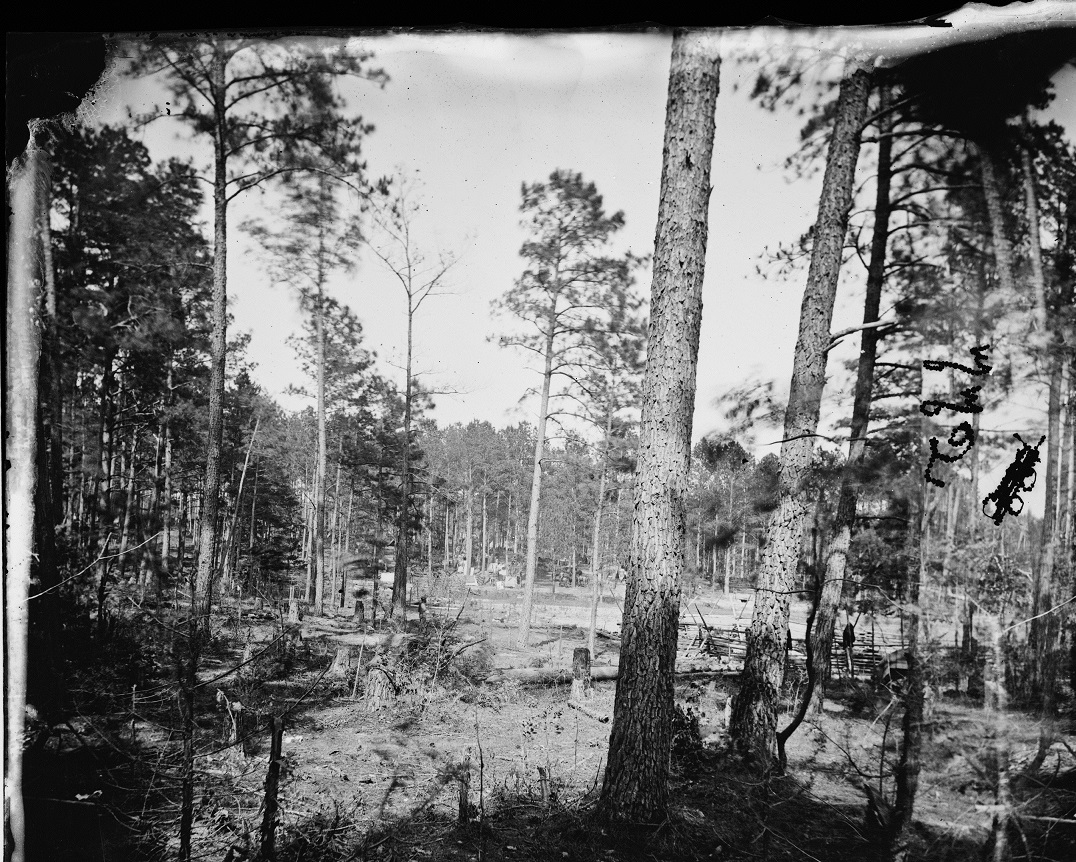
Timothy O'Sulivan took this image, which he identified as "Cold Harbor, Virginia. Camp in the woods," on June 6, 1864. The landscape looks much like this today  (Library of Congress).

Timothy O’Sullivan took this image, which he identified as “Cold Harbor, Virginia. Camp in the woods,” on June 6, 1864. The landscape looks much like this today (Library of Congress).

Even as he commands the Army of the Potomac during its relentless campaign against Robert E. Lee, George Meade is a husband and his father. Here he attempts to discharge some of his responsibilities in those fields. He soothes his wife, collects items she can contribute to the Sanitary Fair in Philadelphia, and he worries about his son, John Sergeant. The Meades’ oldest child, “Sargie” suffered from tuberculosis. His failing health will be a continual theme in his father’s letters, although his son and grandson cut much of that personal agony from the letters when editing them for publication.

Do not be deceived about the situation of affairs by the foolish despatches in the papers. Be not over-elated by reported successes, nor over-depressed by exaggerated rumors of failures. Up to this time our success has consisted only in compelling the enemy to draw in towards Richmond; our failure has been that we have not been able to overcome, destroy or bag his army.

His success has been in preventing us from doing the above, and in heading us off every time we have tried to get around him. In the meantime, both sides have suffered great losses, probably proportionate to our original relative strength, and it is highly probable that both sides have repaired their losses by reinforcements, so that we stand now in the same relative proportion, three to two, with original numbers. The great struggle has yet to come off in the vicinity of Richmond. The enemy have the advantages of position, fortifications, and being concentrated at their centre. We shall have to move slowly and cautiously, but I am in hopes, with reasonable luck, we will be able to succeed.

I am sorry, very sorry, to hear what you write of Sergeant, but God’s will must be done, and we must be resigned.

I am trying to collect some trophies from our recent battle-fields to send you for your fair.

Meade’s correspondence taken from The Life and Letters of George Gordon Meade, Major-General United States Army, Vol. 2, (New York: Charles Scribner’s Sons, 1913), pp. 201-2. Available via Google Books.

Protracted and Severe Fighting (June 5, 1864)

George Meade at Cold Harbor (Library of Congress).

George Meade at Cold Harbor (Library of Congress).

In which George Meade defends his record. Even the attack on Spotsylvania, which he cites as a success, led to 22 hours of slaughter and resulted in Lee moving back to a new and better line. Early in the war, when Lee had resorted to defensive measures, people had derided him as the “King of Spades.” No more. By the time of Mine Run, the Army of the Potomac had come to understand the futility of attacking a well-dug-in position. “With the formidable rifles now in use, a single line of veteran soldiers, behind a three-foot breastwork of earth and rails or a stone fence, can drive back and almost destroy three similar lines approaching to attack them,” noted one Union captain. “Give either our army or the rebels twenty-four hours’ notice of an approaching attack, and they will select a good position, and throw up intrenchments, which it is folly for any but overwhelmingly superior numbers to attempt to carry.”

Since our last battle on the 3d inst. we have been comparatively quiet. The enemy has tried his hand once or twice at the offensive, and in each case has been repulsed and severely punished. This evening, after dark, he made a furious attack, but was everywhere repulsed. The sound of the artillery and musketry has just died away. Indeed, we are pretty much engaged all the time, from early in the morning till late at night. I don’t believe the military history of the world can afford a parallel to the protracted and severe fighting which this army has sustained for the last thirty days. You would suppose, with all this severe fighting, our severe losses, constant marches, many in the night, that the physical powers of the men would be exhausted. I have no doubt in time it will tell on them, but as yet they show no evidences of it.

I feel a satisfaction in knowing that my record is clear, and that the results of this campaign are the clearest indications I could wish of my sound judgment, both at Williamsport and Mine Run. In every instance that we have attacked the enemy in an entrenched position we have failed, except in the case of Hancock’s attack at Spottsylvania, which was a surprise discreditable to the enemy. So, likewise, whenever the enemy has attacked us in position, he has been repulsed. I think Grant has had his eyes opened, and is willing to admit now that Virginia and Lee’s army is not Tennessee and Bragg’s army. Whether the people will ever realize this fact remains to be seen.

After the failed assault of June 3,  hundreds of wounded soldiers lay between the lines while Grant and Lee dickered over the terms that would allow their recovery. Anyone venturing outside the trenches faced almost certain death from sharpshooters. Grant balked at the idea of requesting a truce, which would make it look as if he had lost the contest (which he had). He suggested that Meade should make the request. Meade replied that the Confederates would not recognize him as commander while Grant was present with the army. For his part, Lee had few wounded outside his lines to recover and was hardly prepared to accommodate Grant. While the delicate dance took place between the two commanders, the wounded lay suffering between the lines. Theodore Lyman received the assignment to start the truce proceedings.

This afternoon I carried a flag of truce—quite an episode in my military experiences. At three in the afternoon General Meade sent for me and said, as if asking for a piece of bread and butter: “Lyman, I want you to take this letter from General Grant and take it by a flag of truce, to the enemy’s lines. General Hancock will tell you where you can carry it out.” I recollect he was lying on his cot at the time, with his riding boots cocked up on the footboard. My ideas on flags of truce were chiefly mediaeval and were associated with a herald wearing a tabard. However, I received the order as if my employment had been that from early youth, and proceeded at once to array myself in “store” clothes, sash, white gloves and all other possible finery. After searching in vain for a bugler who could blow a “parley,” I set forth with only a personable and well-dressed cavalry sergeant, and found the gallant Hancock reposing on his cot. “Well, Colonel,” says H., “now you can’t carry it out on my front, it’s too hot there. Your best way is to go to the left, where there are only pickets, and the officers there will get it out.” So the ever-laborious Major Mitchell was summoned and told to provide some whiskey for the Rebs and a flag. The last was a great point: there seemed nothing white about, except the General’s shirt, but at last he found a pillowcase which was ripped up and put on a staff, and you would have admired it when it was completed! Then we made our way towards the left and found General Birney’s men moving that way, who furnished us information about the road, and a guide, Colonel Hapgood of the 5th New Hampshire, corps officer of the day. He was a live Yankee, a thorough New Hampshire man—tall, sinewy, with a keen black eye, and a driving way about him. He was ornamented with a bullet-hole through his hat, another through the trousers, and a third on his sword scabbard. We rode forward till we struck the breastwork at Miles’s Headquarters. It was a curious sight! Something like an Indian family camped half underground. Here was the breastwork, behind which were dug a number of little cellars, about two feet deep, and, over these, were pitched some small tents. And there you could see the officers sitting, with only their heads above ground, writing or perhaps reading; for it was a quiet time and there were no bullets or shells. We followed the line to its end, near by, and then rode through the pine woods a little way. Here Colonel Hamyl remarked in a ghostly voice: “Do you know where you are going? There have been two field officers killed just here.” To whom Colonel Hapgood (with injured pride): ‘‘Yes sir! I do know where I am going. There’s some bullets comes through here; but none to hurt.” Without definitely settling what precise minimum of balls was “none to hurt,” we continued on. Presently the cautious Hapgood pulled up and peered round; and I could see an open field through the trees and another taller wood behind. “Now,” said the New Hampshire patriot, “those tallest trees are full of their sharpshooters; if we strike into the field fifty yards above here, they will fire; but, just below, they can’t see.” So we followed on, and, as soon as we were in the open ground, started at a gallop and got into another wood, close to where I have put my flag on the map. There was here a road, leading past a mill-pond, which however was some quarter of a mile away. Our pickets held this road for some hundred or two yards from us, and then came the enemy’s pickets. The Colonel said he knew a good place to approach, and went forward to call to some of them. After a great deal of delay, the lieutenant on our side got one of them to send for an officer, and then word was sent down each line to cease firing in that command, as a flag of truce was going in. Then we left our horses and went forward, the sergeant carrying the flag. As we turned a corner, close by, we came almost upon their party, standing some paces off. It looked exactly like a scene in an opera; there was never anything that so resembled something got up for stage effect. The sun was near setting, and, in the heavy oak woods, the light already began to fade. On the road stood a couple of Rebel officers, each in his grey overcoat, and, just behind, were grouped some twenty soldiers—the most gipsy-looking fellows imaginable; in their blue-grey jackets and slouched hats; each with his rusty musket and well-filled cartridge-box. I walked up in all stateliness (fully aware, however, that white cotton gloves injured the ensemble), and was introduced to Major Wooten of the 14th North Carolina sharpshooters, belonging to A. P. Hill’s Corps. He was a well-looking man, with quiet and pleasing manners; and, to see us all together, you would suppose we had met to go out shooting, or something of that kind. I am free to confess that the bearing of the few Rebel officers I have met is superior to the average of our own. They have a slight reserve and an absence of all flippancy, on the whole an earnestness of manner, which is very becoming to them. They get this I think partly from the great hardships they suffer, or, still more, the hardships of those at home, and from a sense of their ruin if their cause fails. We attack, and our people live in plenty, with no one to make them afraid; it makes a great difference. . . .

Major Wooten said he would enquire if the despatch could be received, and soon got notice that it could, if in a proper form. So it was sent in, an answer promised in a couple of hours, and we all sat down on the grass to wait—or rather on the leaves, for this sandy soil produces no grass to speak of. As I had time to look about and, still more to sniff about, I became aware that the spot was not so charming as it looked. There had been a heavy cavalry skirmish in the woods and they were full of dead horses, which, as the evening closed, became, as Agassiz would say, “highly offensive.” It was positively frightful! and there I waited till eleven at night! Not even the novelty of the position was enough to distract one’s attention. As to the pickets, they were determined to have also a truce, for, when a Reb officer went down the line to give some order, he returned quite aghast, and said the two lines were together, amiably conversing. He ordered both to their posts, but I doubt if they staid. At half-past eight we had quite a disagreeable experience. There suddenly was heard a shot or two towards our left centre, then quite a volley, and then, whir-r-r-r, the musketry came running down right towards us, as one regiment after another took it up! The next thing I expected was that both sides just near us would take a panic and begin blazing away. The officers sprung to their feet and ran down the lines, to again caution the men; so nobody fired; and there we sat and listened to the volleys and the cannonading, that opened very heavily. . . .
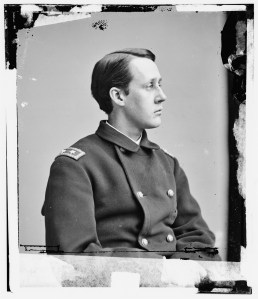
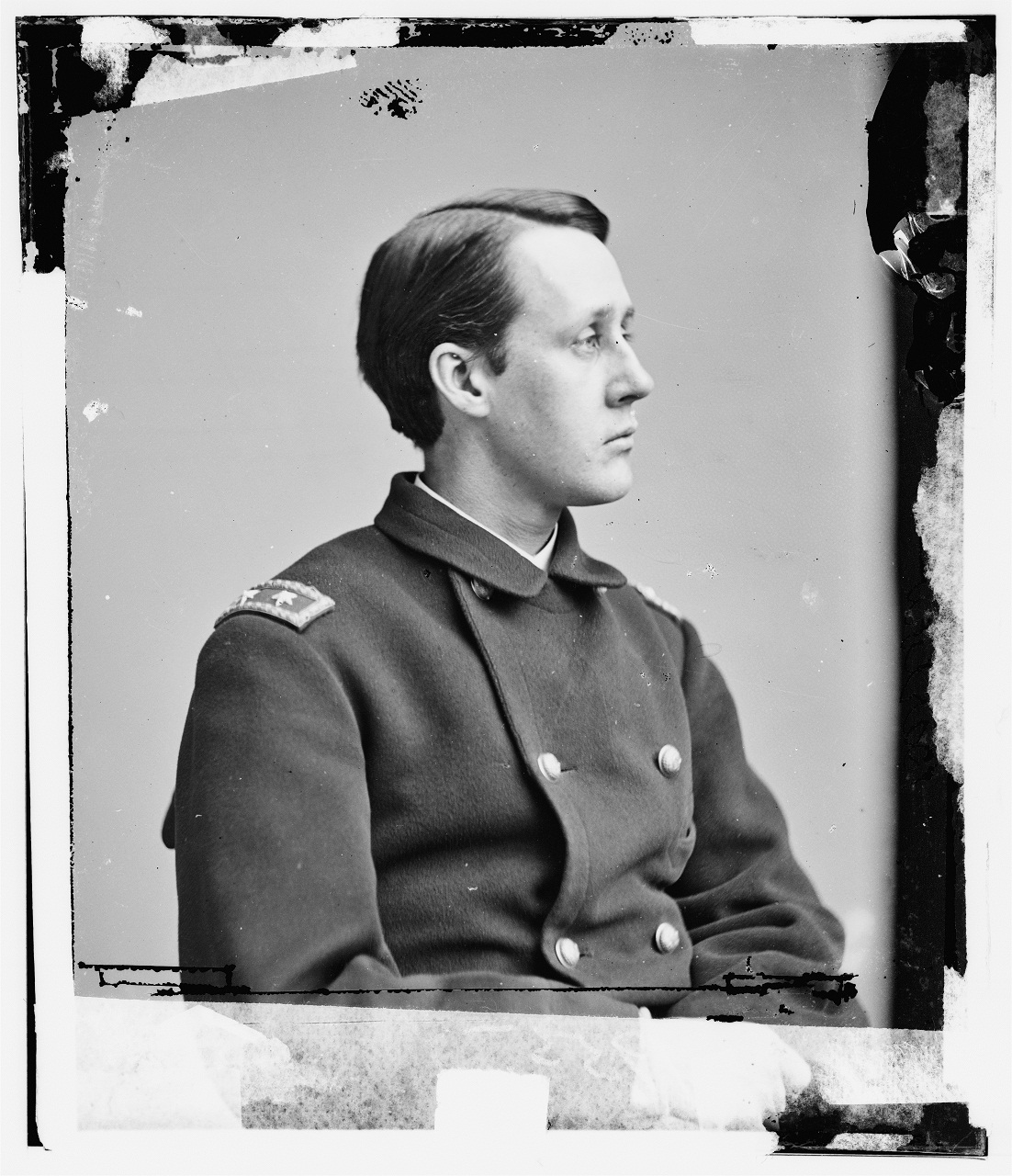
Francis C. Barlow (Library of Congress).

Francis C. Barlow (Library of Congress).

As it got to be after ten, Major Wooten said he would go back and see what was the delay. There came back a lieutenant soon, that is about eleven, with a note from a superior officer, saying that “General Grant’s aide-decamp need not be delayed further,” but that an answer would be sent in at the same point, which could be received by the picket officer. So we shook hands with the Rebs and retreated from the unsavory position. . . . We stopped at Barlow’s Headquarters, and then I kept on to camp, where the General greeted me with: “Hullo, Lyman, I thought perhaps the Rebs had gobbled you during that attack.” . . .

In his journal entry, Lyman includes more about “that eccentric officer,” Francis Barlow. “He was in a merry state; for he had put some hundreds of stragglers in an open field & left them there while the shells were flying, and one got hit!” Barlow hated stragglers.

Meade’s correspondence taken from The Life and Letters of George Gordon Meade, Major-General United States Army, Vol. 2, (New York: Charles Scribner’s Sons, 1913), p. 201. Available via Google Books.

Theodore Lyman’s letter is from Meade’s Headquarters, 1863-1865: Letters of Colonel Theodore Lyman from the Wilderness to Appomattox, pp.149-53. Edited by George R. Agassiz. Boston, Massachusetts Historical Society, 1922. Available via Google Books.


Aftermath (June 4, 1864)

The assault at Cold Harbor on June 3 had been a disaster. In Grant’s initial message to Halleck, sent at 2:15 in the afternoon on June 3—when he must have known better—he wrote that the army’s loss was “not severe.” Later, he would come to regret having ordered the attack at Cold Harbor. According to Horace Porter, Grant’s officers soon learned not to bring up the battle in conversation.

Our men have, in many instances, been foolishly and wantonly sacrificed,” Emory Upton wrote bitterly to his sister. “Thousands of lives might have been spared by the exercise of a little skill; but, as it is, the courage of the poor men is expected to obviate all difficulties.”

There’s no doubt that the Union attack at Cold Harbor was a miserable failure. So was the Confederate attack on the third day at Gettysburg. James McPherson, the Pulitzer Prize–winning Civil War historian, expressed bewilderment at how differently people remember the two failed attacks. At Cold Harbor, “Fifty thousand Union soldiers suffered seven thousand casualties, most of them in less than half an hour,” wrote McPherson in Hallowed Ground: A Walk at Gettysburg, “For this mistake, which he admitted, Grant has been branded a ‘butcher’ careless of lives of his men, and Cold Harbor has become a symbol of mule-headed futility.” McPherson points out that Lee’s army also suffered around seven thousand casualties on July 3. “Yet this attack is perceived as an example of great courage and honor. This contrast speaks volumes about the comparative image of Grant and Lee, North and South, Union and Confederacy.”

I doubt Meade perceived much glory in either attack. In fact, by this point he believed Grant’s relentless hammering at Lee had not worked and was becoming increasingly irritated by the way the general in chief eclipsed Meade’s role in the campaign. Some of that frustration appears in his letter of June 4.

I have only time to write you that we had a big battle yesterday, on the field of the old Gaines’s Mill battle-ground, with the positions of the contending forces reversed. The battle ended without any decided results, we repulsing all attacks of the enemy and they doing the same; losses estimated about equal on both sides; ours roughly estimated at seven thousand five hundred in all.

I had immediate and entire command on the field all day, the Lieutenant General honoring the field with his presence only about one hour in the middle of the day. The papers will, however, undoubtedly inform you of all his doings, and I will therefore confine myself to mine.

George, myself, and all your friends, are well and unhurt. The enemy, as usual, were strongly fortified, and we have pretty well entrenched ourselves. How long this game is to be played it is impossible to tell; but in the long run, we ought to succeed, because it is in our power more promptly to fill the gaps in men and material which this constant fighting produces.

Baldy Smith’s corps has joined, and he is placed under my orders.

As usual, Lyman has a great deal more to add, whether commenting on the relationships among the generals or discussing the way various pieces of ordnance return to earth.

William F. "Baldy" Smith and his staff at Cold Harbor (Library of Congress).

William F. “Baldy” Smith and his staff at Cold Harbor (Library of Congress).

Although there was no battle to-day, both sides were as sensitive as Hotspur when he was “all smarting from my wounds being cold.” The slightest movement would provoke a volley, and any unusual stir would open a battery. This is characteristic of troops in a new position. When they have remained awhile, they begin to be more quiet, the skirmishers fire less and less, and finally cease entirely. The General took three or four of us and went on a sort of tour to his Generals; after a brief visit to General Hancock (who had a battery roaring away close to his Headquarters) and a few words with General Wright, we paid a long visit to “Baldy” Smith, whose tents were pitched between the Woody house and the line of battle. His tent was much better than General Meade’s and he displayed, for his benefit, a lunch with champagne, etc., that quite astonished us. Whether it was the lunch, or Baldy, or “Bully” Brooks (a General of that name), I do not know, but the Commander staid there several hours, talking and smoking.

Let me see, I left the party sitting, as it appeared to me, an unnecessarily long time at Baldy Smith’s. I say “unnecessarily,” first, because it was several hours, and General Meade had nothing to discuss of any moment; and, secondly, because a round-shot would, every now and then, crash through the neighboring trees, or go hoppity-hop along the open field on the edge of which the tents were. You ought to see them skip! It would be odd, if it were not so dangerous. When they have gone some distance and are going slower, you can see them very plainly, provided you are in front of, or behind them. They pass with a great whish, hit the ground, make a great hop, and so go skip, skip, skip, till they get exhausted, and then tumble —flouf— raising a puff of sand. That is the reason round-shot are more dangerous than conical, which strike perhaps once, vault into the air with a noise like a Catherine’s wheel, topple over and over, and drop without further trouble. … At last the General’s confab was broken up by the arrival of Burnside,* who, in Fredericksburg days, had a furious quarrel with Baldy and Brooks—or they with him. So they don’t speak now; and we enjoyed the military icicle in great perfection! All the day there was sharpshooting and cannonading along our front.

*”Burnside has a short, military jacket, and, with his bell-crowned felt hat, the brim turned down, presents an odd figure, the fat man!” —Lyman’s Journal.

Meade’s correspondence taken from The Life and Letters of George Gordon Meade, Major-General United States Army, Vol. 2, (New York: Charles Scribner’s Sons, 1913), pp. 200-1. Available via Google Books.

Theodore Lyman’s letter is from Meade’s Headquarters, 1863-1865: Letters of Colonel Theodore Lyman from the Wilderness to Appomattox, pp.148-9. Edited by George R. Agassiz. Boston, Massachusetts Historical Society, 1922. Available via Google Books.
Cold Harbor (June 3, 1864)

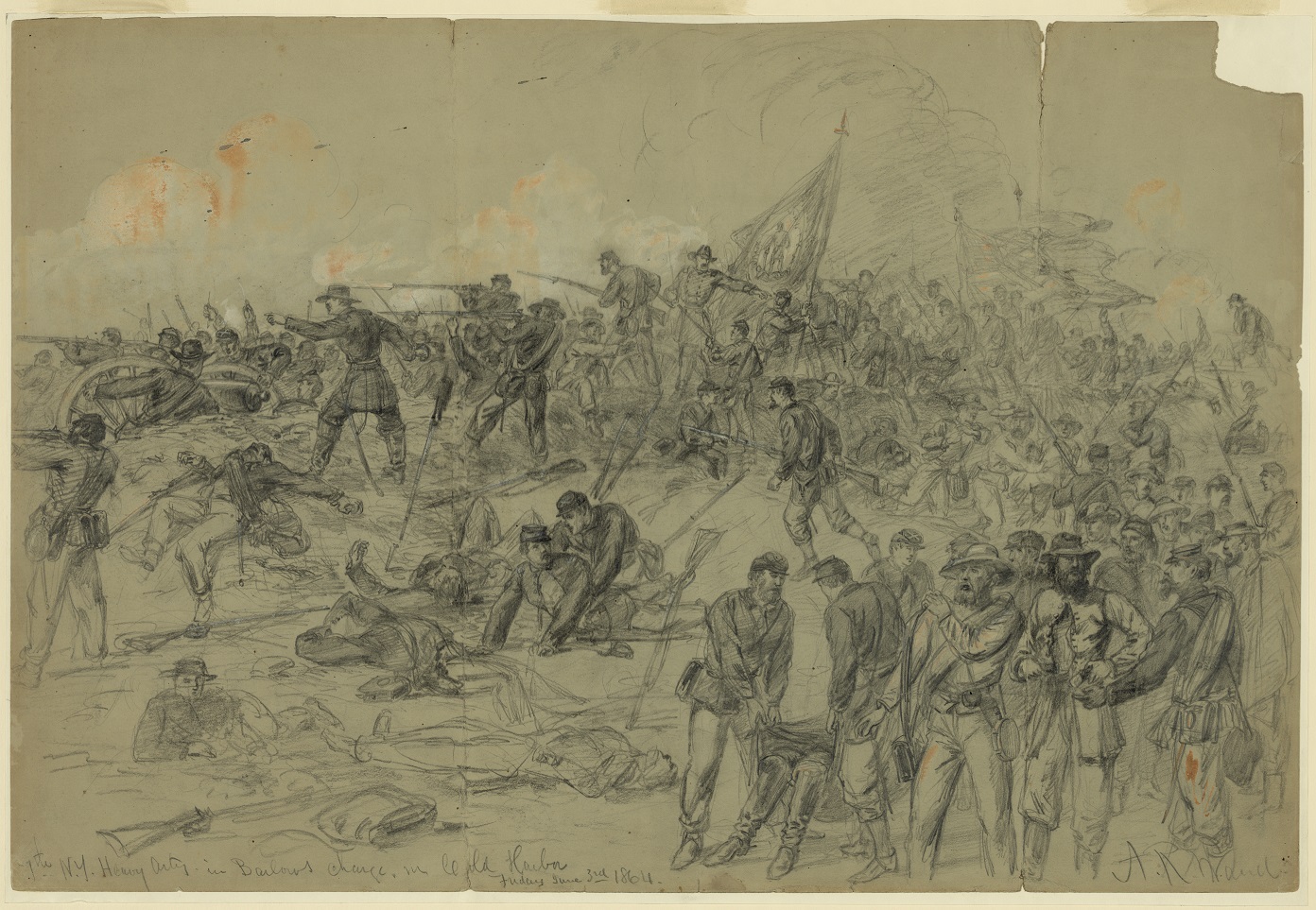
Alfred Waud identified this drawing from June 3 as "7th N.Y. Heavy Arty. in Barlows charge nr. Cold Harbor Friday June 3rd 1864." Click to enlarge (Library of Congress).

Alfred Waud identified this drawing from June 3 as “7th N.Y. Heavy Arty. in Barlows charge nr. Cold Harbor Friday June 3rd 1864.” Click to enlarge (Library of Congress).

“I always regret the last assault on Cold Harbor was ever made.” So wrote Ulysses S. Grant in his memoirs. He had much cause for regret. One hundred and fifty years ago Union soldiers made a doomed attack on entrenched rebel lines. In about a half hour some 7,000 of them fell as casualties. In his letter of June 3, Theodore Lyman presents a clear-eyed account of what he say during the battle, without sugar-coating the final result.

We had very severe fighting this morning, all along the lines. If you look on the map you may follow our lines. The line of battle faced westerly, towards Gaines’s Mill and Mechanicsville, with a corps covering the right flank, and the left refused (a wing is “refused” when it is swung back from the direction of the main line). In some sort this was the battle of Gaines’s Mill reversed. . . . The Rebel lines were about parallel with ours and they were throwing up dirt as hard as they could. No country could be more favorable for such work. The soldiers easily throw up the dirt so dry and sandy with their tin plates, their hands, bits of board, or canteens split in two, when shovels are scarce; while a few axes, in experienced hands, soon serve to fell plenty of straight pines, that are all ready to be set up, as the inner face of the breastwork. I can’t say I heard with any great hope the order, given last night, for a general assault at 4.30 the next morning! You see Wright and Smith took their front line and drove them back Wednesday afternoon. Thursday afternoon was twenty-four, and Friday morning would be thirty-six hours, for them to bring up and entrench their whole army. If we could smash them up, the Chickahominy lay behind them; but I had no more hope of it, after Spotsylvania, than I had of taking Richmond in two days. Half-past four found us at Kelly’s, the Headquarters of General Wright; the brave General himself, however, had gone to the front. At that moment the cannon opened, in various directions, and the Rebels replied vigorously. There has been no fight of which I have seen so little as this. The woods were so placed that the sound, even, of the musketry was much kept away, and the fighting, though near us, was completely shut from view. All the warfare for us was an occasional roundshot, or shell, that would come about us from the Rebel batteries. In the direction of the 18th Corps the crash of the musketry was very loud, but elsewhere, scarcely to be noticed. . . . About five we had a gleam of hope for our success. News came that Barlow had carried their works and taken seventeen guns; and so he did; but it is one thing to get in, another to stay in. His men advanced heroically and went over the breastworks with a rush; but the enemy had reserves massed behind, well knowing that his extreme right was seriously threatened. Before our supports could get up, their forces were down on our men, while a heavy enfilade of canister was kept up from flanking batteries. Barlow was driven out with heavy loss, and succeeded in getting off only about 300 of the prisoners he took. Like good soldiers, however, his men stopped and turned about, close to the works, and there entrenched themselves. At six we got notice that Russell’s division could not carry the line in their front. Ricketts, however, on the right of the 6th Corps, got their first line, and so did the 18th Corps on his right; but the 18th people were forced back, and this left Ricketts a good deal exposed to enfilade; but he held on. A singular thing about the whole attack, and one that demonstrated the staunchness of the troops, was, that our men, when the fire was too hot for them to advance and the works too strong, did not retreat as soldiers often do, but lay down where some small ridge offered a little cover, and there staid, at a distance from the enemy varying from forty to perhaps 250 yards. When it was found that the lines could not be carried, General Meade issued orders to hold the advanced position, all along, and to trench. The main fight lasted, I suppose, some three hours, but there was sharp skirmishing and artillery firing the whole day. The Rebels threw canister in large quantities, doing much damage. . . .

"Barlow and Gibbons charge between the Mechanicsville road and swamp, June 3rd, 1864." By Alfred Waud. Inscribed on the back: This was a prominent position at the battle of Gaines Mill 1862. Our line was then at right angles to the present advance and faced to the right. Barlow charged to the left of the house, and Gibbon on the right." Inscribed vertically: "Gains [sic] Mills or Cold Harbor/Gen Barlows & Gibbons June 3rd 1864." Click to enlarge (Library of Congress).

“Barlow and Gibbons charge between the Mechanicsville road and swamp, June 3rd, 1864.” By Alfred Waud. Inscribed on the back: “This was a prominent position at the battle of Gaines Mill 1862. Our line was then at right angles to the present advance and faced to the right. Barlow charged to the left of the house, and Gibbon on the right.” Inscribed vertically: “Gains [sic] Mills or Cold Harbor/Gen Barlows & Gibbons June 3rd 1864.” Click to enlarge (Library of Congress).

David Bell Birney.

David Bell Birney.

In the afternoon came Wright and Hancock, with their Staff officers, to consult with General Meade. They looked as pleasant as if they had been out to dine, instead of standing all day with shells, bullets and canister coming about them; for we now have a set of corps commanders who, in action, go, as they say, where they “can see”; which means sitting calmly in places where many people would be so scared they wouldn’t know the left wing from the right. Which reminds me of a ludicrous circumstance—there always is something of the ludicrous mixed in every tragedy. Three or four vulgar and very able-bodied civilians had got down to the army, in some way or other, and were at our standpoint for a little while. Having come from the White House and hearing little musketry, they concluded it would be quite safe to go further to the front. “Come,” said one, in a flippant way, “let’s go forward and see the fun.” So off they trotted down the Gaines’s Mill road. One of Wright’s aides said they came pretty soon, as far as where they were standing. All was quiet, but these braves had hardly dismounted when the Rebel guns again opened and the shells came with fearful precision over the spot! One gentleman, a fat man, rushed wildly to his horse, convulsively clutched the mane and tumbled on the saddle, galloping hotly off. But it so happened that two successive shells, passing with their hideous scream, burst just behind his horse, giving him the wings of panic! The other cit, quite paralyzed, lay down flat behind a ridge; in a few minutes he looked up at a Staff officer and, with the cold sweat rolling off him, exclaimed: “Oh! I wish they would stop! Don’t you think, sir, they will stop pretty soon?” What became of the third I know not; but they all “saw the fun.” Not a thing did I have to do till six in the evening, when General Meade told me to go to General Birney, ascertain his position and what he thought of the force in his front; then keep on to Warren and ask him if he could so close in his Corps to the left as to set Birney free to return to the Second Corps. I found General Birney, with his usual thin, Puritanic face, very calmly eating tapioca pudding as a finish to his frugal dinner. He remarked drily that his man had selected that hollow as particularly safe; but, as half a dozen shells had already plumped in there, he did not exactly believe the theory a good one. I had a great mess finding General Warren.* First I went, by the road leading through the woods, to Bethesda Church. There were his aides and his flag: but the General had “ridden out along the lines”—confound that expression! That is the luck of a Headquarters aide. You say: “Is the General here?” “No, sir, he has gone, I believe, along the line.” “Do you know where?” “Well, Colonel, he did not say exactly; but, if you will follow down the breastworks, I think you will find him.” (Delightful vision of a line of two miles or so of breastworks with the infantry safely crouched behind, and you perched on a horse, riding down, taking the chance of stray shot, canister, and minie balls, looking for a general who probably is not there.) The greatest piece of coolness is when you are advised to make a short cut by the picket line! . . .

*“This was Warren’s great way, to go about, looking thus after details and making ingenious plans; but it kept him from generalities, and made it hard to find him, so that he finally came to trouble as much by this as by anything else.”—Lyman’s Journal

Major General Gouverneur Kemble Warren

Major General Gouverneur Kemble Warren (Library of Congress).

Warren looks care-worn. Some people say he is a selfish man, but he is certainly the most tender-hearted of our commanders. Almost all officers grow soon callous in the service; not unfeeling, only accustomed, and unaffected by the suffering they see. But Warren feels it a great deal, and that and the responsibility, and many things of course not going to suit him, all tend to make him haggard. He said: “For thirty days now, it has been one funeral procession, past me; and it is too much! To-day I saw a man burying a comrade, and, within half an hour, he himself was brought in and buried beside him. The men need some rest.” . . .

At nine at night the enemy made a fierce attack on a part of Gibbon’s division, and, for a time, the volleys of musketry and the booming of the cannon were louder, in the still night, than the battle had been by day. But that sort of thing has not done with the Rebels, since the brilliant attack of Johnson, the second night of the Wilderness. This time they were repulsed completely. It was then that our men called out: “Come on! Come on! Bring up some more Johnnies! You haven’t got enough!” . . .

To-night all the trenching tools were ordered up and the lines were strengthened, and saps run out, so as to bring them still closer to the opposing ones. And there the two armies slept, almost within an easy stone-throw of each other; and the separating space ploughed by cannon-shot and clotted with the dead bodies that neither side dared to bury! I think nothing can give a greater idea of deathless tenacity of purpose, than the picture of these two hosts, after a bloody and nearly continuous struggle of thirty days, thus lying down to sleep, with their heads almost on each other’s throats! Possibly it has no parallel in history. So ended the great attack at Cool Arbor. The losses were far greater for us than for the Rebels. From what I can gather I doubt not we lost four or five to one. We gained nothing save a knowledge of their position and the proof of the unflinching bravery of our soldiers. . . .*

*“I do think there has been too much assaulting, this campaign\ After our lessons of failure and of success at Spotsylvania, we assault here, after the enemy had had thirty-six hours to entrench, and that time will cover them over their heads and give them slashings and traverses besides! The best officers and men are liable, by their greater gallantry, to be first disabled; and, of those that are left, the best become demoralized by the failures, and the loss of good leaders; so that, very soon, the men will no longer charge entrenchments and will only go forward when driven by their officers.”—Lyman’s Journal.

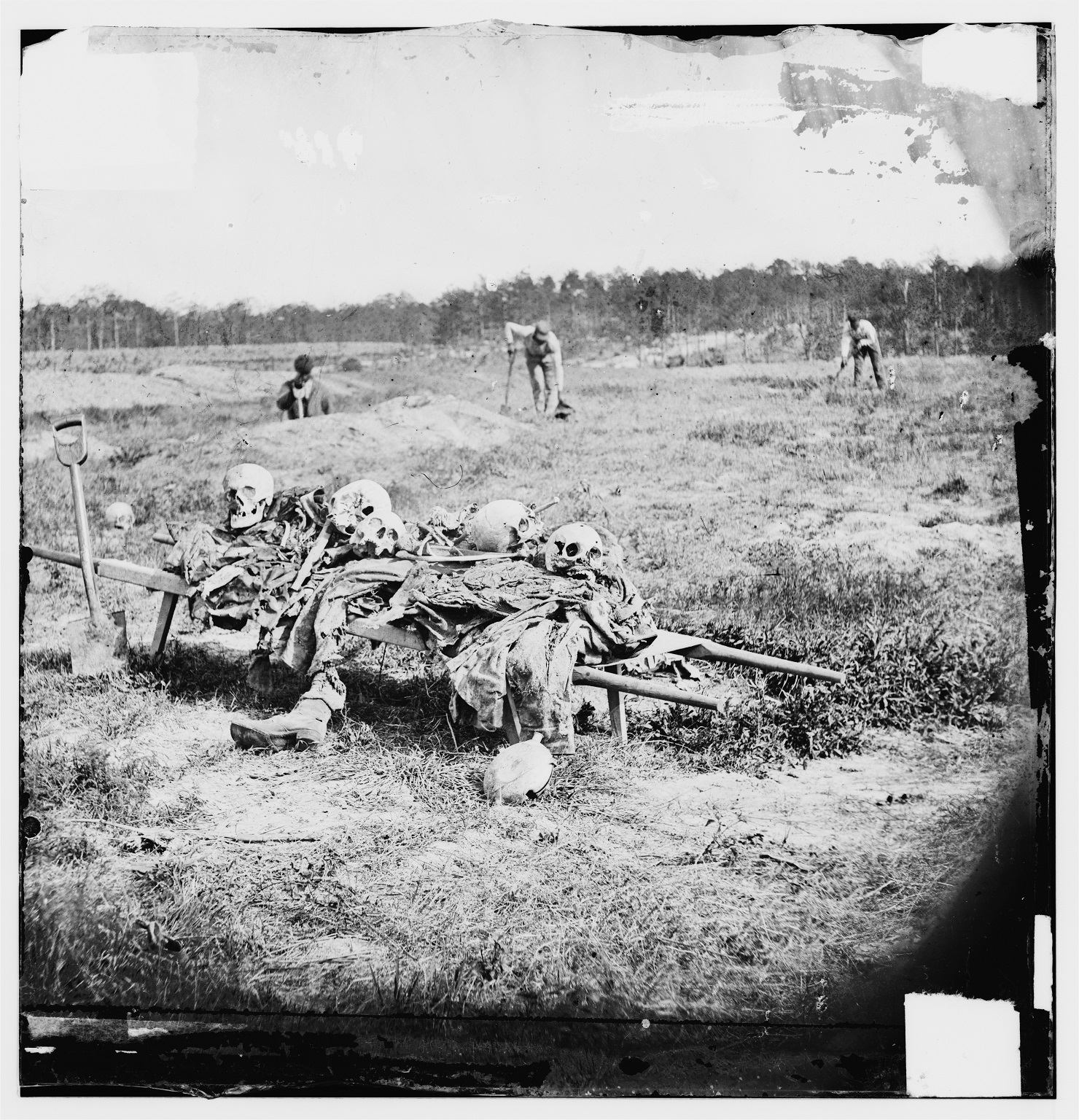
The costs of war. The remains of dead soldiers being collected at Cold Harbor after the war (Library of Congress).

The costs of war. The remains of dead soldiers being collected at Cold Harbor after the war (Library of Congress).

Theodore Lyman’s letter is from Meade’s Headquarters, 1863-1865: Letters of Colonel Theodore Lyman from the Wilderness to Appomattox, pp.143-8. Edited by George R. Agassiz. Boston, Massachusetts Historical Society, 1922. Available via Google Books.

Eve of Battle (June 2, 1864)

Alfred Waud labled this drawing "June 2nd Position nr. Cold Harbor--rifle pits in the front." On the back he wrote, "A union battery held this hill at the battle of Gaines Mill tenaciously from a position near the buildings looking to the right of the picture, at right angles to the present line of battle." Click to enlarge (Library of Congress).

Alfred Waud labeled this drawing “June 2nd Position nr. Cold Harbor–rifle pits in the front.” On the back he wrote, “A union battery held this hill at the battle of Gaines Mill tenaciously from a position near the buildings looking to the right of the picture, at right angles to the present line of battle.” Click to enlarge (Library of Congress).

On June 2 Grant and Meade position the Army of the Potomac in preparation for an attack on the Rebel lines. In his letter Theodore Lyman continues to call the battleground Cool Arbor although today we remember it by another name: Cold Harbor.

Here Lyman presents his case for George McClellan as the Union’s best general. He echoes McClellan’s reasoning for the failure of the Peninsula Campaign back in 1862–It was all the fault of President Lincoln, who held back 35,000 men of Irvin McDowell’s corps to defend Washington. Those men included George Meade’s brigade. McClellan, in a typical bit of understatement, had called Lincoln’s act “the most infamous thing that history has recorded.”

To-day has been occupied with strategy; but our strategy is of a bloody kind, and even the mere movements have not passed without the sounds of cannon and musketry for two or three hours. Sharp as steel traps those Rebs! We cannot shift a hundred yards, but presto! skirmishers forward! and they come piling in, pop, pop, pop; with reserves close behind and a brigade or two hard on the reserves, all poking and probing as much as to say: “Hey! What! Going are you! Well, where? How far? Which way? How many of you are there?”—And then they seem to send back word: “There they go—down there; head ’em off! Head ’em off quick!” And very soon General So-and-so, who thinks he has entirely got round the Rebel line, begs to report that he finds them strongly entrenched in his front! Yesterday the 6th Corps drove the enemy from their lines, in their front, and took a good many prisoners. The division of Ricketts, which Hancock called a “weakly child,” suddenly blazed out, and charged with the bayonet; an example I hope it will follow up! The “weary boys” at first broke and ran as usual, but Ricketts, their new commander, a man of great personal courage, pitched into them and kept at them, till finally, on the 1st of June, he got them to storm breastworks, and now I hope and believe they will continue good troops. Such are the effects of good pluck in generals. You hear people say: “Oh, everyone is brave enough; it is the head that is needed.” Doubtless the head is the first necessity, but I can tell you that there are not many officers who of their own choice and impulse will dash in on formidable positions. They will go anywhere they are ordered and anywhere they believe it is their duty to go; but fighting for fun is rare; and unless there is a little of this in a man’s disposition he lacks an element. Such men as Sprigg Carroll, Hays (killed), Custer and some others, attacked wherever they got a chance, and of their own accord. Very few officers would hold back when they get an order; but the ordeal is so awful, that it requires a peculiar disposition to “go in gaily,” as old Kearny used to say.

Last night the 2d Corps marched, to form on the left of the 6th at Cool Arbor; it was badly managed, or rather it was difficult to manage, like all those infernal night marches, and so part of the troops went fifteen miles instead of nine and there was any amount of straggling and exhaustion. I consider fifteen miles by night equal to twenty-five by day, and you will remember our men have no longer the bodily strength they had a month before; indeed, why they are alive, I don’t see; but, after a day’s rest, they look almost as fresh as ever. . . . We set out in the morning by half-past seven and, partly by roads, partly by cross-cuts, arrived at Kelly’s via Woody’s house. Of all the wastes I have seen, this first sight of Cool Arbor was the most dreary! Fancy a baking sun to begin with; then a foreground of breastworks; on the left, Kelly’s wretched house; in the front, an open plain, trampled fetlock deep into fine, white dust and dotted with caissons, regiments of many soldiers, and dead horses killed in the previous cavalry fight. On the sides and in the distance were pine woods, some red with fires which had passed through them, some grey with the clouds of dust that rose high in the air. It was a Sahara intensified, and was called Cool Arbor! Wright’s Headquarters were here, and here, too, I first beheld “Baldy” Smith, a short, quite portly man, with a light-brown imperial and shaggy moustache, a round, military head, and the look of a German officer, altogether. After getting all information, General Meade ordered a general assault at four p.m.. but afterwards countermanded it, by reason of the exhausted state of the 2d Corps. We pitched camp in the place shown on my map by a flag, where we since have remained—ten whole days. Towards evening Warren was to close in to his left and join with the rest of the line, his right resting near Bethesda Church, while Burnside was to mass and cover his movement; but they made a bad fist of it between them. The enemy, the moment the march began, rushed in on the skirmishers. A division, 5th Corps, got so placed that it bore the whole brunt (and a fine division too). Between the two corps—both very willing—the proper support was not put in. The enemy in force swung round by Via’s house and gobbled up several miles of our telegraph wire, besides several hundred prisoners. We ought to have just eaten them up; but as it was, we only drove them back into some rifle-pits we had formerly abandoned, and then the line was formed as originally ordered, with Burnside swung round to cover our right flank from Bethesda Church towards Linney’s house, while the enemy held Via’s house and a line parallel to our own. . . .*

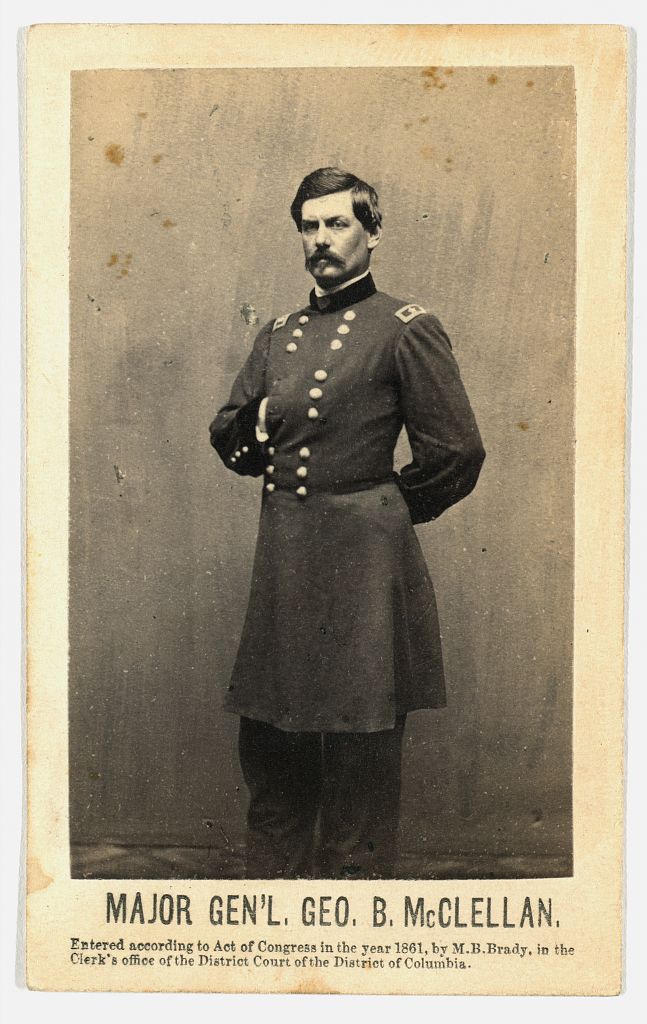
General George McClellan. Lyman believes he was the Union's best general (Library of Congress).

General George McClellan. Lyman believes he was the Union’s best general (Library of Congress).

You know I was never an enthusiast or fanatic for any of our generals. I liked McClellan, but was not “daft” about him; and was indeed somewhat shaken by the great cry and stories against him. But now, after seeing this country and this campaign, I wish to say, in all coolness, that I believe he was, both as a military man and as a manager of a country under military occupation, the greatest general this war has produced. You hear how slow he was; how he hesitated at small natural obstacles. Not so. He hesitated at an obstacle that our ultra people steadily ignore, the Rebel Army of Northern Virginia; and anyone that has seen that army fight and march would, were he wise, proceed there with caution and wariness, well knowing that defeat by such an enemy might mean destruction. When I consider how much better soldiers, as soldiers, our men now are than in his day; how admirably they have been handled in this campaign; and how heroically they have worked, marched, and fought, and yet, how we still see the enemy in our front, weakened and maimed, but undaunted as ever, I am forced to the conclusion that McClellan (who did not have his own way as we have) managed with admirable skill. Mind, I don’t say he was perfect. I say he was our best. Think how well we are off. Do we want the very garrison of Washington? Grant beckons, and nobody is hardy enough to say him nay. McClellan had over 20,000 men taken from him at the very crisis of the campaign. Suppose at the culmination of our work, a telegraph from the President should come: “Send General Wright and 25,000 men at once to Winchester.” How would that do? In all this I praise the present commanders. The handling of this army, in especial, has been a marvel. Through narrow roads (the best of them not better than the “lane” opposite our back avenue), ill known and intricate, over bogs and rivers, we have transported cannon and army waggons in thousands, and a vast army has been moved, without ever getting in confusion, or losing its supporting distance. I don’t believe there is a marshal of France that could do it with his army. I am sure there is not.

*“When Grant heard of it, he said to Meade: ‘We ought to be able to eat them up; they have placed themselves in such a position. Generally I am not in favor of night attacks; but I think one might be justified in such a case as the present.’ Indeed it was a wretched affair.”—Lyman’s Journal.

Theodore Lyman’s letter is from Meade’s Headquarters, 1863-1865: Letters of Colonel Theodore Lyman from the Wilderness to Appomattox, pp.138-42. Edited by George R. Agassiz. Boston, Massachusetts Historical Society, 1922. Available via Google Books.
Pegging Away (June 1, 1864)

Artist William Waud sketched the arrival of "Baldy" Smith and the XVIII Corps at White House landing on the Pamunkey on May 18. On the front Waud wrote, "Ruins of the White House; the scene of Washington's courtship & marriage; the tent by Pilchard." This White House belonged to Rooney Lee, son of Robert E. George Washington had indeed courted Martha here. On the back Waud wrote, "This is only a small portion of the force shown here as there were many large vessels employed such as the John Brooks, the George Leary, the Escort, the Metamone[sic]-all similar to the Hudson river & sound boats but which I have not the opportunity of sketching if Mr Parsons has drawings of these vessels if the view is thought interesting enough they might be introduced covered with troops hanging on like bees. For description see the letters of Mr. Winser in the Times. W.W." Harpers published an engraving on June 18. Click to enlarge (Library of Congress).

Artist William Waud sketched the arrival of “Baldy” Smith and the XVIII Corps at White House landing on the Pamunkey on May 18. On the front Waud wrote, “Ruins of the White House; the scene of Washington’s courtship & marriage; the tent by Pilchard.” This White House belonged to Rooney Lee, son of Robert E. George Washington had indeed courted Martha here. On the back Waud wrote, “This is only a small portion of the force shown here as there were many large vessels employed such as the John Brooks, the George Leary, the Escort, the Metamone[sic]-all similar to the Hudson river & sound boats but which I have not the opportunity of sketching if Mr Parsons has drawings of these vessels if the view is thought interesting enough they might be introduced covered with troops hanging on like bees. For description see the letters of Mr. Winser in the Times. W.W.” Harpers published an engraving on June 18. Click to enlarge (Library of Congress).

On June 1 Meade, in a throw-away line at the end of his letter, mentions two things that will irritate him more and more throughout the campaign: the press and the way that Grant was receiving credit for the Army of the Potomac’s successes. His resentments against the press will explode in a few days, with serious repercussions for his reputation. His resentment against Grant will continue to fester, although Meade, a good soldier, discharges his duties to the best of his ability.

We are pegging away here, and gradually getting nearer and nearer to Richmond, although its capture is yet far off. Our advance is within two miles of Mechanicsville, which, if you remember, is the place where the fighting commenced in the Seven Days. The rebs keep taking up strong positions and entrenching themselves. This compels us to move around their flank, after trying to find some weak point to attack. This operation has now occurred four times, namely, crossing the Rapidan, at Old Wilderness, at Spottsylvania Court House, and recently at North Anna. We shall have to do it once more before we get them into their defenses at Richmond, and then will begin the tedious process of a quasi-siege, like that at Sebastopol; which will last as long, unless we can get hold of their railroads and cut off their supplies, when they must come out and fight.

Whilst I am writing the cannon and musketry are rattling all along our lines, over five miles in extent, but we have become so accustomed to these sounds that we hardly notice them.

The weather is beginning to be hot, but I keep in the saddle during the day, and sleep soundly at night.

The papers are giving Grant all the credit of what they call successes; I hope they will remember this if anything goes wrong.

William F. "Baldy" Smith was a Meade friend who eventually turned enemy. (Library of Congress)

William F. “Baldy” Smith was a Meade friend who eventually turned enemy. (Library of Congress)

Theodore Lyman’s letter from July 1 goes into more detail about the arrival of William F. “Baldy” Smith and the XVIII Corps, sent from Ben Butler’s Army of the James to reinforce the Army of the Potomac. Meade and Smith went back a ways. When Meade received command of the V Corps back in December 1862 after the Battle of Fredericksburg, Smith was one of the generals who shared his celebratory champagne. Smith, who possessed “unusual powers of caustic criticism” and quarreled incessantly with his superior officers, led the VI Corps at Fredericksburg but became so disillusioned by army commander Ambrose Burnside he went to the White House with William Franklin to express his misgivings to President Lincoln. Burnside was dismissed from command but Smith was sent out west. He had redeemed himself, in Grant’s eyes, at least, by performing capably in the campaign to break the siege of Chattanooga. He then accompanied Grant back east, amid rumors that Smith would replace Meade at the head of the Army of the Potomac. However, Grant assigned him to the Army of the James under Maj. Gen. Benjamin Butler, the most political of political generals. The cockeyed Butler and his army were supposed to form one of the prongs in Grant’s multipronged campaign against the Confederacy. Instead, Butler had gotten his army bottled up at Bermuda Hundred with his back against the James River, where they remained, impotent and useless.

At 1.30 last night, General Wright with the 6th Corps passed round our left flank and marched on Cool Arbor, which already was occupied by our cavalry last night. They would have fallen back, in view of the advance of the enemy’s infantry, but General Meade sent an order to hold it, which they did; and had a very heavy fight early this morning, remarkable from the fact that our cavalry threw up breastworks and fought behind them, repulsing the enemy till Wright could arrive. Baldy Smith too was marching from Whitehouse and came up during the day, forming on the right of the 6th Corps. Meantime, of course, the enemy was marching to his own right, in all haste, and formed so as to cover the roads leading to Mechanicsville and also to continue his line on his right. . . . There was a desperate charge on Smith and Wright at Cool Arbor and the sound of musketry was extremely heavy long after dark, but the Rebels could not do it and had to go back again. Nor did the right of the line escape where they attacked Birney, and were driven back just the same way. . . . Smith had orders to report to General Meade and so became part of the Army of the Potomac. General Meade was in one of his irascible fits to-night, which are always founded in good reason though they spread themselves over a good deal of ground that is not always in the limits of the question. First he blamed Warren for pushing out without orders; then he said each corps ought to act for itself and not always be leaning on him. Then he called Wright slow (a very true proposition as a general one). In the midst of these night-thoughts, comes here from General Smith bright, active, self-sufficient Engineer-Lieutenant Farquhar, who reports that his superior had arrived, fought, etc., etc., but that he had brought little ammunition, no transportation and that “he considered his position precarious.” “Then, why in Hell did he come at all for?” roared the exasperated Meade, with an oath that was rare with him.

Lyman added a footnote to his journal entry. Farquhar reported Meade’s outburst to Smith, Lyman noted. “Smith never forgave him and put that sentence, in large letters, in his report, which appeared many months after and amused Meade, for Smith had dished himself then and was nobody.”

Meade’s correspondence taken from The Life and Letters of George Gordon Meade, Major-General United States Army, Vol. 2, (New York: Charles Scribner’s Sons, 1913), p. 200. Available via Google Books.

Theodore Lyman’s letter is from Meade’s Headquarters, 1863-1865: Letters of Colonel Theodore Lyman from the Wilderness to Appomattox, pp.137-8. Edited by George R. Agassiz. Boston, Massachusetts Historical Society, 1922. Available via Google Books.

John Gibbon’s Bible Lesson (May 31, 1864)

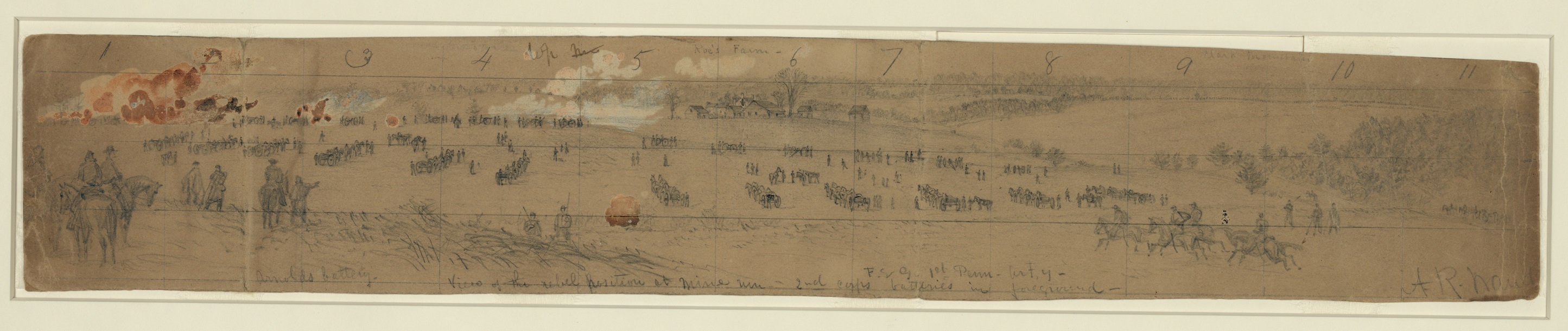
Alfred Waud sketched the firing of a coehorn mortar at Cold Harbor. Click to enlarge (Library of Congress).

Alfred Waud sketched the firing of a cohorn mortar at Cold Harbor. Click to enlarge (Library of Congress).

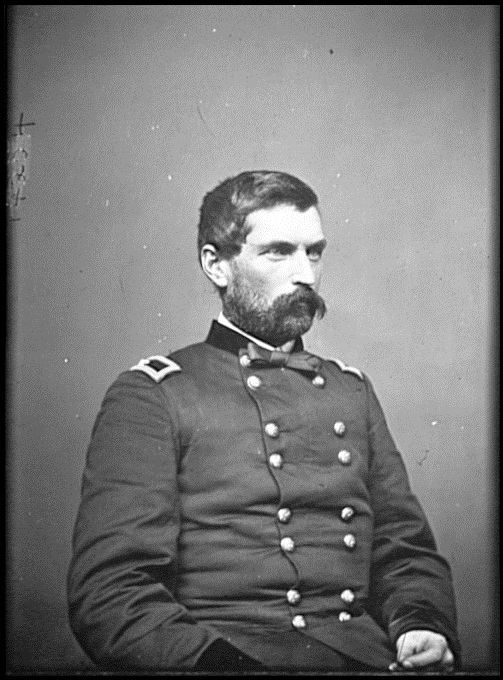
John Gibbon explains some Biblical history in Theodore Lyman’s letter from May 31. Gibbon had been born in Philadelphia but he grew up in North Carolina. When war broke out he remained loyal to the Union, although three of his brothers joined the other side. Badly wounded at Gettysburg, he commanded a division of the II Corps. There will be more about the arrival of William H. “Baldy” Smith and his XVIII Corps from Butler’s Army of the James in Lyman’s next letter.

Last night, what with writing to you and working over some maps of my own, I got to bed very late, and was up tolerably early this morning, so to-day I have passed a good deal of time on my back fast asleep; for the General has not ridden out and has sent out very few officers. As I implied, to-day has been an occasion of Sybarite luxury. What do you think we mustered for dinner? Why, green peas, salad, potatoes, and fresh milk for the coffee! Am I not a good forager? Yes, and iced water! The woman (a fearful Secesh) asked two dollars for half a bushel of ice; upon which I, in a rage, sent a sergeant and told him to pay only a reasonable price and to take what we needed. But, in future, I will not pay for ice; it costs these Rebels nothing, and they can’t eat it. For food I will always pay the scoundrels. They have usually plenty of ice for the hospitals, and the bands are kept there to play for the wounded, which pleases them. The Sanitary are doing, I believe, a great deal of good at the rear, between this and Washington. There is room for any such people to do good, when there are such multitudes of wounded. I was amused to read a letter from one of the Sanitaries at Fredericksburg, who, after describing his good works, said that, for eight days, his ears were “bruised by the sound of cannon.” To me, Fredericksburg and Montreal seem about equally far away!

Brigadier General John Gibbon. He became a major general in June 1864 (Library of Congress).

Brigadier General John Gibbon. He became a major general in June 1864 (Library of Congress).

The armies lay still, but there was unusually heavy fighting on the skirmish line the whole time; indeed there was quite an action, when Birney, Barlow, and Wright advanced and took the front line of the enemy. We used, too, a good deal of artillery, so that there was the noise of battle from morning to night. We took in some cohorn [coehorn] mortars, as they are called. These are light, small mortars, that may be carried by two or three men, and are fired with a light charge of powder. They throw a 24-lb. shell a maximum distance of about 1000 yards. As these shells go up in the air and then come down almost straight, they are very good against rifle-pits. General Gibbon says there has been a great mistake about the armies of Israel marching seven times round Jericho blowing on horns, thereby causing the walls to fall down. He says the marching round was a “flank movement,” and that the walls were then blown down with cohorns. Some of the heavy artillerists of the German regiment were first sent to fire these mortars; but it was found that they could give no definite account of where the projectiles went, the reason of which was that, every time they fired, the officer and his gunners tumbled down flat in great fear of Rebel sharpshooters!

“Baldy” Smith arrived, by steamer, at Whitehouse, from Bermuda Hundreds, with heavy reinforcements for this army. The Rebels, on their side, have been also bringing up everything—Breckinridge from the valley of the Shenandoah, Hoke from North Carolina, and everything from the South generally. . . . General Wilson’s division of cavalry was sent out towards our rear and right, to cover that quarter and to continue the destruction of the railroads below Hanover Junction. General Sheridan, with the remaining cavalry, swung round our left flank and pressed down towards Shady Grove and Cool Arbor (this name is called Coal Harbor, Cold Harbor, and Cool Arbor, I can’t find which is correct, but choose “Arbor” because it is prettiest, and because it is so hideously inappropriate). In vain I try to correct myself by the engineer maps; they all disagree. The topographical work of the engineers is rather uphill in this country. Before we opened the campaign the engineers prepared a series of large maps, carefully got up from every source that they could come upon, such as state, county, and town maps, also the information given by residents and refugees, etc., etc. In spite of all this the result has been almost ludicrous! Some places (e.g. Spotsylvania) are from one to two miles out of position, and the roads run everywhere except where laid down. I suppose the fact is that there was no material whatever wherewith to make a map on a scale so large as one inch to a mile. It is interesting to see now how the engineers work up the country, as they go along. Topographers are sent out as far as possible in the front and round the flanks. By taking the directions of different points, and by calculating distances by the pacing of their horses, and in other ways, they make little local maps, and these they bring in in the evening, and during the night they are compiled and thus a map of the neighborhood is made. If the next day is sunny, photographic copies are taken of this sketch and sent to the principal commanders, whose engineers add to, or correct it, if need be, and these corrections are put on a new sketch. Much information is gotten also by the engineers sent with the cavalry. . . .

Theodore Lyman’s letter is from Meade’s Headquarters, 1863-1865: Letters of Colonel Theodore Lyman from the Wilderness to Appomattox, pp.134-7. Edited by George R. Agassiz. Boston, Massachusetts Historical Society, 1922. Available via Google Books.
Disputing Every Inch of Ground (May 30, 1864)

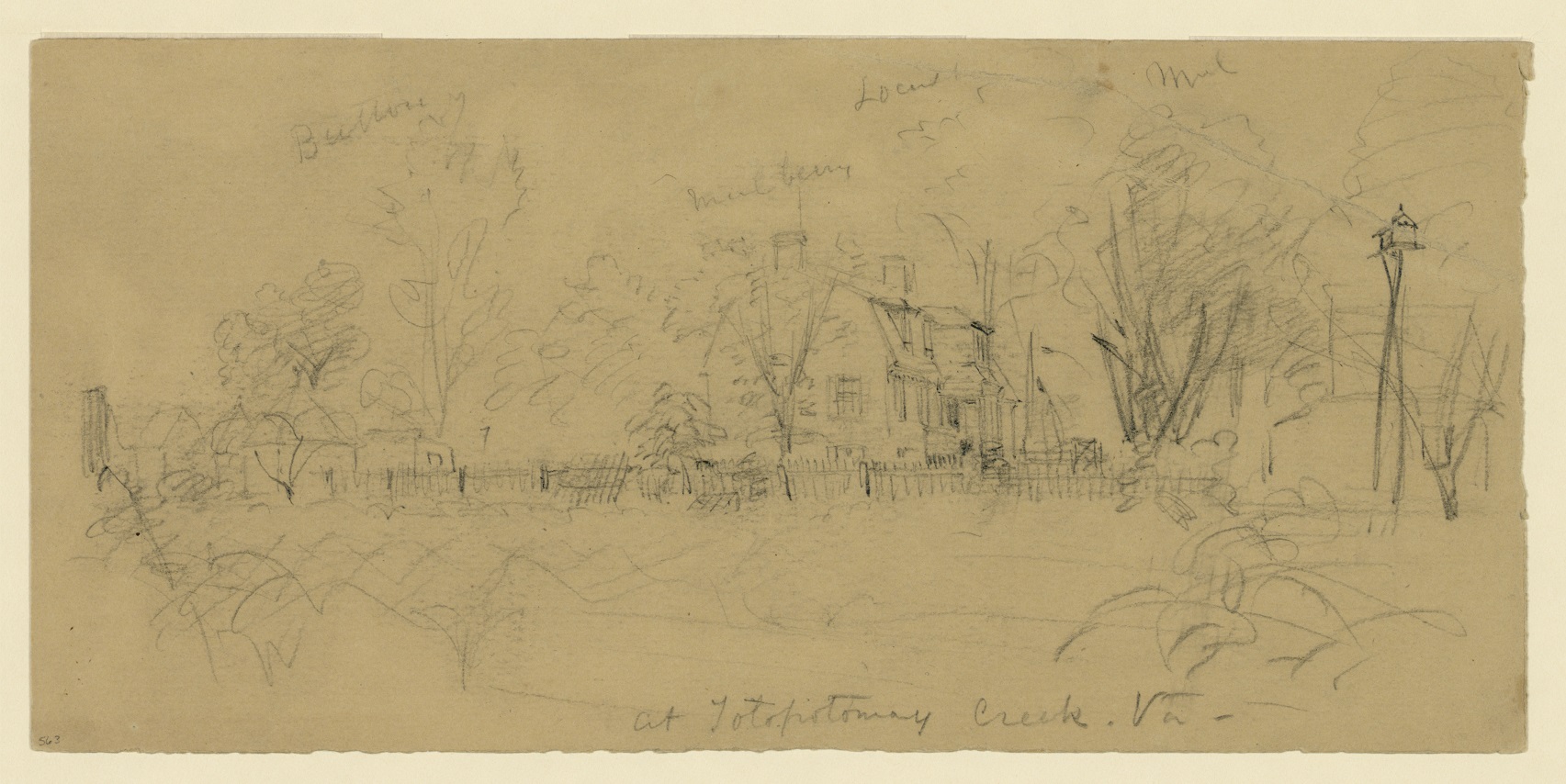
"At Totopotomoy Creek," a drawing Alfred Waud did around this time 150 years ago. Click to enlarge (Library of Congress).

“At Totopotomoy Creek,” a drawing Alfred Waud did around this time 150 years ago. Click to enlarge (Library of Congress).

I get the sense of George Meade tossing off quick notes to reassure his wife while his attention and energies are engaged in the huge task of moving his army through Virginia. Theodore Lyman, on the other hand, finds time to pen another long, detailed account of life in a blighted country.  Meade first.

We are within sixteen miles of Richmond, working our way along slowly but surely. I expect we shall be a long while getting in, but I trust through the blessing of God we will at last succeed, and if we do, I think, from the tone of the Southern press, and the talk of the prisoners, that they will be sensible enough to give it up. They are now fighting cautiously, but desperately, disputing every inch of ground, but confining themselves exclusively to the defensive.

Mathew Brady took this photo of Winfield Scott Hancock with his staff and division commanders. Click to enlarge (Library of Congress).

Mathew Brady took this photo of Winfield Scott Hancock with his staff and division commanders. Click to enlarge (Library of Congress).

Theodore Lyman goes into much, much more detail in his letter of May 30. His journal entry for the same day ends with these ominous words: “The cavalry have reached Cold Harbor.”

It has been a tolerably quiet day, though there was a quite sharp fight at evening on our left — the Rebels badly used up. The people in Richmond must hear plainly the booming of our cannon: they scarcely can feel easy, for we are closing in on the old ground of McClellan. Fair Oaks was two years ago this very day. What armies have since been destroyed and rebuilt! What marchings and countermarchings, from the James to the Susquehanna! Still we cling to them — that is the best feature. There is, and can be, no doubt of the straits to which these people are now reduced; particularly, of course, in this distracted region; there is nothing in modern history to compare with the conscription they have. They have swept this part of the country of all persons under 50, who could not steal away. I have just seen a man of 48, very much crippled with rheumatism, who said he was enrolled two days ago. He told them he had thirteen persons dependent on him, including three grandchildren (his son-in-law had been taken some time since); but they said that made no difference; he was on his way to the rendezvous, when our cavalry crossed the river, and he hid in the bushes, till they came up. I offered him money for some of his small vegetables; but he said: “If you have any bread, I would rather have it. Your cavalry have taken all the corn I had left, and, as for meat, I have not tasted a mouthful for six weeks.” If you had seen his eyes glisten when I gave him a piece of salt pork, you would have believed his story. He looked like a man who had come into a fortune. “Why,” said he, “that must weigh four pounds — that would cost me forty dollars in Richmond! They told us they would feed the families of those that were taken; and so they did for two months, and then they said they had no more meal.” What is even more extraordinary than their extreme suffering, is the incomprehensible philosophy and endurance of these people. Here was a man, of poor health, with a family that it would be hard to support in peacetimes, stripped to the bone by Rebel and Union, with no hope from any side, and yet he almost laughed when he described his position, and presently came back with a smile to tell me that the only two cows he had, had strayed off, got into a Government herd, and “gone up the road” — that’s the last of them. In Europe, a man so situated would be on his knees, tearing out handfuls of hair, and calling on the Virgin and on several saints. There were neighbors at his house; and one asked me if I supposed our people would burn his tenement? “What did you leave it for?” I asked. To which he replied, in a concise way that told the whole: “Because there was right smart of bullets over thaar!” The poorest people seem usually more or less indifferent or adverse to the war, but their bitterness increases in direct ratio to their social position. Find a well-dressed lady, and you find one whose hatred will end only with death — it is unmistakable, though they treat you with more or less courtesy. Nor is it extraordinary: there is black everywhere; here is one that has lost an only son; and here another that has had her husband killed. People of this class are very proud and spirited; you can easily see it; and it is the officers that they supply who give the strong framework to their army. They have that military and irascible nature so often seen among an aristocracy that was once rich and is now poor; for you must remember that, before the war, most of these landowners had ceased to hold the position they had at the beginning of this century. There, that is enough of philosophizing; the plain fact being that General Robert Lee is entrenched within cannon range, in a sort of way that says, “I will fight you to my last gun and my last battalion!” We had not well got our tents pitched before the restless General, taking two or three of us, posted off to General Hancock. That is his custom, to take two or three aides and as many orderlies and go ambling over the country, confabbing with the generals and spying round the country roads. There, of course, was Hancock, in a white shirt (his man Shaw must have a hard time of it washing those shirts and sheets) and with a cheery smile. His much persecuted aides-de-camp were enjoying a noon-tide sleep, after their fatigues. The indefatigable [William] Mitchell remarked that there were many wood-ticks eating him, but that he had not strength to fight them! The firing was so heavy that, despite the late hour, General Meade ordered Hancock and Burnside to advance, so as to relieve Warren. Only Gibbon had time to form for an attack, and he drove back their front line and had a brief engagement, while the other commands opened more or less with artillery; and so the affair ended with the advantage on our side. — The swamp magnolias are in flower and the azaleas, looking very pretty and making a strong fragrance.

Meade’s correspondence taken from The Life and Letters of George Gordon Meade, Major-General United States Army, Vol. 2, (New York: Charles Scribner’s Sons, 1913), p. 199. Available via Google Books.

Theodore Lyman’s letter is from Meade’s Headquarters, 1863-1865: Letters of Colonel Theodore Lyman from the Wilderness to Appomattox, pp.132-4. Edited by George R. Agassiz. Boston, Massachusetts Historical Society, 1922. Available via Google Books.

18 Miles from Richmond (May 29, 1864)

Just a short note from George Meade today. It is cautiously optimistic. General Grant was feeling even more confident. On May 26 he had written to Henry Halleck, ““Lee’s army is really whipped. The prisoners we now take show it, and the action of his army shows it unmistakably. A battle with them outside of intrenchments cannot be had. Our men feel that they have gained the morale over the enemy and attack with confidence. I may be mistaken, but I feel that our success over Lee’s army is already insured.”

We have crossed the Pamunkey, and are now within eighteen miles of Richmond. Lee has fallen back from the North Anna, and is somewhere between us and Richmond. We shall move forward to-day to feel for him. We are getting on very well, and I am in hopes will continue to manoeuvre till we compel Lee to retire into the defense of Richmond, when the grand decisive fight will come off, which I trust will bring the war to a close, and that it will be victory for us.

Meade’s correspondence taken from The Life and Letters of George Gordon Meade, Major-General United States Army, Vol. 2, (New York: Charles Scribner’s Sons, 1913), p. 199. Available via Google Books.