Reputation (April 6, 1864)

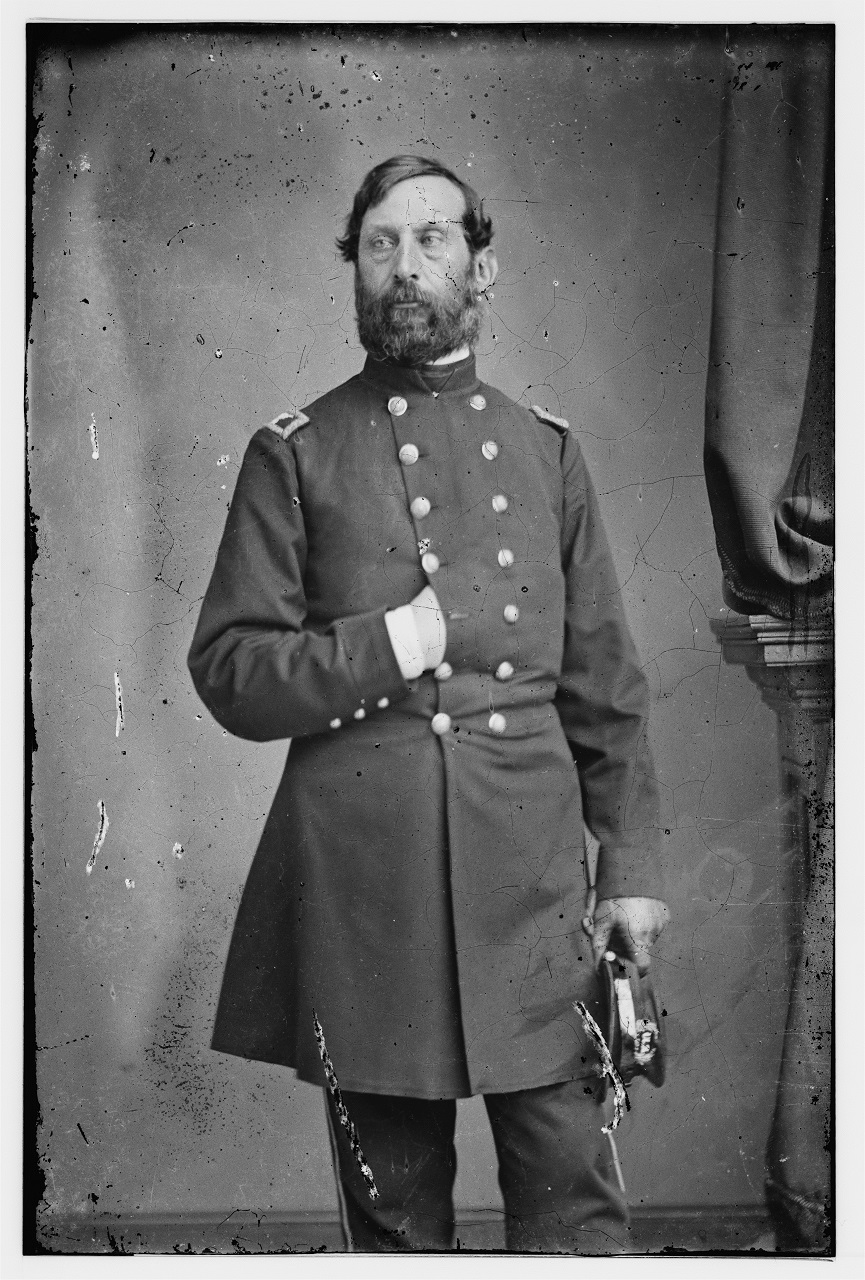
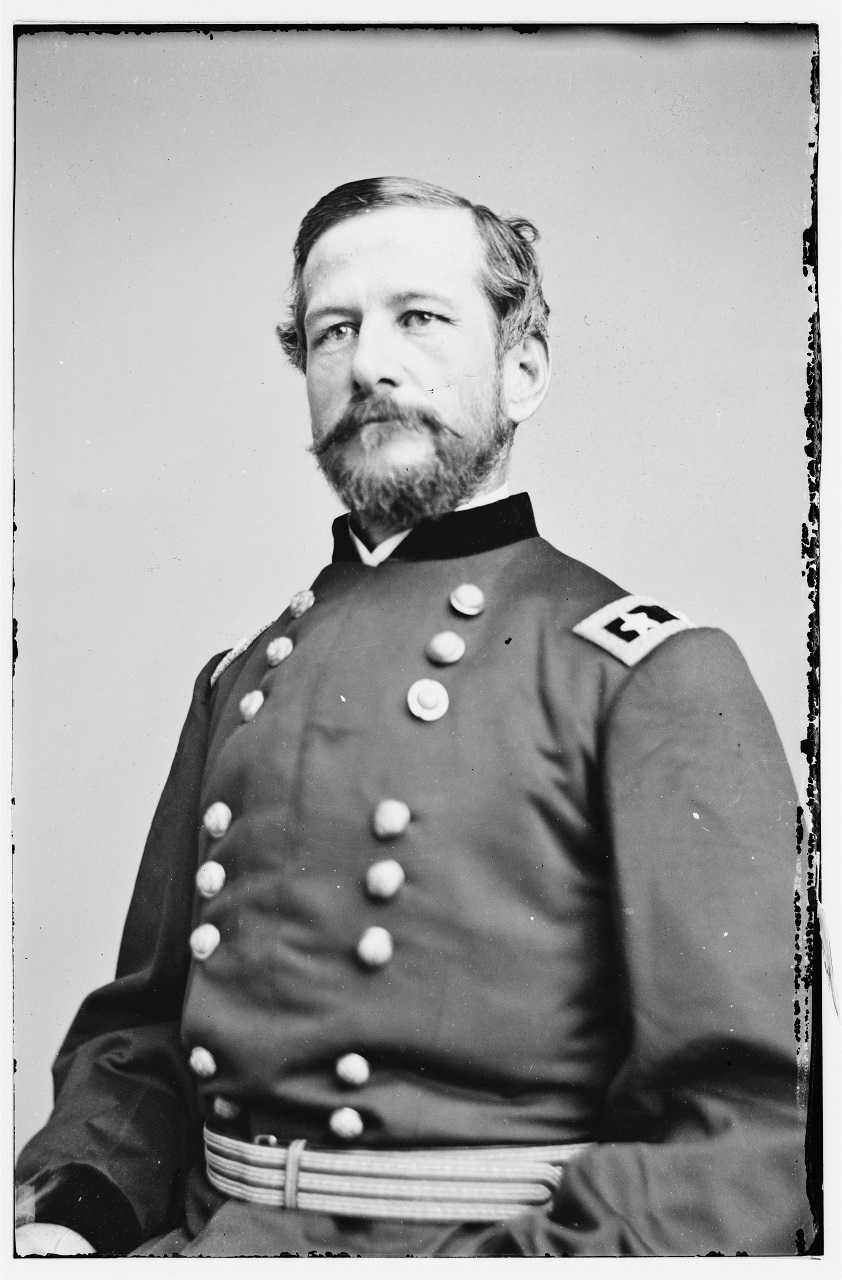
The Army of the Potomac's head of artillery, Henry Hunt. He said he would have known if Meade had been planning a retreat from Gettysburg (Library of Congress).

The Army of the Potomac’s head of artillery, Henry Hunt. He said he would have known if Meade had been planning a retreat from Gettysburg (Library of Congress).

Henry Hunt, the Army of the Potomac’s head of artillery, was one witness who testified in Meade’s favor for the Joint Committee on the Conduct of the War. Since moving his ammunition trains was an important logistical consideration when moving the army, Hunt said he would certainly have known if Meade was planning a retreat from Gettysburg. Hunt had also met with Daniel Sickles at Gettysburg on July 2 before that III Corps commander moved his men forward. Sickles had told Hunt he wanted to move out of the general depression along the Union line where Cemetery Ridge ceased being a ridge, and take a position on the higher ground alongside the Emmitsburg Road. He had been especially concerned about a peach orchard that would offer Confederate artillery an excellent position to wreak havoc on the Union line. Hunt had agreed that the forward line had some advantages but felt it also had some serious drawbacks. Then Hunt had heard firing from the direction of Cemetery Hill and prepared to ride off and investigate. Sickles had asked him if he should move his troops forward. “Not on my authority; I will report to General Meade for instructions,” replied Hunt. He found Meade and told him that Sickles’s proposed line had favorable offensive possibilities but that he would not recommend it. Sickles had moved forward without permission.

David Birney had been one of Sickles’ division commanders at Gettysburg and took corps command after Sickles was wounded. He had no love for Meade and sought to see him replaced by either Joe Hooker or, even better, Dan Sickles.

General Grant returned yesterday, and I have seen him to-day. Nothing new or important has transpired.

General Hunt has been up to Washington and before the committee. He says, after questioning him about the famous order of July 2, and his telling them he never heard of it, and from his position and relations with me would certainly have heard of it, they went to work and in the most pettifogging way, by a cross-examination, tried to get him to admit such an order might have been issued without his knowing anything about it. This, after my testimony, and that of Warren, Hancock, Gibbon and Hunt, evidently proves they are determined to convict me, in spite of testimony, and that Butterfield’s perjury is to outweigh the testimony of all others. I suppose you have seen the last effusion of Historicus. There is no doubt now about the author, as he quotes a private letter from [David Bell] Birney, which could not have been written to any one but Sickles. The best joke is that Barnes, it is said, has a letter from Birney, denying that he ever made any statements of the kind quoted in his letter to Historicus. Is it not too bad that one’s reputation should be in the hands of such men?

Meade’s correspondence taken from The Life and Letters of George Gordon Meade, Major-General United States Army, Vol. 2, (New York: Charles Scribner’s Sons, 1913), pp. 187-8. Available via Google Books.

Pure Inventions (April 4, 1864)

Ulysses S. Grant, in a print based on an illustration by Thomas Nast (Library of Congress).

Ulysses S. Grant, in a print based on an illustration by Thomas Nast (Library of Congress).

George Meade was never a fan of the press and here he vents a bit about the false stories being told about Ulysses S. Grant.

If you believe all you see in the papers about Grant, you will be greatly deceived. All that I have seen are pure inventions. I mean such stories as his being opposed to reviews, balls, etc., having given orders to stop them; of inviting soldiers into his car; of announcing his displeasure at the luxury of the officers of the Army of the Potomac, that all he wanted was soldiers’ fare, pork and beans; of the enthusiasm with which he is received by the soldiers, etc., etc. All these are humbugs, and known to the writers to be without foundation, but are persistently put forth for some purpose unknown. When he first came down he said he wished to keep out of Washington as much as possible, and it was his intention while in this part of the country to remain with my army, and he asked me where he could find a good house for his headquarters. I told him his only chance was either in Warrenton or Culpeper; that the former was rather out of the way, and that I thought he could readily get one in the latter place, which he did; whereupon the newspapers announced him as establishing his headquarters eight miles nearer the enemy than even I did. Not content with puffing him, they must have a fling at me. Grant is very much annoyed at the foolish way they are mentioning his name; but it is a matter he cannot very well notice. As I have before told you, he is very well disposed towards me, and has talked very freely and properly about my particular friends Hooker, Sickles and Butterfield.

Meade’s correspondence taken from The Life and Letters of George Gordon Meade, Major-General United States Army, Vol. 2, (New York: Charles Scribner’s Sons, 1913), p. 187. Available via Google Books.
Before the Committee (April 2, 1864)

The United States Capitol Building in July 1863 (Library of Congress).

The United States Capitol Building in July 1863 (Library of Congress).

Meade continues to chew over his difficulties in Washington. For the letter he mentions (and Lincoln’s response), see the correspondence regarding Historicus. Pennie is his son Spencer.

I left Washington this morning, bidding dear Pennie good-bye at the hotel, which he was to leave half an hour after me. He has had a pretty pleasant time, and his visit has been a source of great happiness to me.

I enclose you a letter I addressed the Department, with an autograph reply from the President. I feel quite sure the President meant to be very kind and complimentary in paying me the distinguished honor of writing a reply in his own hand, and under this conviction I am bound to be satisfied. You will perceive, however, that the main point of my request is avoided, namely, my desire that the letter of Historicus should be submitted, with my letter, to General Sickles, and if he acknowledged or endorsed it, then I wished a court of inquiry, not otherwise. However, Mr. Stanton told me the true reason, which was that it was concluded submitting the letter to Sickles was only playing into his hands; that a court of inquiry, if called at my request, although it might exonerate me, yet it would not necessarily criminate him; and that, on the whole, it was deemed best not to take any action. [Daniel] Butterfield, I hear, was very bitter in his testimony, and made wonderful revelations. I went before the committee yesterday and replied only to his assertion that I instructed him to draw up an order to retreat. This I emphatically denied; also denied any knowledge of his having drawn up such an order; presented documentary evidence to show that, if I had any such idea, that my orders and despatches were contradictory, and referred to numerous officers who ought to have and would have known if I entertained any idea of the kind.

Michigan's Senator Zachariah Chandler. (National Archives.)

Michigan’s Senator Zachariah Chandler. (National Archives.)

I find I have three warm friends on the committee—[Moses] Odell of New York, [Daniel] Gooch of Massachusetts, and [Benjamin] Harding of Oregon. It is believed [Bnjamin] Wade, of Ohio, is favorably inclined. If either he or one of the others should prove so, it would make a majority in my favor. Old Zach Chandler is my bitterest foe and will show me no quarter. While going up to Washington I had a long and satisfactory talk with Grant, who has expressed himself and acted towards me in the most friendly manner. Among other things he said he heard Horace Greeley had been in Washington, demanding my removal, and that [George] Thomas be brought here. Grant said, if he saw Greeley he should tell him that when he wanted the advice of a political editor in selecting generals, he would call on him. The President, Secretary, indeed every one I met, were civil and affable to me.

Meade’s correspondence taken from The Life and Letters of George Gordon Meade, Major-General United States Army, Vol. 2, (New York: Charles Scribner’s Sons, 1913), pp. 186-7. Available via Google Books.

A Strong Denial (April 1, 1864)

Daniel Butterfield has one of the most elaborate tombs in the Military Academy at West Point's cemetery. Unlike Meade, Butterfield did not go to school here (Tom Huntington photo).

Daniel Butterfield has one of the most elaborate tombs in the Military Academy at West Point’s cemetery. Unlike Meade, Butterfield did not go to school here (Tom Huntington photo).

Meade’s troubles in Washington continue, as he testifies before the Joint Committee on the Conduct of the War about Daniel Butterfield’s accusations that Meade had asked him to prepare orders for the retreat of the army from Gettysburg. While Meade was willing to admit he may have asked Butterfield to familiarize himself with the local roads in case a retreat became necessary, he strongly denied that he had anything else in mind. He vehemently refuted Butterfield’s implications that he had planned to retreat from Gettysburg. “I utterly deny, under the full solemnity and sanctity of my oath, and in the firm conviction that the day will come when the secrets of all men shall be made known—I utterly deny every having intended or thought, for one instant, to withdraw that army, unless the military contingencies which the future should develop during the course of the day might render it a matter of necessity that the army should be withdrawn,” he said.

I came up yesterday with Grant, am going to-day before the committee to answer Dan Butterfield’s falsehoods. Shall return tomorrow. I am all right, and every one is most civil to me. I will write more fully on my return.

Meade’s correspondence taken from The Life and Letters of George Gordon Meade, Major-General United States Army, Vol. 2, (New York: Charles Scribner’s Sons, 1913), p. 186. Available via Google Books.
Gettysburg in the Rain

meade statue

Meade's display in the Gettysburg visitor center museum (Tom Huntington).

Meade’s display in the Gettysburg visitor center museum (Tom Huntington).

It was gray and drizzly yesterday but my wife, Beth Ann, and I decided to head down to Gettysburg anyway. It was not a day for hiking around the battlefield, so we stuck to the visitor center instead. Beth Ann had never been through the new museum and Cyclorama and I had not had a chance to see the temporary “Treasures of the Civil War” exhibit. Despite the weather we found the parking lot at the visitor center to be pretty full, and plenty of people inside (although it wasn’t nearly as crowded as it was in July). I checked the bookstore to make sure they had plenty of copies of Searching for George Gordon Meade and Guide to Gettysburg Battlefield Monuments on hand. (They did.) Then we watched the movie and took in the Cyclorama program.

I’m still blown away by the Cyclorama. It remains an impressive achievement, even in this era of CGI. The level of detail in the painting is magnificent. We spotted Meade off in the distance and one of the staff members on hand pointed out John Gibbon, Winfield Scott Hancock, Alexander Webb, and other generals. I was not convinced about the identify of Henry Hunt, though, because the figure indicated did not have Hunt’s beard–but what do I know? The man also showed us the figure of Abraham Lincoln that artist Paul Philippoteaux had inserted into his huge canvas. We all know that Lincoln wasn’t really on the battlefield (if memory serves, he was busy fighting a trainload of vampires at the time) but Philippoteaux wanted to include the late president as a symbolic gesture.

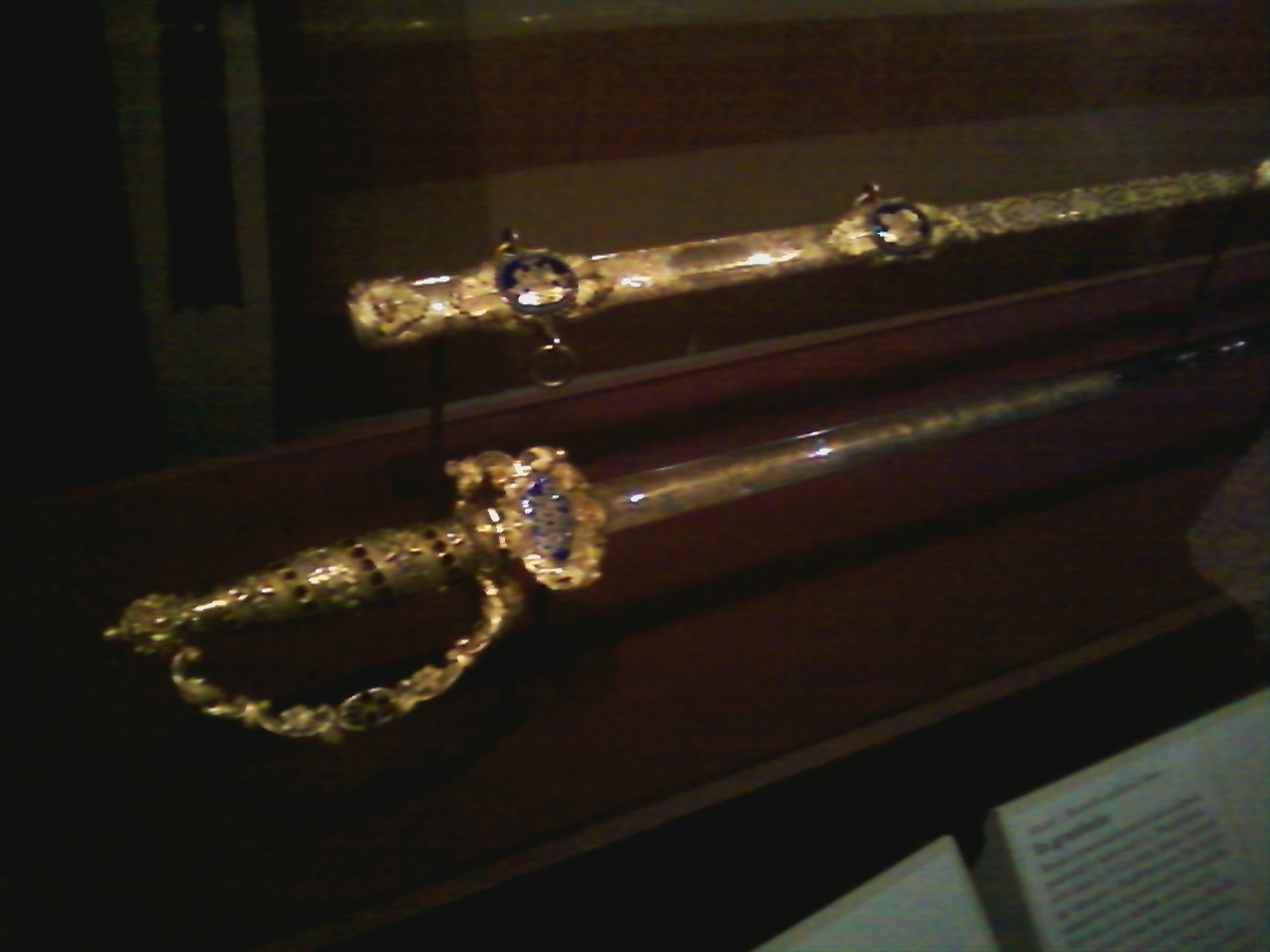
Then it was on through the museum and finally to the “Treasures” exhibit. I had wanted to see this small display for some time because it includes a bunch of Meade artifacts, including his glasses, boots, hat, and frock coat. It also had the gorgeous, jewel encrusted sword that the Pennsylvania Reserves had presented to him in August 1863. It was a beautiful object, indeed, though I had to agree with Meade’s assessment that “It seems a pity, though, to waste so much money on an article that from its great value is actually rendered useless.”

Meade's presentation sword (Tom Huntington).

Meade’s presentation sword (Tom Huntington).

After some beers at the Reliance Mine Saloon and dinner at Gettysburg Eddie’s, it was time to head home through a driving rain. All in all, not a bad way to spend a day.

The general and his glasses (Tom Huntington).

The general and his glasses (Tom Huntington).

The Return of Lyman (March 30, 1864)

Theodore Lyman, George G. Meade’s observant aide, has been on leave in Boston, depriving us of his accounts of life in the Army of the Potomac for much of March 1864. He returns to find a transformed army, with several of its top generals transferred elsewhere.

The heavy artillery regiments he mentions will receive a baptism in blood soon enough.

General George Sykes (Library of Congress photo).

General George Sykes (Library of Congress photo).

I am pretty well, I thank you, and not so blue as when I came back the other time, perhaps because the generals are here and it is not so utterly triste. However, I am fain to say I draw invidious comparisons between it and home, mais that helps nothing. There have been marvellous changes within these three weeks. Generals Sykes, Newton, French, and Pleasonton are ordered off. I do feel sorry for Sykes, an excellent soldier, always sure to do his duty, and with this army for a long time. I fear they displaced him at Washington because they disliked his rough manners. General Pleasonton was always very civil to me and I am sorry therefore to see him go. I have not yet got it clearly in my head how the corps have been shifted about, but I suppose I shall in a few days. . . .

The latest joke is the heavy sell that has been practised on some regiments of “Heavy Artillery,” which had reenlisted and had been sent home to recruit. Now these gentry, having always been in fortifications, took it for granted they should there continue; consequently the patriotic rush of recruits (getting a big bounty) was most gratifying; one regiment swelled to 1900; another to 2200, etc., etc. Bon! Then they returned to the forts round Washington, with the slight difference that the cars kept on, till they got to Brandy Station; and now these mammoth legions are enjoying the best of air under shelter tents! A favorite salutation now is, “How are you, Heavy Artillery?” For Chief of Cavalry we are to have a General Sheridan, from the West. He is, I believe, on his way. If he is an able officer, he will find no difficulty in pushing along this arm, several degrees. . . .

Theodore Lyman’s letter is from Meade’s Headquarters, 1863-1865: Letters of Colonel Theodore Lyman from the Wilderness to Appomattox, pp 80-1. Edited by George R. Agassiz. Boston, Massachusetts Historical Society, 1922. Available via Google Books.
Father and Son (March 29, 1864)

Alfred Waud sketched the Union signal position that Meade and his son saw on Pony Mountain (Library of Congress).

Alfred Waud sketched the Union signal position that Meade and his son saw on Pony Mountain (Library of Congress).

George Meade continues to enjoy his time with son Spencer.

Of the officers he mentions in this letter, George Sykes will head west to take command of the Department of Kansas. John Newton, whom Meade had assigned to command of the I Corps over Abner Doubleday at Gettysburg, will command a division in William Sherman’s army. William French’s days of combat are over; he will serve as an administrator for the rest of the war. Why Meade fought to retain him after French’s failures at Mine Run is a bit of a mystery. Alfred Pleasonton will also head west to command cavalry in the Department of the Missouri.

In Washington, Daniel Buttefield spreads the story that Meade planned to retreat from Gettysburg.

Spencer and the Whipple boys continue to enjoy themselves. Yesterday was a fine day, and they rode over with me to Hancock’s, some five miles. We then rode to Culpeper Court House, five miles, where I met General Grant, just from Washington. After which we returned to headquarters, a distance of six miles, making in all sixteen miles for the day’s riding. En route the boys ascended Pony Mountain, a hill of some five hundred feet elevation, near Culpeper, on which we have a signal station and a fine telescope, and from whence you have a good view of the country, the rebel lines, camps, etc. At night Pennie was pretty well fatigued. But this morning he was up bright and early, and started with me, before eight o’clock, to go to Culpeper, where General Grant reviewed two divisions of infantry, and one of cavalry. It commenced to rain, however, during the review, which curtailed the ceremonies, and after spending an hour with Grant, we returned home in the rain. I borrowed an India rubber poncho for Pennie, so that he came back dry, but on the way his horse, and Willie Whipple’s, became excited and started off with them at full speed. The boys, however, kept their seats beautifully till George and an orderly headed off the horses and stopped them.

Grant continues very affable and quite confidential. He laughs at the statement in the papers of his remarks about balls, etc., and says he will be happy to attend any innocent amusement we may get up, he including among these horse races, of which he is very fond.

I join with you in the regret expressed at the relief of Sykes. I tried very hard to retain Sykes, Newton, and even French, as division commanders, but without avail. I had very hard work to retain Sedgwick. As to Pleasanton, his being relieved was entirely the work of Grant and Stanton.

I hear Butterfield has been swearing terribly against me. I shall go up day after to-morrow to meet his charges.

It is storming now violently.

Meade’s correspondence taken from The Life and Letters of George Gordon Meade, Major-General United States Army, Vol. 2, (New York: Charles Scribner’s Sons, 1913), p. 185. Available via Google Books.

Easter (March 27, 1864)

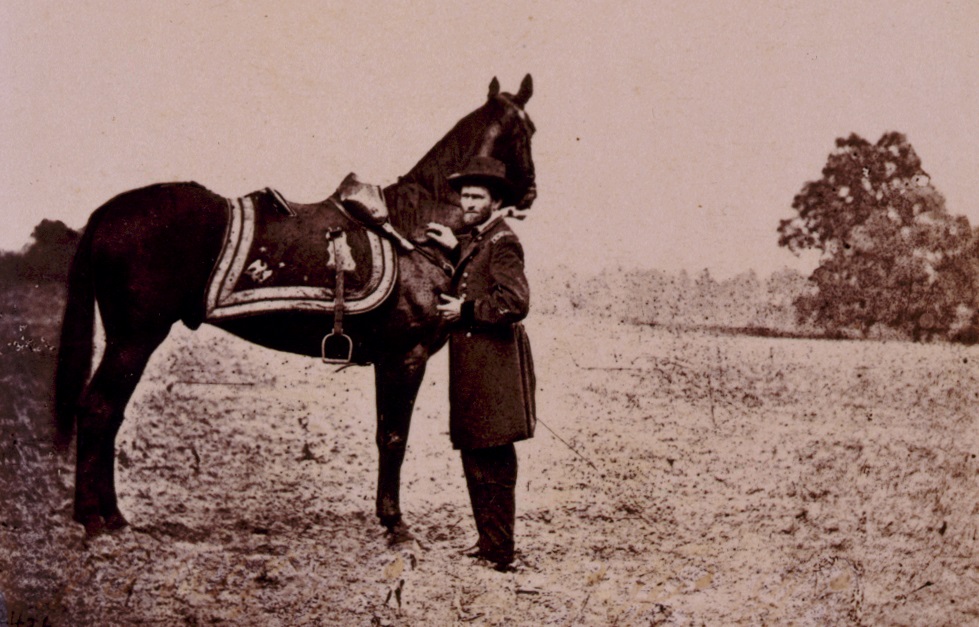
Ulysses S. Grant with his horse Cincinnati (Library of Congress).

Ulysses S. Grant with his horse Cincinnati (Library of Congress).

In 1864 Easter Sunday fell on March 27, explaining the presence of Bishop H. B. Whipple with the Army of the Potomac. In 1872 Whipple will give the address at George Meade’s funeral in Philadelphia. Meade’s Easter letter strikes a sad note regarding the health of John Sergeant Meade. From this point forward many of Meade’s letters contain anguished passages about his oldest son but when it came time to publish them in Meade’s Life and Letters, his editors (son George and grandson) cut much of that overly personal material.

It would be interesting to learn what Mrs. Meade had to say about Grant. Most likely she resented the way the new general-in-chief was overshadowing her husband.

Your letter of the 25th inst. arrived this afternoon. I am very much distressed to hear of Sergeant’s continued weakness. As to my going home, that is utterly out of the question. You must not expect to see me till next winter, unless, as before, I am brought home on a litter. Whatever occurs, I shall not voluntarily leave the field.

We have had most interesting services to-day by Bishop Whipple, who administered the Holy Communion to quite a number of officers and soldiers, hastily collected from the staff and the detachments on duty at these headquarters. We had afternoon services, and afterwards the bishop and his assistant, with General Seth Williams, dined with me. The bishop brought down with him a magnificent bouquet of flowers, with which our rude altar was adorned. The bishop is a most interesting man, about forty years of age, but full of life and energy. He preached two most appropriate and impressive discourses, well adapted to all classes of his hearers.

General Grant went up to Washington to-day, expecting to return to-morrow. You do not do Grant justice, and I am sorry to see it. You do not make a distinction between his own acts and those forced on him by the Government, Congress and public opinion. If left to himself, I have no doubt Grant would have let me alone; but placed in the position he holds, and with the expectations formed of him, if operations on a great scale are to be carried on here, he could not well have kept aloof. As yet he has indicated no purpose to interfere with me; on the contrary, acts promptly on all my suggestions, and seems desirous of making his stay here only the means of strengthening and increasing my forces. God knows I shall hail his advent with delight if it results in carrying on operations in the manner I have always desired they should be carried on. Cheerfully will I give him all credit if he can bring the war to a close.

Meade’s correspondence taken from The Life and Letters of George Gordon Meade, Major-General United States Army, Vol. 2, (New York: Charles Scribner’s Sons, 1913), p. 184-5. Available via Google Books.

Sons and Generals (March 26, 1864)

Meade wished this quickie biography had devoted more space to his engineering work (Archives.com).

Meade wished this quickie biography had devoted more space to his engineering work (Archives.com).

In his letter of March 26, Meade mentions two of his sons, Spencer (Pennie) and John Sergeant (Sargie). John Sergeant was Meade’s oldest son, born on November 4, 1841. Spencer, his third son, was born on January 19, 1850. The second son, George, was serving on Meade’s staff. Poor John Sergeant was already ill with the tuberculosis that will kill him in less than a year.

The letter about a court of inquiry that Meade mentions is the one he wrote in response to the article by Historicus, which he believed was either written or dictated by Dan Sickles. The Life and Public Services of General Meade was one of several quickie biographies of Union generals published by T.R. Peterson & Brothers of Philadelphia.

Pennie arrived yesterday, looking very well and quite delighted with his journey and at getting to camp. Willie and Davy Whipple came with him. Unfortunately they came in a storm of rain, and although to-day has been blustering and raw, they have been out on horseback, commencing their sight seeing. This evening they have gone over to one of the neighboring camps, where the soldiers are going to have a negro minstrel exhibition.

The weather has been so unpropitious that no inspection has been practicable by General Grant. I spent several hours with him yesterday. He appears very friendly, and at once adopts all my suggestions. I believe Grant is honest and fair, and I have no doubt he will give me full credit for anything I may do, and if I don’t deserve any, I don’t desire it.

I think I wrote you I had a long and friendly letter from Mr. Harding, in which he said he had seen Mr. Stanton, who told him of my letter in reference to Sickles, asking for a court of inquiry, which Mr. Stanton said he should not grant, for the reason that he did not deem one necessary; that I had been made a brigadier general in the regular army and thanked by Congress for my services at Gettysburg, and that no attention should be paid to such a person as Sickles. Mr. Stanton told Mr. Harding he thought I was unnecessarily nervous about these attacks, and that I ought not to give them a thought. I, however, think differently, and do not believe in the policy of remaining quiet, under the false and slanderous charges of even the most insignificant.

Tell Sargie two copies of the famous “Life and Services of Major General Meade” have been sent me by the publishers. I had no idea my services would take up so much printing matter. I must confess I think a little more space might be given to my services prior to the Rebellion. I always thought my services in the construction of lighthouses, and subsequently on the Lake Survey, were of considerable importance.

Meade’s correspondence taken from The Life and Letters of George Gordon Meade, Major-General United States Army, Vol. 2, (New York: Charles Scribner’s Sons, 1913), pp. 183-4. Available via Google Books.

Reorganizing (March 24, 1865)

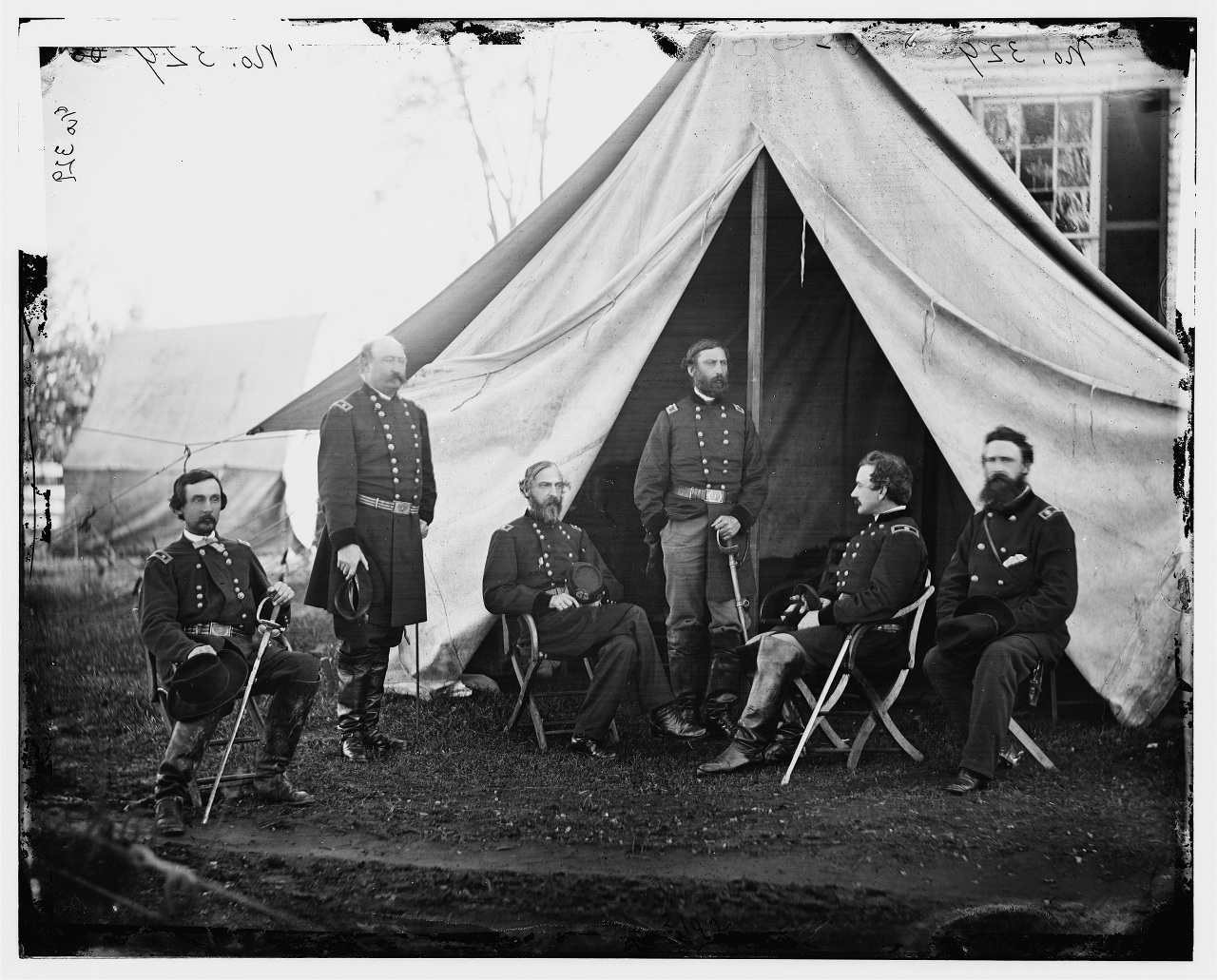
Taken in September 1863 outside Culpeper, this image shows Meade with his corps commanders. From left to right we have Gouverneur Warren, then in command of the II Corps, William French (III Corps), Meade, artillery chief Henry Hunt, chief of staff Andrew Humphreys, and George Skyes (V Corps).

Taken in September 1863 outside Culpeper, this image shows Meade with his corps commanders. From left to right we have Gouverneur Warren, then in command of the II Corps, William French (III Corps), Meade, artillery chief Henry Hunt, chief of staff Andrew Humphreys, and George Skyes (V Corps). Now French and Sykes are out and Warren has command of the V Corps (Library of Congress).

Alfred Pleasonton headed the cavalry corps for the Army of the Potomac (Library of Congress).

Alfred Pleasonton headed the cavalry corps for the Army of the Potomac (Library of Congress).

I have been very busy to-day. The much-talked-of order for reorganizing the Army of the Potomac has at last appeared. Sykes, French and Newton are relieved. Sedgwick, Hancock and Warren command the three corps. This evening an order has arrived relieving General Pleasanton, which, although I did not originate it, yet was, I presume, brought about by my telling the Secretary that the opposition I had hitherto made to his removal I no longer should make. As the Secretary has been desirous of relieving him ever since I have had command, and I have been objecting, he has taken the first chance to remove him as soon as my objections were withdrawn.

Grant arrived to-day. I met him at the depot near my headquarters and accompanied him to Culpeper, where I spent several hours and returned. He was as affable as ever, and seems not at all disposed to interfere with my army in any details.

I hear Butterfield is in Washington, and is going to swear that I told him to prepare an order to retreat, and from what Gibbon writes me, it is evident he did prepare such an order; but I trust by the concurrent testimony of every other officer on the field, the documentary evidence in the shape of orders at different periods of the day, and my own sworn statement, to prove that the preparation of this order was not authorized by me, and that it was due to Butterfield’s own fears. I understand the Secretary is very indignant at his coming to Washington, and has ordered him back to his post.

Get the last number of the Spirit of the Times, in which there is a scathing article on Grant, Sherman, McPherson, Schofield and myself, and lauding, as usual, Joe Hooker.

Meade’s correspondence taken from The Life and Letters of George Gordon Meade, Major-General United States Army, Vol. 2, (New York: Charles Scribner’s Sons, 1913), pp. 182-3. Available via Google Books.