Busy (September 19, 1863)

John Minor Botts and family pose for a photograph on the porch of their house in Culpeper. Meade and his staff were frequent visitors here (Library of Congress).

John Minor Botts and family pose for a photograph on the porch of their house in Culpeper. Meade and his staff were frequent visitors here (Library of Congress).

Meade mentions John Minor Botts in his letter of September 19, 1863. Theodore Lyman talks about Botts in his journal entry from the same day. Lyman said Botts was “a fat man, with a mild blue eye, and his clothing seemed to show the world had gone hard with him.” In fact, the world had gone somewhat hard with Botts, who was an island of Unionism on a sea of secession. A Virginia native, Botts was a Whig politician and former U.S. Congressman and had been briefly jailed by the Confederate authorities because of his staunch pro-Union position.

In his memoir, The Great Rebellion: Its Secret History, Rise, Progress, and Disastrous Failure (1866, and available via Google Books), Botts describes how he bought his house in Culpeper and the tribulations he suffered there. “I purchased in the fall of 1862, and moved to the county on the 8th of January, 1863; but I had hardly gotten comfortably warm in the house before General J. E. B. Stuart came in with his whole cavalry force, took possession of every part of my premises (of 2200 acres), except my house, yard, and garden, turned his horses loose to graze in every field, to the exclusion of my own stock, which was left at the mercy of his highly-incensed command, without any effort or desire on his part to restrain them. They killed my hogs, drove off portions of my cattle with their own whenever they moved, and stole from me $50,000 worth of horses, at Confederate prices, and in Confederate money. Daily and hourly I was subjected to all sorts of vexatious annoyances. I had neither peace nor rest, day nor night, from the time this cavalry force came upon me until the arrival of the Federal army under General Meade in the month of September, except during the battles of Chancellorsville and Gettysburg, from both of which they came immediately back to take care of me.

“General Meade moved into Culpepper on the 12th of September, 1863, and General Stuart moved back at double-quick across the Rapidan.”

Meade saw a fair amount of Botts until the army moved out on the Overland Campaign in May 1864. On one occasion Lyman said this about the Virginian: “Botts is a ready witted, clear headed man, and entertaining to hear.”

The Beckham Meade mentions is Robert F. Beckham, who had served under him on the survey of Lake Superior just before the war. Beckham threw in his lot with the Confederacy and commanded a battery of J.E.B. Stuart’s horse artillery. The Pendleton he mentions is probably Nathanael Greene Pendleton of Ohio, formerly a Whig Congressman. Meade’s wife’s father, John Sergeant, had also been a Whig politician. Pendleton’s son was Ohio Congressman George H. Pendleton, an anti-war Democrat who ran as George McClellan’s vice presidential candidate in the election of 1864.

The Botts family in Culpeper. Theodore Lyman described the Botts daughters as "pleasing, somewhat countryfied young ladies" (Library of Congress).

The Botts family in Culpeper. Theodore Lyman described the Botts daughters as “pleasing, somewhat countryfied young ladies” (Library of Congress).

At present I am very busy. I made the advance I did under the belief that Lee had sent away a large portion of his army, and would perhaps, if threatened, retire to Richmond. I find, however, he evinces no disposition to do so, but is, on the contrary, posted in a very strong position behind the Rapidan, where he can hold me in check, and render it very difficult to pierce his line or turn his position. Under these circumstances I have referred the question to Washington.

John Minor Botts (Library of Congress).

John Minor Botts (Library of Congress).

To-day John Minor Botts, who lives in this vicinity, came to see me and told me Beckham had been at his house a few days ago (before we advanced), and spoke in the most enthusiastic terms of me; so that Beckham is not changed. A Mr. Pendleton also, who was in Congress and knew your father, called, and spoke of Mr. Joseph R. Ingersoll, who had been at his house. Both these gentlemen are Union men.

Meade’s correspondence taken from The Life and Letters of George Gordon Meade, Major-General United States Army, Vol. 2, (New York: Charles Scribner’s Sons, 1913), p. 150. Available via Google Books.

September 16, 1863

Meade and his staff pose forphotos at the Wallach House in Culpeper, where the Army of the Potomac established its headquarters (Library of Congress).

Meade and his staff pose for a photo at the Wallach House in Culpeper, where the Army of the Potomac established its headquarters (Library of Congress).

Meade continues to fume over the newspaper article that said he had endorsed Pennsylvania Governor Andrew Gregg Curtin in his speech when he received his presentation sword from the Pennsylvania Reserves. (See the entry for August 31.) He establishes headquarters at Culpeper Court House.

The enclosed correspondence will explain itself. The day I received Mr. Young’s letter, there was visiting at my camp the Hon. John Covode, of Pennsylvania, and Colonel Puleston, a friend of Governor Curtin. Both these gentlemen were present at the presentation and heard my remarks; both are ardent Republicans, yet they admitted they did not hear me make any reference to election day; on the contrary, admired the skill with which I praised Curtin without alluding to his political position. I do not know what Mr. Young will say or do, but it is his fault, or rather that of his reporter, and not mine, if he has been placed in a false position.

The enemy seem disposed to keep quiet the other side of the Rapidan, and to let me hold the country between that river and the Rappahannock, which I took from them on Sunday, including Culpeper Court House. I have now got as far as Pope was last year when he fought the battle of Cedar Mountain. I trust I will have better luck than he had. I am now waiting to know what they in Washington want done. Lee has certainly sent away a third of his army, but he has enough left to bother me in advancing, and though I have no doubt I can make him fall back, yet my force is insufficient to take advantage of his retiring, as I could not follow him to the fortifications of Richmond with the small army I have.

At the time Mr. Covode was here, he was accompanied by a Judge Carter, of Ohio, recently appointed Chief Judge of the new court created in the District of Columbia by the last Congress. These gentlemen spent the night with me, and I had a long talk on national affairs, and I saw what I was before pretty well convinced of, that there was not only little prospect of any adjustment of our civil war, but apparently no idea of how it was to be carried on. The draft is confessedly a failure. Instead of three hundred thousand men, it will not produce over twenty-five thousand, and they mostly worthless. There is no volunteering, and this time next year the whole of this army of veterans goes out of service, and no visible source of resupply. And yet no one seems to realize this state of affairs, but talks of going to war with England, France, and the rest of the world, as if our power was illimitable. Well, Heaven will doubtless in good time bring all things right.

Meade’s correspondence taken from The Life and Letters of George Gordon Meade, Major-General United States Army, Vol. 2, (New York: Charles Scribner’s Sons, 1913), p. 149. Available via Google Books.

Cavalry Operations (September 13, 1863)

Alfred Pleasonton headed the cavalry corps for the Army of the Potomac (Library of Congress).

Alfred Pleasonton led the cavalry corps for the Army of the Potomac (Library of Congress).

On September 13 Meade wrote home about sending cavalry head Alfred Pleasonton on an expedition to determine if Robert E. Lee’s army was on the move. He attached Theodore Lyman to Pleasonton’s staff so Lyman could get some experience in the field. Lyman wrote about his adventures on September 17 but I thought I would include that letter here. It demonstrates Lyman’s great value as an observer. He provides a wonderful perspective of a cavalry operation and a particularly vivid portrait of George Armstrong Custer.

A few days ago some scouts I had sent across the river returned and reported that Lee’s army was moving back to Richmond. They asserted positively that that portion near Fredericksburg had actually gone. I did not and do not much rely on their story, though I could not doubt but that a portion of his force had been sent away for some purpose either to re-inforce Beauregard at Charleston or Bragg in the South West.

It was necessary, however, that I should make some effort to ascertain what was going on, so to-day I sent Pleasanton, with all the cavalry, supported by Warren’s Corps (Second), to see what they could find out. Pleasanton crossed the river early, and immediately was engaged with the enemy’s cavalry, and has been fighting them all day. The result is that we have driven them from Culpeper Court House, and three miles beyond, have captured three guns and over fifty prisoners, and Warren is now in Culpeper, some nine miles in front of the Rappahannock. Still the great question as to whether Lee is withdrawing is unsettled, though Pleasanton sends word that all the information that he is able to pick up goes to support the rumor that he is falling back. Should it prove true, I suppose some movement on my part will be necessary; but what, I can’t say, as with my limited force I don’t see how I can advance much farther, and there is no probability of their permitting me to go to the James River, as it uncovers Washington.

Here’s Lyman’s take:

Having again got “home,” I find leisure and paper to write you a rather longer letter than you have got of late. Perhaps you would like to hear about our little cavalry performance. Of course there was not hard fighting, and a hundred or so will cover all the killed and wounded; nevertheless, as the whole was new to me and as the operations covered a good deal of country, they were interesting and instructive both. The whole Cavalry Corps (a good many thousand men) had been massed the day before, and had orders to cross the Rappahannock early next morning. I was to ride down in time to join General Pleasonton. The distance to the river is some eight miles, so I was up at 4.30 — rain pitchforks! dark as a box — thunder and lightning — everything but “enter three witches.” However, in my india-rubber coat and much-insulted large boots, much of the water could be kept out, and, by the time we were saddled and had had some tea, behold it stopped raining and away I went, quite thankful, and with a tail of six orderlies and a corporal. The ground was very wet, and we went slipping and sliding, in the red mud, till we drew near the river, when, behold, the whole country alive with train-waggons, columns of infantry, batteries, and ambulances; the latter with the stretchers fastened outside disagreeably suggestive of casualties. The rear of the cavalry had just crossed, when I got there; and General Pleasonton was on the opposite bank, where I presently joined him, crossing by the railroad bridge. He had with him a good many aides, besides orderlies and escort. Just at this point we held the southern, as well as the northern, bank and the pickets were some two miles out. The country is rolling, but not quite hilly; there are very large open fields (now filled mostly with weeds) and again, considerable woods. In these last our cavalry were hidden, so that you would have said there were not 300 of them all together. This I found, presently, was a great point, to conceal men, behind woods and ridges, as much as possible. We all now rode to our extreme picket line and took a view; and there, sure enough, was Mr. Reb with his picket line, about one third of a mile off. We could see a chain of mounted videttes, and, behind these, on a little knoll, a picket reserve, with their horses tied to trees. We waited some time to give a chance to General Gregg who had crossed on our right, and General Kilpatrick on our left, to get into the proper positions. Then General Pleasonton ordered an advance, and, in a few moments, quite as if by magic, the open country was alive with horsemen; first came columns of skirmishers who immediately deployed and went forward, at a brisk trot, or canter, making a connected line, as far as the eye could reach, right and left. Then followed the supports, in close order, and with and behind them came the field batteries, all trooping along as fast as they could scramble. It was now between eight and nine and the sun was bright, so that the whole spectacle was, to a greenhorn like me, one of the most picturesque possible. Not the least remarkable feature was the coolness of Mr. Reb under these trying circumstances. Their videttes stared a few moments, apparently without much curiosity, then turned tail and moved off, first at a walk, then at a trot, and finally disappeared over the ridge at a gallop. We rode on about a mile, keeping a little behind the skirmishers; General Buford and his Staff being just ahead and to the left. To the left we could hear cannon, General Kilpatrick having got into a skirmish there. Presently I saw a puff of smoke, on a ridge in front of us, and then hm-m-why-z-z-z, bang! went the shell, right by General Buford’s Staff, taking the leg off a poor orderly. Much pleased with their good shot, they proceeded to give our Staff a taste; and missiles of various kinds (but all disagreeable) began to skip and buzz round us. It was to me extraordinary to see the precision with which they fired. All the shot flew near us, and, while I had gone forward to the crest of the ridge to get a better view, a shell exploded directly in the midst of the Staff, wounding an orderly and very neatly shaving a patch of hair off the horse of Captain Hutchins. However, two could play at that game, and Captain Graham soon made the obnoxious guns limber up and depart to the next ridge, where they would again open and stay as long as they could. By the time we had got a few miles further, the enemy had brought forward all his cavalry and began firing with rifles, to which our men replied with their carbines.
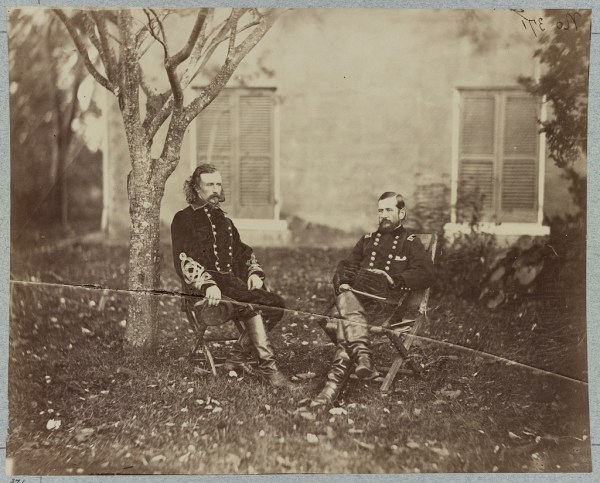
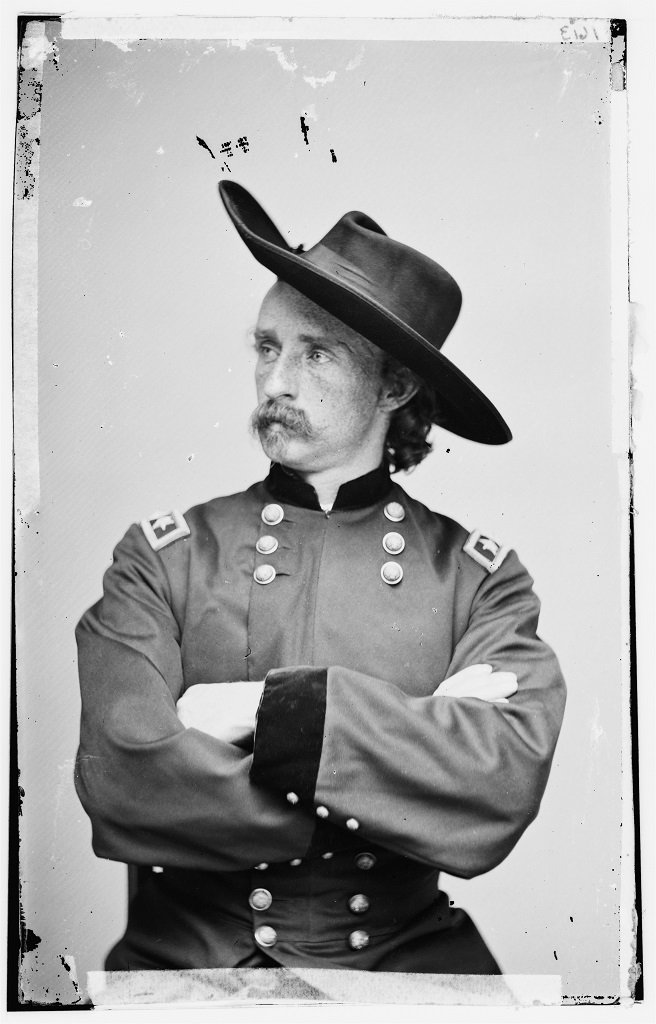
George Armstrong Custer and Alfred Pleasonton, photographed in Warrenton, VA, in October 1863 (Library of Congress).

George Armstrong Custer and Alfred Pleasonton, photographed in Warrenton, VA, in October 1863 (Library of Congress).

We now entered a wooded tract, interspersed with mudholes and springy ground, and here the enemy made quite a hard stand, for the town of Culpeper lay a couple of miles beyond and they wished to gain time to get off their stores by the railroad. The advanced regiments were therefore dismounted and sent into the woods, while the artillery tried to find some place whence the guns could be used. It was at this place that I first heard the yells, for which the Rebels are noted. They were the other side of a high bank, covered with bushes, and they yelled to keep their spirits up as long as possible. But they were soon driven through the woods and then we came on an open country, in full view of Culpeper. This was a very interesting sight. The hills are, hereabout, quite large, and on the one opposite us stood Culpeper, very prettily situated, the railroad running through the lower part of the town. Just in the outskirts the Rebels had planted two batteries, as a last check, and behind were drawn up their supports of cavalry. Our cavalry were coming out of the woods, on all sides, moving on the town in form of a semi-circle, while the guns were pelting those of the enemy with might and main. Suddenly we were aware of a railroad train slowly leaving the depot, and immediately several guns were turned on it; but it went off, despite the shells that burst over it. Then there suddenly appeared a body of our cavalry, quite on the left of the town, who made a rush, at full speed, on three cannon there stationed, and took the whole of them with their caissons. This was a really handsome charge and was led by General Custer, who had his horse shot under him. This officer is one of the funniest looking beings you ever saw, and looks like a circus rider gone mad! He wears a huzzar jacket and tight trousers, of faded black velvet trimmed with tarnished gold lace. His head is decked with a little, gray felt hat; high boots and gilt spurs complete the costume, which is enhanced by the General’s coiffure, consisting in short, dry, flaxen ringlets! His aspect, though highly amusing, is also pleasing, as he has a very merry blue eye, and a devil-may-care style. His first greeting to General Pleasonton, as he rode up, was: “How are you, fifteen-days’-leave-of-absence? They have spoiled my boots but they didn’t gain much there, for I stole ‘em from a Reb.” And certainly, there was one boot torn by a piece of shell and the leg hurt also, so the warlike ringlets got not only fifteen, but twelve [additional] days’ leave of absence, and have retreated to their native Michigan!

George Armstrong Custer (Library of Congress).

George Armstrong Custer (Library of Congress).

The Rebels now retreated in all haste, and we rode at once in, and found a good many supplies at the depot with a number of rifles and saddles. As we rode up, the building was beset with grinning dragoons, each munching, with great content, a large apple, whereof they found several barrels which had been intended for the comfort of Mr. Stuart’s dashing knights. I was surprised at the good conduct of the gypsy-looking men. They insulted no one, broke nothing, and only took a few green peaches, which, I fancy, amply revenged themselves. Culpeper is a really decent place, with a brick hotel, and a number of good houses, in front of which were little gardens. I send you a rosebud, which I picked as we rode through the town; there were plenty of them, looking rather out of place there, in the midst of muddy batteries and splattered cavalrymen! A queer thing happened in the taking of the three guns. An officer was made prisoner with them, and, as he was marched to the rear, Lieutenant Counselman of our side cried out, “Hullo, Uncle Harry!” “Hullo!” replied the captain uncle. “Is that you? How are you?” And there these two had been unwittingly shelling each other all the morning!

After resting the horses we pushed on to the south, towards what is called Pong Mountain, for you must know that this region is more hilly, and Pong Mountain is about comparable to the Blue Hills (not quite so high, perhaps). . . . We drove the enemy five miles beyond Culpeper, making fifteen miles, in all, and there a halt was ordered and pickets thrown out. Our Headquarters were a wretched house, of two rooms, inhabited by two old women. We gave them one room and took the other ourselves. And now I loomed out! The Staff had, in the way of creature comforts, nothing but sabres and revolvers. It was dark and raining guns, and the Chief-of-Staff had the stomachache! I took from my saddle-bags a candle and lighted the same, prepared tea from my canteen, and produced a loaf of bread and a Bologna sausage, to the astonishment of the old campaigners, who enquired, “Whether I had a pontoon bridge about me?” Then I rolled myself in my coat and took a good night’s sleep on the floor.

The next morning we started for Raccoon Ford, on the Rapidan, five miles distant. The enemy were mostly across and only opposed us with a few skirmishers. As we got in sight of it, the prospect was not cheering. The opposite bank, partly wooded and partly covered with cultivation, rose in steep, high hills, which completely commanded our side of the river. It was a fine sight to see the column splashing along the wood road, lying between fine oak trees; but the fine sight was presently interrupted by a shell, which exploded about 100 yards ahead of me and right among the horses’ legs, without touching me! The General rode into the open field to reconnoitre the position, and I with him, because he wanted my glass; but Mr. Secesh has a sharp eye for gold cords round hats, and, in a minute, wh-n-n-g, fiwp! wh-z-z-z! a solid shot struck just in front of us, and bounced over our heads. The General ordered us to disperse about the field, so as not to make a mark; but, as I rode off, they sent a shell so near me that a facetious officer called out: “I guess they think you’re somebody pretty distinguished, Kun’l.” However, there may be a good deal of cannon shooting, without many hits; in proof of which I will say that we had a brisk fire of artillery from 10.30 to 2.30, together with a sharp spattering of rifles and carbines, and that our loss was five killed and fifteen wounded! Shells do not sound so badly as I expected; nor did I feel as I expected on the occasion. There is a certain sense of discipline and necessity that bears you up; and the only shell I “ducked” was the first one.

After some difficulty we got some guns in position and drove off those opposed. Then General Kilpatrick’s division went to a better ford below, and tried to get over there; but the Rebels opened on him with fourteen cannon and silenced his guns after a hard fire. So we concluded the fords were not practicable for cavalry, which I think might have been apparent from the outset. Whereupon both parties stopped and stared at each other; and we heroes of the Staff went to a house (much better than that of last night) and partook of mutton which, during the day, we had valiantly made the prey of our bow and our spear. On our right General Gregg had driven the enemy beyond Cedar Mountain and nearly to the river, but was there brought up by a heavy force of artillery in position. All day Tuesday we lay doing nothing. I rode over with the General to Cedar Mountain, passing close to the battlefield, and ascended, thus getting a fine view of the Rapidan valley, which is very beautiful and would, in the hands of good farmers, yield a thousandfold. . . . We have taken on our reconnaissance in force about 150 prisoners, three guns, and five caissons. Yesterday the entire army crossed the Rappahannock, and I got orders to return to Headquarters, which I did.

Meade’s correspondence taken from The Life and Letters of George Gordon Meade, Major-General United States Army, Vol. 2, (New York: Charles Scribner’s Sons, 1913), pp. 148-9. Available via Google Books.

Theodore Lyman’s letter is from Meade’s Headquarters, 1863-1865: Letters of Colonel Theodore Lyman from the Wilderness to Appomattox, pp. 14-20. Edited by George R. Agassiz. Boston, Massachusetts Historical Society, 1922. Available via Google Books.

Gifts (September 11, 1863)

Meade and Theodore Lyman both wrote home on September 11 and I include both letters. All was quiet on the eastern theater’s front. Regarding the cigars Meade received, Ulysses S. Grant, too, also began receiving shipments of cigars from admirers following his victories in the west and his attempt to smoke as many of them as possible quite likely led to the cancer that killed him.

Everything remains quiet and in status quo. Humphreys has gone to Philadelphia for a few days to see his wife, who is in the country, and will call to see you, and give you the latest news from camp. I wrote you in my last, of being the recipient of a bouquet from Wisconsin; but since then I have been honored with two very valuable presents. The first is a handsome scarf pin of gold and enamel. It is accompanied with a very flattering note stating it was made in England, and brought over by the donor to be presented in the name of himself and wife, as a tribute of admiration for my great services in saving the country. The note is signed W. H. Schenley, and I think the writer is a Captain Schenley, of the British navy, who many years since married Miss Croghan, of Pittsburgh. Captain Schenley says he intends visiting the army and making my acquaintance.

The second present is five hundred most delicious Havana cigars, sent to me by a Mr. Motley, of New York, whom I accidentally met at the sword presentation to General Sedgwick, and to whom I must have been particularly civil, or in some way made a great impression on him, to induce him to send me five hundred cigars. So you see there is some compensation for the misery we have to suffer.

Here’s Lyman’s letter:

The last two days have been most unusually quiet. I read a little in military books, write a few letters, look over the newspapers a little, talk to the Staff officers, and go to bed early. The conversation of the officers is extremely entertaining, as most of them have been in a good many battles. They say that General Meade is an extremely cool man. At Gettysburg he was in a little wooden house, when the hot fire began. The shells flew very thick and close, and his Staff, who were outside, got under the lee of the house and sat down on the grass. As they sat there, out came General Meade, who, seeing them under such a slender protection against cannon-balls, began to laugh, and said: “That now reminds me of a feller at the Battle of Buena Vista, who, having got behind a wagon, during a severe cannonade, was there found by General Taylor. ‘Wall Gin’ral,’ said he, looking rather sheepish, ‘this ain’t much protection, but it kinder feels as it was.'” As a point to the Chief’s anecdote, a spherical case came through the house at that instant, exploded in their circle and wounded Colonel Dickinson. . . .

The Lydia Leister house at Gettysburg, which Meade used as his headquarters during the battle. Notice the dead horses in the road. Lyman relates a story about Meade here on July 3, 1863 (Library of Congress).

The Lydia Leister house at Gettysburg, which Meade used as his headquarters during the battle. Notice the dead horses in the road. Lyman relates a story about Meade here on July 3, 1863 (Library of Congress).

I walked over and saw the Provost prisoners, the other evening. If you want to see degraded human nature, there was the chance. There was a bough covering, about forty feet square, guarded by sentries, and under it were grouped some fifty of the most miserable and depraved human beings I ever saw—deserters, stray Rebel soldiers, “bushwhackers” and camp-followers. They sleep on the bare ground with such covering as they may have, and get a ration of pork and biscuit every day. This is only a sort of temporary guardhouse, where they are put as they come in. War is a hard thing. This country, just here, was once all fenced in and planted; now there isn’t a rail left and the land is either covered with dried weeds or is turned into a dusty plain by the innumerable trains of horses, mules and waggons.

Meade’s correspondence taken from The Life and Letters of George Gordon Meade, Major-General United States Army, Vol. 2, (New York: Charles Scribner’s Sons, 1913), pp. 147-8. Available via Google Books.

Theodore Lyman’s letter is from Meade’s Headquarters, 1863-1865: Letters of Colonel Theodore Lyman from the Wilderness to Appomattox, pp. 12-13.Edited by George R. Agassiz. Boston, Massachusetts Historical Society, 1922. Available via Google Books.

Visiting the Dead

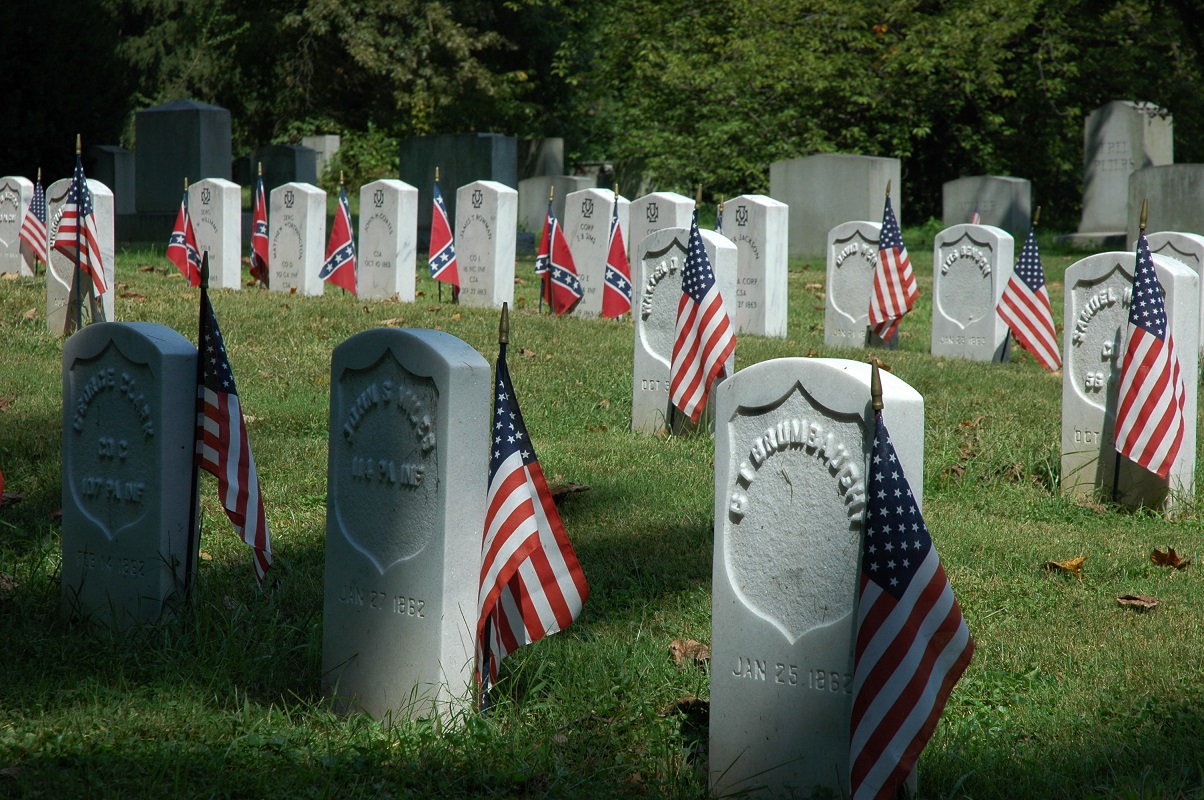
Civil War soldiers, Union and Confederate, are buried in Harrisburg Cemetery.

Civil War soldiers, Union and Confederate, are buried in Harrisburg Cemetery.

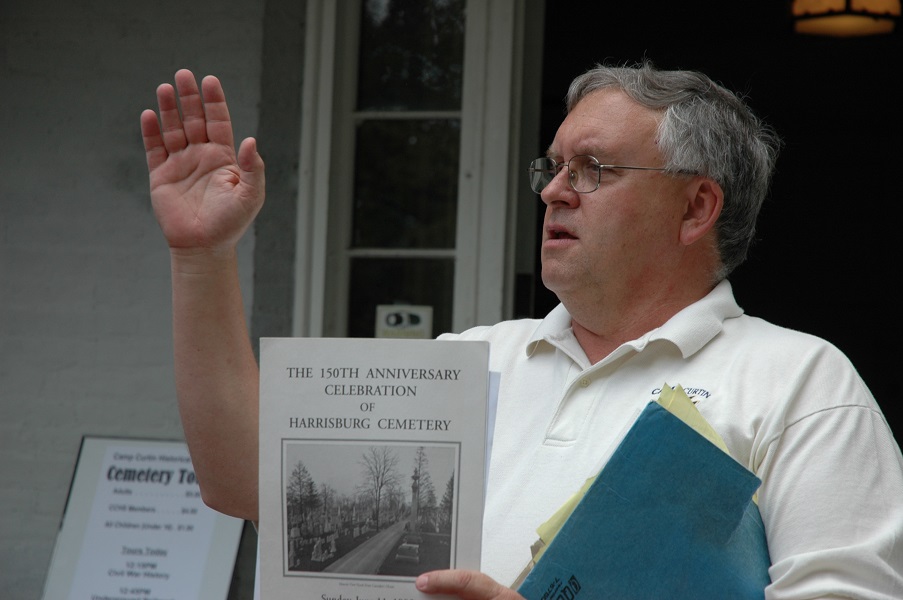
Yesterday (September 8, 2013) I drove over to Harrisburg Cemetery in Harrisburg, Pennsylvania, to take a tour offered by the Camp Curtin Historical Society. Our guide was Jim Schmick, the society’s founder and president. Jim is also the owner of Civil War and More in Mechanicsburg and a seemingly inexhaustible source of knowledge about the Civil War and local history. For more than two hours Jim showed us around the cemetery as he told stories about the people buried there and tied in their lives to the places and events of Harrisburg’s past. There was nothing here particularly Meade related, but we visited governors and the city of Harrisburg’s first mayor, stopped by the grave of Andrew David Porter, who served on George Washington’s staff, and saw the grave of Simon Cameron, Lincoln’s first secretary of war.

Of course, we went to see John Geary’s grave. Geary commanded a division of the XII Corps at Gettysburg (where he unfortunately got lost while leading his men to reinforce the Union left on July 2) and was also the mayor of San Francisco, the territorial governor of Kansas, and the governor of Pennsylvania. Quite a career.

The cemetery, founded in 1845 on 12 acres, has grown to cover 35 acres. It’s still an active cemetery and it is suitably atmospheric. I’ve posted a few photos–click on them to see larger versions.

The cemetery gatehouse. Harrisburg Cemetery is a stop along the Pennsylvania Civil War Trails (and I wrote about it in my book of the same name).

The cemetery gatehouse. Harrisburg Cemetery is a stop along the Pennsylvania Civil War Trails (and I wrote about it in my book of the same name).

Jim Schmick shows us a brochure from the cemetery's 150th anniversary in 1995.

Jim Schmick shows us a brochure from the cemetery’s 150th anniversary in 1995.

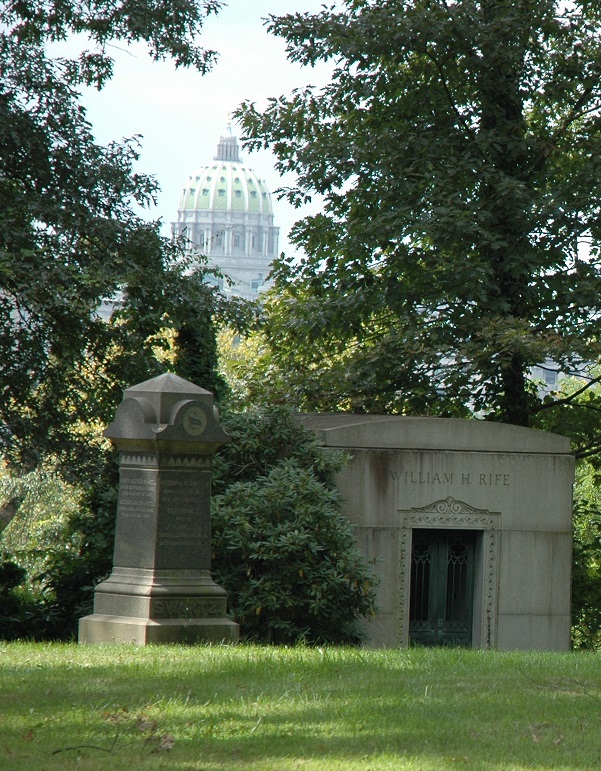
The Pennsylvania State Capitol is visible through the trees. George Grey Barnard, who created some of the statuary for the building, is buried here.

The Pennsylvania State Capitol is visible through the trees. George Grey Barnard, who created some of the statuary for the building, is buried here.

John White Geary had an impressive life as a soldier and a politician.

John White Geary had an impressive life as a soldier and a politician.

In this closeup of the Geary statue, you can see the dings from bullets that someone recently fired at it.

In this closeup of the Geary statue, you can see the dings from bullets that someone recently fired at it.

Jim tells us about Joseph Knipe, the officer who named Harrisburg's Camp Curtin after the then-governor of Pennsylvania.

Jim tells us about Joseph Knipe, the officer who named Harrisburg’s Camp Curtin after the then-governor of Pennsylvania.

Simon Cameron, Lincoln's first secretary of war, is buried here. Cameron's combination of corruption and incompetence forced Lincoln to replace him with Edwin Stanton and ship Cameron off to Moscow to serve as envoy there.

Simon Cameron, Lincoln’s first secretary of war, is buried here. Cameron’s combination of corruption and incompetence forced Lincoln to replace him with Edwin Stanton and ship Cameron off to Moscow to serve as envoy there.

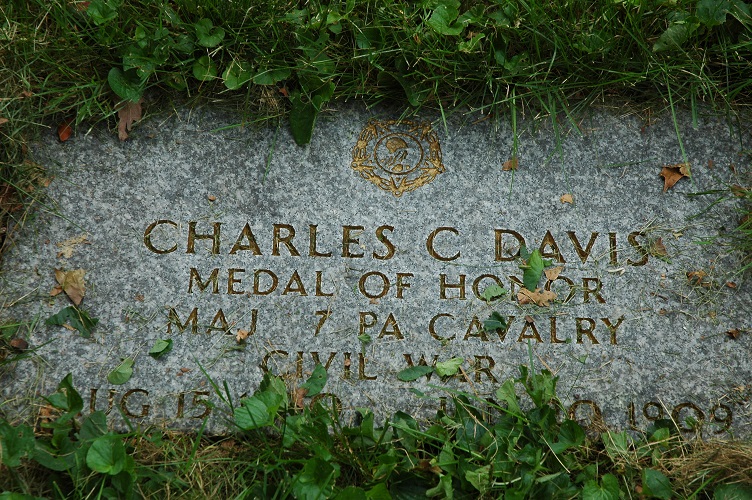
The only Medal of Honor recipient buried here, Charles C. Davis earned his honors with the 7th PA Cavalry at the Battle of Shelbyville.

The only Medal of Honor recipient buried here, Charles C. Davis earned his honors with the 7th PA Cavalry at the Battle of Shelbyville.

As good a place to end the tour as any.

As good a place to end the tour as any.

Regards from Sheboygan (September 8, 1863)

Maj. Gen. William French, commander of the III Corps, poses with his staff outside Culpeper sometime in September 1863. French stands in the group's center, looking slightly to his right. Click on the image to see a larger version (Library of Congress).

Maj. Gen. William French, commander of the III Corps, poses with his staff outside Culpeper sometime in September 1863. French stands near the group’s center, looking slightly to his right. Click on the image to see a larger version (Library of Congress).

Meade’s letter from September 8, 1863, is fairly short and unexceptional. On the next day, however, Theodore Lyman wrote a letter home that proves much more informative. I include them both here, Meade’s first. The General French he refers to is William French, who had taken over the III Corps following the wounding if Daniel Sickles at Gettysburg.

I reviewed the Third Corps, commanded by General French. The day was pretty hot, and I had to ride six miles to the review and back the same distance. I received recently a very handsome bouquet from two ladies in Sheboygan, Wisconsin; I send you the note accompanying it. Likewise a curious letter written by a rebel refugee in Canada. I am in receipt of such curious documents all the time.

Lyman goes into much more detail about the review and other aspects of life with the Army of the Potomac. (Mause Headrigg, whom he mentions at the end, is a character from Sir Walter Scott’s Old Mortality.)

In my last I forwarded a landscape with Headquarters of the 3d Corps in the verdant background. In this, I will describe the Review, at which, as the Gauls say, “I assisted.” . . . Everybody got himself up in all available splendor. Those that had scarfs put them on, and those that had none, tried to make up in the shine of their boots and newness of their coats. General Meade burst forth in the glory of a new saddle-cloth, which the expressman had, in the nick of time, brought fresh from Washington. As for myself, did I not put on the Brimmer scarf, and white gloves, and patent-leather boots; whereby, shining like a lily of the field, was I not promoted to ride immediately behind the Chief, thereby happily avoiding the dust? Heure militaire, we all mounted, the escort presented arms, and the cavalcade jogged off, en route for the parade ground, six miles distant. The road lay through pine woods, and barren fields, and all sorts of places like most roads hereabouts, and the cloud of dust we raised must have been extremely pleasant to the escort in the rear! At length we got in sight of a big U. S. flag, and, immediately after, beheld a long slope of clear ground, quite black with the lines of infantry, while long artillery trains were moving across the fields to get into position. It looked very handsome and warlike, and the muskets, which had received an extra burnish, were flashing away at a great rate. The procession rode up to the house and dismounted midst great cries of “Orderly!” to come and hold their horses. Then advanced convenient Contrabands and dusted us down; which improved our aspect not a little. After which the Corps Commander, General French, came forth, with proper greetings. He looks precisely like one of those plethoric French colonels, who are so stout, and who look so red in the face, that one would suppose some one had tied a cord tightly round their necks. Mounted on a large and fine horse, his whole aspect was martial, not to say fierce. In a few minutes we again got on, and moved towards the field; whereupon there arose a great and dis tant shouting of “Bat-tal-ion! Shoulder! Her-r-rms!” and the long lines suddenly became very straight and stiff, and up went the muskets to a shoulder. We rode down the front and up the rear of each line (of which there were three, each of a division with the artillery on the left flank) amid a tremendous rolling of drums and presenting of arms and dropping flags; the bands playing “Hail to the Chief.” Miss Sturgis’s mare behaved very nicely and galloped along with her neck arched, minding nothing except the flags, and those not much. Even the cannon did not disturb her behaviour. . . .

After the artillery had in like manner been reviewed, the General took a station by a little flag, and then all three divisions marched past, followed by the artillery. It was a somewhat sad sight to look at these veterans, with their travel-stained uniforms and their battered canteens; many of the regiments had no more than 200 men, and their flags were so tattered that you could barely read such names as Fair Oaks, and Williamsburg, where so many of the missing 800 now lie. The men looked spare and brown and in good health; and also as if they would then and there fight French Zouaves or anybody else you chose to bring on. . . . Some divisions at Gettysburg marched thirty-six miles in one day; and then fought for two days after that, with scarcely anything to eat or to drink. Among the troops were the 11th and 16th Massachusetts regiments and the 10th battery, and certainly none of the soldiers looked better. . . . The artillery looked even more serviceable than the infantry; and, independent of the large number of guns, was well horsed and well manned. As a rule I am much pleased with the aspect of our officers, high and low. They are cleanly and have a firm, quiet bearing. You can often pick out those who have been through the thick of it, by their subdued and steady look. The dress of the soldiers is highly practical, more so even than the French. The knapsack is baggy and of a poor pattern, however. It is curious how everything has, by sheer hard service and necessity, been brought down to the lowest point of weight and complication. A dragoon tucks his trousers inside his boots, buckles on a belt, from which hang a sabre and revolver, gets on a horse with a McClellan saddle and curb bridle, and there he is, ready to ride fifty miles in one day and fight on top of it. . . . After the Review the generals were entertained in a bower, with champagne and other delicacies, while we of the Staff meekly had big sandwiches and buckets of punch. I tried a sandwich, but found it rather salt eating, and so confined myself to iced water, wherein I got ahead of winebibbers who arrived at home very cross and hot. The General, who is very moderate in his conviviality, soon broke up the meeting, and, amidst a most terrible clicking of spurs and rattling of sabres, we all mounted, and so home by a short cut which one of General French’s aides was kind enough to show us, and which entailed a considerable amount of rough riding; so that, with Mause Headrigg, I had occasion to remark, “By the help of the Lord I have luppen a ditch!”

Meade’s correspondence taken from The Life and Letters of George Gordon Meade, Major-General United States Army, Vol. 2, (New York: Charles Scribner’s Sons, 1913), p. 147. Available via Google Books.

Theodore Lyman’s letter is from Meade’s Headquarters, 1863-1865: Letters of Colonel Theodore Lyman from the Wilderness to Appomattox, pp. 9-12. Edited by George R. Agassiz. Boston, Massachusetts Historical Society, 1922. Available via Google Books.
Visiting (September 6, 1863)

There is no letter from General Meade on September 6, but Theodore Lyman does write home. He documents a visit to Maj. Gen. George Sykes, who had replaced Meade as the head of the V Corps when Meade received command of the Army of the Potomac. Humphreys is Andrew Humphreys, now serving as Meade’s chief of staff.

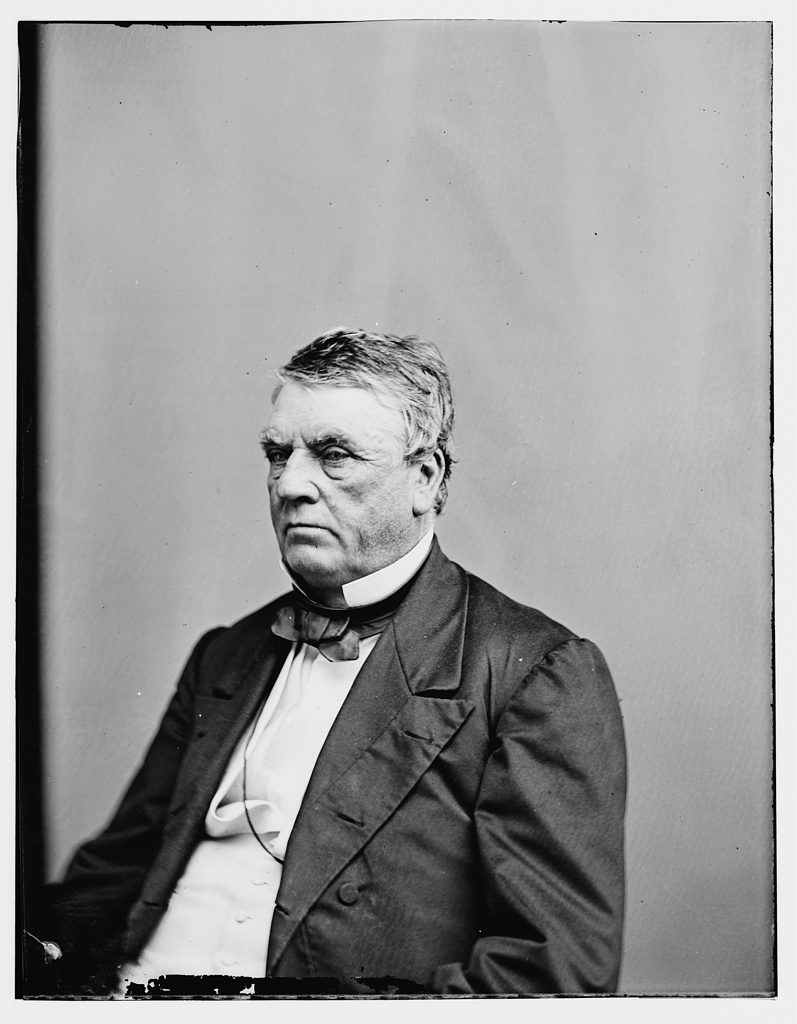
General George Sykes. (Library of Congress photo.)

General George Sykes. (Library of Congress photo.)

I promised to tell you how I invited General Meade to go with me and see General Sykes. If I didn’t know anything, I looked like a Commander-in-Chief, for I had the best horse and the best accoutrements, and as for clothes, General Meade was nowhere; besides which, he had no sword, while I had. The cavalry escort reminded me exactly of the Guides that go with the little Prince along the rue de Rivoli. No two of them had caps alike, none had their jackets buttoned; all were covered with half an inch of dust, and all eschewed straps to their pantaloons. Nevertheless, had the Rebs appeared, I should have preferred these informal cavaliers to the Guides. Each man had a sabre with a rusty scabbard, and a revolver hung at his belt. They all ride well, and would be handsome horsemen, if “got up.”

General Humphreys, with his usual bland smile, appeared on a small gray, which was of a contrary and rearing disposition; but the General remarked, with the air of an injured man, that he had had three valuable horses killed under him in battle, and now he should only get cheap ones. General Meade, whose saddle-flap was ornamented with a bullet-hole within an inch of his leg, was mounted on a small bay. And so we jingled off; sometimes in the road, sometimes in the open fields, sometimes in the woods and sometimes through creeks and mudholes. The Chief rides in a most aggravating way, neither at a walk nor a gallop, but at a sort of amble, which bumps you and makes you very uncomfortable. … In due season we got to the 5th Corps Headquarters, near the Rappahannock, which is a very narrow affair at this point, and not over four feet deep on the shallowest fords. General Sykes looks a little like the photograph of General Lyon and has a very thick head of hair, which stands up like Traddles’s. He is a mild, steady man, and very polite, like all the officers I have seen down here. Indeed, a more courteous set of men it would be hard to find. I have yet to meet a single gruffy one. They are of all sorts, some well educated, others highly Bowery, but all entirely civil. . . . The astute Sykes talked some time with the Chief, and then we rode to the Headquarters of General [John] Newton, who commands the 1st Corps, hard by. This chieftain had a very gorgeous tent, erected for the express accommodation of Mrs. Newton, who, however, was soon driven forth by the general order excluding all ladies from the lines; and the tent was all that remained to remind one of her presence. General Newton also has a thick head of hair, and is a tall and finely built man and “light complected.” He was in great glee over a tệte-de-pont he had erected, and hoped to decoy some unfortunate Rebels to within range of it. He produced a huge variety of liquids which I had to refuse. The drinks I have refused will be a burden on my conscience in time to come. They come from all sides and in great variety, even champagne! . . .

Theodore Lyman’s letter is from Meade’s Headquarters, 1863-1865: Letters of Colonel Theodore Lyman from the Wilderness to Appomattox, pp. 8-9.Edited by George R. Agassiz. Boston, Massachusetts Historical Society, 1922. Available via Google Books.

Bad Press (September 5, 1863)

Throughout his army career Meade disliked and distrusted the press. He complained about the newspaper coverage of the Mexican-American War when he was a young officer, and he complained even more vociferously during the Civil War. Things came to a head during the 1864 Overland Campaign when Meade had a reporter kicked out of the army’s camp, but that explosion was a long time coming, as his letter from September 5, 1863, attests. The Spirit of the Times was a New York weekly that was best known for its coverage of sports. George Wilkes had purchased it in 1861.

Have you seen a very bitter article in Wilkes’s Spirit of the Times, of August 29th [see below]? He says the victory of Gettysburg was due entirely to the strength of the position and the heroic bravery of the common soldiers, and was entirely independent of any strategy or military ability displayed by any general from the senior down. He then charges me with imbecility and timidity, and says the Army of the Potomac never can do anything so long as so many incompetent men are at the head of it. The only consolation I have, is that censure from such a source will in the eyes of all respectable people be praise. There is no doubt the position at Gettysburg was very strong, and that the victory was in a great measure due to this fact; and it is also equally true that if the men had not fought as well as they did, I should have been beaten; but I have yet to learn the existence in history of a general whose genius was equal to winning victory when all the advantages were against him, and his men would not fight.

Wilkes is a Hooker man; but whether his article was inspired by any of the friends of this officer, I am not prepared to say, and can hardly believe such to be the case.

This is the newspaper article that so infuriated Meade:

EXTRACT FROM NEWSPAPER ARTICLE, ATTACK ON GENERAL MEADE, MENTIONED IN LETTER OF SEPTEMBER 5, 1863.

(Wilkes’ Spirit of the Times of August 29, 1863)

SINGULAR REVELATIONS
In Regard To
The Army Of The Potomac

(The following letter comes from a distinguished military writer who has had much observation in the Army of the Potomac, and whose opinions we can assure the readers of the Spirit are well worth noting. It was written to a personal friend in this city, and from his hands we obtain it.)

Washington, August 16, 1863

My Dear Sir:

The Army of the Potomac—that army which has so often elevated men from mediocrity into greatness—that army which has marched, fought and bled to no purpose—now lies in sweet repose along the line of the Rappahannock, patiently waiting, as Micawber says, “for something to turn up.” The history of this army is one of barren toil, suffering and death. Its successes are magnified by venal letter-writers into great victories, and its defeats are represented as splendid strokes of strategy. It is thus that a confiding people have been humbugged from month to month, and year to year. History can furnish no instance that will even remotely compare with this army for gross ignorance and mismanagement. In no instance has success been followed up with vigorous and rapid blows; on the contrary, the enemy have been allowed to retreat without molestation, until they had time to rally their scattered forces and fortify themselves. The battle of Gettysburg was purely defensive, and our success was mainly due to the natural strength of our position, to our artillery, and the firmness of a portion of the troops, but in no degree to the strategy or ability displayed by any of the generals, from the senior down.

Here indeed, was an opportunity for a general to have shown the qualities of an able commander, if he possessed them. His troops, however decimated, had, by his own account, suffered far less than the enemy. But his army, flushed with victory, was not permitted to follow up and harass a beaten, dispirited and demoralized enemy, hampered with a vast amount of plunder, thousands of wounded, and an impassable river obstructing their retreat; and while letter-writers were announcing their hopelessness of its escape, Lee’s army was quickly making arrangements for crossing without the slightest interruption from Gen. Meade, or serious effort to penetrate his design. Suggestions were made and heard, to send a force above the rebel position, when by cutting trees and throwing them into the river, his pontoons or other bridges might be swept away. But Gen. Meade’s frequently declared belief was, that Lee could cross when he pleased; that he did not intend to cross, but meant to fight. The sequel shows how completely he was deceived. Had Gen. Meade possessed the activity of either Grant or Rosecrans, and, I may add, of Hooker, he could, by a cavalry reconnaissance on the south side of the Potomac, and a forced one on the Maryland side, have easily discovered Lee’s true intentions; and had he attacked him with his army divided by that river, he must have inevitably destroyed or captured one half of it. But blinded and deceived by Lee, timidity ruled the hour, and the golden opportunity, that is only to be seen and grasped by genius, was lost forever. Here, then, we have a commander but a few days previous magnified into a great general, for his success in a battle which he was forced, in defence, to fight; which was due alone to the natural strength of his position, and the courage of the rank and file, and not, as I have before said, to any display of his military abilities. And yet, when an occasion was subsequently presented for the exercise of his qualities as a commander, he tranquilly sits down before a hastily constructed gutter (miscalled entrenchments) for a week, and quietly permits the enemy to prepare for and cross a formidable stream that barred his retreat. Who can estimate the future sacrifice of life that must ensue from this terrible mistake?

The public must have news to feed upon. It matters not, it would seem, whether it be true or false; and hence they will hear before long of some remarkable things that are soon to take place, which they are not at liberty to reveal. But it may as well make up its mind that the Army of the Potomac will never accomplish anything. With some few exceptions, it is the worst handled body of men, so far as the general officers are concerned, that the world has ever seen. This is, in a great measure, due to the accursed political influence that has blighted and almost destroyed its energy and efficiency. It is due, also, to the many commanders outside the army proper, who have restrained and controlled its action on more than one important occasion, from the President down; and above all, it is due to the many ignorant and self-sufficient politicians who have been appointed to high commands, and the large infusion of foreign adventurers into the different staffs.

In the meantime, Theodore Lyman wrote home to continue the narrative about reaching the Army of the Potomac and its commander, under whom he was going to serve as a volunteer aide. The “female doctor” he describes is Mary Walker, who later won the Medal of Honor for her medical services during the war, only to have Congress revoke it a mere six days before her death in 1919. It was posthumously reinstated. The Grand Army of the Republic Museum and Library in Philadelphia, which displays the head of Meade’s horse, Old Baldy, also has Walker’s medical kit in its collections.

This is what Lyman wrote on September 5, 1863:

Mary E. Walker, the "female doctor" Lyman encountered on the train (Library of Congress).

Mary E. Walker, the “female doctor” Lyman encountered on the train (Library of Congress).

Our train consisted in a large number of freight cars, all marked “U. S. Military Railroads,” and of one passenger car containing its precious freight of officers, not to speak of the female doctor who knocked Zacksnifska out of all sight and knowledge. She was going down to get the son of an old lady, who (the said son) had had a sunstroke, and this female doctor had great confidence she could cure him. She was attired in a small straw hat with a cockade in front, a pair of blue pantaloons and a long frock coat, or sack. Over all she had a linen “duster”; and this, coupled with the fact that she had rips in her boots, gave her a trig appearance. She was liberal in her advice to all com ers and especially exhorted two newspaper boys to immediately wash their faces, in which remark she was clearly correct. . . .

At Warrenton Junction there was luckily an ambulance from headquarters; and as its owner was only a diminutive captain, I had no hesitation in asking him to carry me up, with my traps. … So off we set, on a road which went sometimes over stumps and sometimes through “runs” two or three feet deep. We passed any quantity of pickets and negroes and dragoons in twos and threes; till at last, looking off to the left (or rather right), I beheld what seemed a preparation for a gigantic picnic: a great number of side-tents, pitched along regular lines, or streets, and over them all a continuous bower of pine boughs. These were “Headquarters.” I put my best foot forward and advanced to the tent of the Commander-inChief, in front of which waved a big flag on a high staff. In my advance I was waylaid by a lieutenant, the officer of the day, who with much politeness said General Meade was out for a ride, but would I not walk into a tent and take some whiskey; which I accepted, all but the whiskey. He turned out to be a Swede, one Rosencrantz, and I rejoiced his soul by speaking of Stockholm. Presently there arrived the General himself, who cried out, “Hulloo, Lyman! how are you?” just as he used to. He was as kind as possible, and presently informed me I was to mess with him. As the Chief-of-Staff is the only other man who is allowed to do this, you may concede that my lines have fallen in pleasant places! The said Chief-of-Staff is General Humphreys, a very eminent engineer. He is an extremely neat man, and is continually washing himself and putting on paper dickeys. He has a great deal of knowledge, beyond his profession, and is an extremely gentlemanly man. As to the Assistant Adjutant-General, S. Barstow, he was most hospitable, and looked out for getting me a tent, etc. He really has a laborious and difficult position, the duties of which he seems to discharge with the offhand way of an old workman.

Now I will pull up. As to my riding forth yesterday and to-day, in martial array, beside the General, and with dragoons clattering behind, shall not the glories thereof be told in a future letter? Meanwhile, if you want to feel as if nobody ever was or could be killed, just come here! This is the effect, strange as it may seem. For your assurance I will state, that we yesterday rode seven miles directly towards the enemy, before we got to a spot whence their pickets may sometimes be seen! . . .

Meade’s correspondence taken from The Life and Letters of George Gordon Meade, Major-General United States Army, Vol. 2, (New York: Charles Scribner’s Sons, 1913), p. 147. Newspaper article from pp. 316-7. Available via Google Books.

Theodore Lyman’s letter is from Meade’s Headquarters, 1863-1865: Letters of Colonel Theodore Lyman from the Wilderness to Appomattox, pp. 5-7.Edited by George R. Agassiz. Boston, Massachusetts Historical Society, 1922. Available via Google Books.
A New Arrival (September 3, 1863)

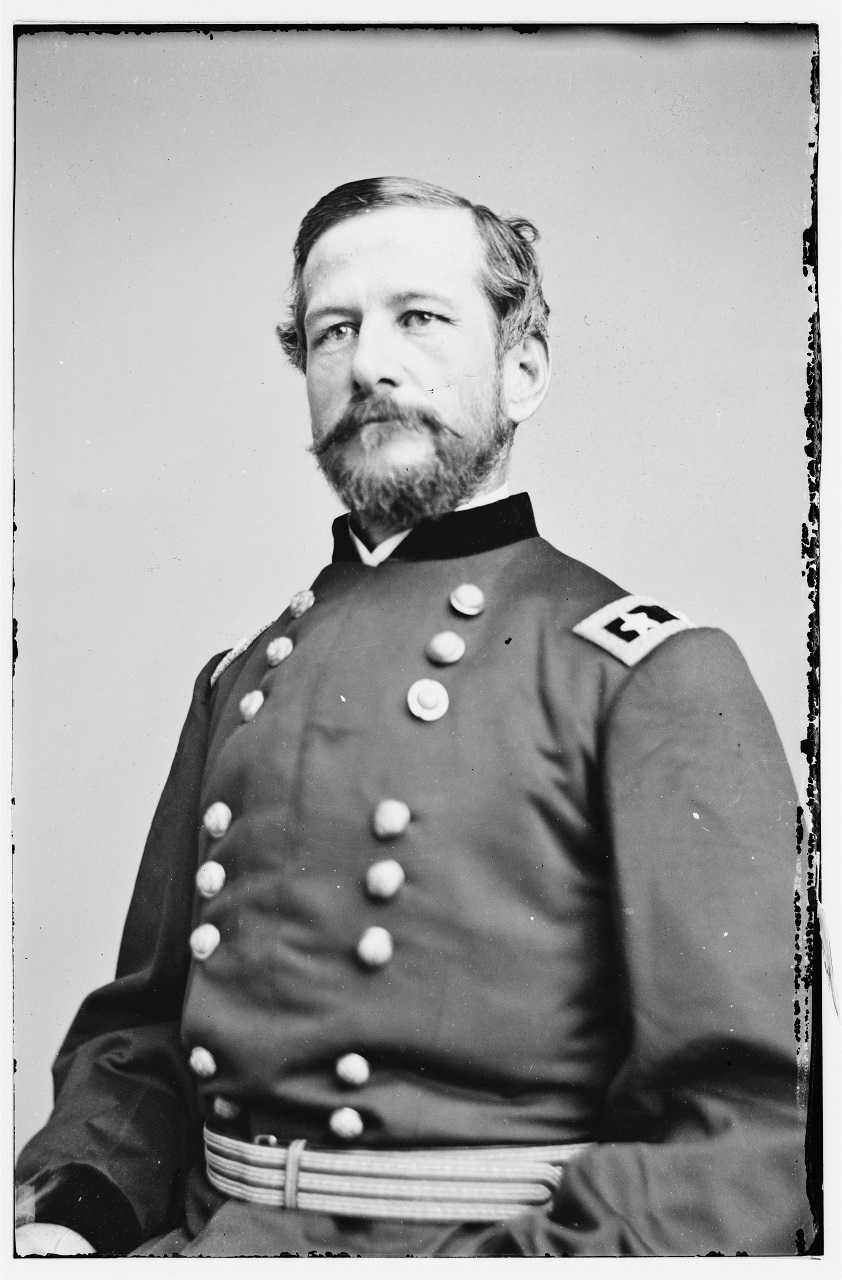
Theodore Lyman

Theodore Lyman

In September 1863 Theodore Lyman reached the Army of the Potomac. For the rest of the war he performed a valuable service by documenting his experiences with George Meade while serving as a volunteer aide to the general. As I write in Searching for George Gordon Meade: The Forgotten Victor of Gettysburg, “Lyman was a Boston patrician and Harvard graduate who traveled among the best families and married well. He had first met Meade in Florida in 1856, when he was studying starfish and Meade was overseeing lighthouse construction. While in Europe during the war, a conflict that had already killed many in his circle, Lyman wrote to the general and asked about a staff position. ‘My military accomplishments are most scanty,’ he admitted. ‘I can ride, shoot and fence tolerably, speak French fluently and German a little, have seen many thousands of troops of most nations of Central Europe, and have read two or three elementary books.’“Meade wrote back and warned him that it would not be an ‘easy berth.’ Two of his aides had already been killed, he warned. ‘If you join my staff, which I would be most delighted were you to, you must make up your mind to see the elephant in his most formidable proportions.’ ‘Seeing the elephant’ was army slang for experiencing combat. Lyman was willing, and once he returned to the United States, he used his Boston connections to get a commission as a lieutenant colonel. He reached Meade’s side on September 3, 1863, and remained with him until Lee surrendered.

I thought it would be illuminating to include portions of Lyman’s letters alongside Meade’s and present their joint impressions of the war. Lyman, much more than Meade, was a keen observer who enjoyed writing about the personal idiosyncrasies of the people around headquarters and he provides some lively and personal accounts of life with the army. Lyman’s letters were published in 1922. In 2007 the Kent State University Press published Meade’s Army: The Private Notebooks of Lt. Col. Theodore Lyman. Edited by David W. Lowe, the journals overlap the letters at times but also provide much unique information about the army. I highly recommend both books for anyone interested in George Meade and the Army of the Potomac.

Meade’s letter comes first. In it he mentions Montgomery Meigs, the Union army’s quartermaster general. A native of Georgia, Meigs graduated from West Point in 1836 and is one of the Civil War’s unsung heroes, having managed to keep the Union forces equipped and fed throughout the war, which was no small task. He was also the man who insisted that Union dead be interred as close as possible to Arlington House, Robert E. Lee’s home in Arlington, Virginia, overlooking Washington, D.C. Today the burial ground is Arlington National Cemetery.

Montgomery Meigs, the Union army's efficient quartermaster general (Library of Congress).

Montgomery Meigs, the Union army’s efficient quartermaster general (Library of Congress).

The expedition has been quite successful; the boats were found at Port Royal and were destroyed by our artillery fire from this side. The expedition sent to destroy them consisted of cavalry and artillery, but as they had to go a long distance, over forty miles from the main part of my army, I had to send infantry to support them, and to guard the lower crossing places to prevent the enemy coming over and cutting them off. This has stirred us up a little. We have also had a visit from Brigadier General [Montgomery] Meigs, Quartermaster General, who has been inspecting the transportation of this army and who has been pleased to express himself very much gratified with all he has seen. The conscripts continue to come in very slowly, and I fear it will be some time before I am in a condition to move with any prospect of being able to accomplish anything.

I think I told you that one of William Parker’s sons was on my staff. [William Parker was Meade’s cousin.] The other day he paid a visit to his regiment, and on his return must have been captured, as nothing has since been heard of him. I have written Cortlandt [Williams’ brother] about it, but I fear the news of his disappearance got into the papers before my letter reached him, as I received a telegram to-day from his father enquiring about it.

I sent up my sword and fixings, but at the request of our express agent, it is to be exhibited for a short time at Gait’s jewelry shop, in Washington.

Here’s what Theodore Lyman wrote home on the same day:

Behold me, installed in solemn state! having thus far lost no limb. Betimes, at seven this morning, I was duly at the Alexandria ferryboat with horses, Silas and Albert. Having shown my pass, I assured the worthy corporal on guard that there was no liquor in the saddle-box, and was allowed to go on board, and twenty minutes took us to Alexandria, a town in no wise remarkable except for an antique pavement, much resembling that of Pompeii and of the Via Appia at Rome, in respect to deep holes and ruts. Here I was driven to the “Depot,” which consisted in one wooden counting-room, closely beset on all sides by puffing engines and innumerable freight cars. Having, at great risk, got into the shanty, I of course found a Marbleheader at the head of all affairs, viz., Colonel Devereux. He received me with tenderness, my horses were put in the best car and I was placed in a state chair until the train was ready, when the conductor solemnly took me and placed me first in the only passenger car. Shoulder-straps is shoulder-straps down here, and folks is obleeged to stand round. The conductor (the dirtiest mortal I ever saw, but extremely energetic and capable) said we should have no trouble with guerillas, as they had a very nice colonel in command near there, who had taken the wise precaution to seize the father and brother of the chief guerilla and then to send a civil message to him stating that, if any trains were fired into, it would be his (the Colonel’s) painful duty to tie said relations on the track and run an engine over them! This had an excellent effect. I have only time to-night to say that we got down all safe. . . . You may rest easy on my account for the present. There is about as much appearance of an enemy near at hand, as there would be on Boston Common. The nearest of them (except a few guerillas) are many miles from here.

Meade’s correspondence taken from The Life and Letters of George Gordon Meade, Major-General United States Army, Vol. 2, (New York: Charles Scribner’s Sons, 1913), pp.146-7. Available via Google Books.

Theodore Lyman’s letter is from Meade’s Headquarters, 1863-1865: Letters of Colonel Theodore Lyman from the Wilderness to Appomattox, p. 4-5. Edited by George R. Agassiz. Boston, Massachusetts Historical Society, 1922. Available via Google Books.

Presentation Day (August 31, 1863)

Alfred Waud’s sketch of the ceremony on August 27, 1863, when the Pennsylvania Reserves  presented Meade with a ceremonial sword to honor their former commander (Library of Congress).

Alfred Waud’s sketch of the ceremony on August 27, 1863, when the Pennsylvania Reserves presented Meade with a ceremonial sword to honor their former commander (Library of Congress).

Meade had written home several times about the presentation sword that the Pennsylvania Reserves, his old division, had purchased for him. The soldiers had been waiting for several months to give it to him. Finally, on August 27, the big day arrived and Meade received the beautiful, ornate weapon at a public ceremony. Meade had written his wife that he had not prepared any remarks; maybe he should have. As I write in Searching for George Gordon Meade: The Forgotten Victor of Gettysburg, Charles Wainwright of the I Corps, for one, thought that Meade “replied lamely” when it came time for him to talk. Wainwright also reported that the dinner afterwards turned into a drunken rout. A bald-headed friend of Pennsylvania Governor Andrew Gregg Curtin’s stood on a table and sang bawdy songs, while people shoved and pushed to get food and drink and privates hobnobbed with captains.

The presentation ceremony also led Meade into the kind of political controversies he wished to avoid. One newspaper reported that Meade had advocated Curtin’s reelection in November. He had said no such thing, Meade protested. He did like the sword, though.

There was much more serious business to attend to the next day—the execution of five deserters. The men were “bounty jumpers,” meaning they had signed up to obtain the government bonus for enlisting, and then deserted once they received it. It’s questionable whether the men–all immigrants, and only one of whom spoke English–realized the penalty they would pay if caught. On the afternoon of Saturday, August 29, the V Corps assembled on a slight rise looking down on the spot where the execution would take place. The funeral procession started at 3:00. The five condemned men appeared in manacles, accompanied by other soldiers lugging the coffins. They marched slowly to their freshly dug graves. Four of the men walked steadily, but one needed support to stay on his feet. The soldiers placed the coffins on the ground next to the graves, and the prisoners sat on them. By then it was nearly 4:00, and the orders stated the executions had to be carried out by that time. “Shoot these men, or after 10 minutes it will be murder!” shouted Brig. Gen. Charles Griffin. “Shoot them at once!”

A sergeant of the guard covered the condemned men’s faces with white cloth and the artists from Harper’s and Frank Leslie’s magazines who had been sketching the scene packed up their easels and supplies. The clergy—a rabbi, a priest, and a chaplain–withdrew. The executioners, twelve riflemen for each prisoner, marched into position. “Ready. Aim. Fire!” shouted the captain in charge. Sixty rifles roared and flashed. Four of the men fell with dull thumps onto their coffins and rolled onto the ground, dead. The fifth remained in a seated position until the examining surgeon laid the body back on the coffin.

I send you to-day some scraps from the newspapers. The first is an extract from the London correspondent of the Presbyterian, which Ben. Gerhard [his wife’s brother-in-law] sent to me, and which I consider very flattering; for if there is any reputation I aspire to, it is that of a gentleman. The next is the account of the grand presentation from Forney’s Chronicle, which is the best and most accurate account I have seen. The speech is accurately reported, with one exception, and that is where I am made to say, “I hoped the people of Pennsylvania would re-elect Governor Curtin.” I said nothing of the kind, and made no allusions to elections. Just before I went on the stand, _____________ came to me and said: “If you can say anything in favor of Curtin, it will help us greatly.” I replied: “I don’t know, Mr. _____________, what you mean by helping you. You know I have nothing to do with politics; but it was my intention before you spoke to me to allude to Governor Curtin and his services in behalf of the volunteers from Pennsylvania.” “Well,” said he, “that is all we want.” I did say all that I am reported to have said, except the allusion to his re-election, which was put in by ________. This was bad enough; but in to-day’s paper comes out in an editorial (which I send you), puffing Curtin and quoting my speech in italics.

The more I examine my sword the more I am delighted with its beauty. It is really most chaste and artistic. It seems a pity, though, to waste so much money on an article that from its great value is actually rendered useless.

We are having a little excitement to-day, in an expedition that has been sent down the river, to attempt to destroy two gunboats which the enemy recently surprised and captured at the mouth of the Rappahannock. The expedition was ordered from Washington, and I hope it will prove successful.

The conscripts are coming in now pretty fast. To-day for the first time over a thousand arrived. They are generally pretty good men, and I trust the example made of the five deserters, who were shot on Saturday, will check the evil of desertion. This execution was witnessed by a very large number of soldiers, and I am told the only remark made was, “Why did they not begin this practice long ago?” Not a murmur against the justice or the propriety of the act was heard. Indeed, the men are the most anxious to see this great evil cured, as they know their own security will be advanced thereby.

NEWSPAPER ARTICLE, GENERAL MEADE’S SPEECH OF ACCEPTANCE OF SWORD PRESENTED BY THE DIVISION OF “PENNSYLVANIA RESERVES,” AUGUST 28, 1863, MENTIONED IN LETTER OF AUGUST 31, 1863.

(New York Tribune, August 31, 1863)

Gen. Crawford, and Officers of the Division of Pennsylvania Reserve Corps: I accept this sword with feelings of profound gratitude and with just pride. I should be insensible to all the generous feelings of humanity, if I were not proud and grateful at receiving a testimonial of approbation from a band of officers and men so distinguished as has been the Division of the Pennsylvania Reserve Corps during the whole period of this war. I have a right, therefore, to be proud that such a body of soldiers should think my conduct, and my course, of such a character as to justify them in collecting together here so many distinguished gentlemen as I see around me from different parts of the country, and particularly our own State, to present to me, this handsome testimonial, which is no more than saying, I have done my duty toward them. From the very commencement of my connection with that corps as Commander of the Second Brigade, in the Fall of 1861, it was my earnest desire to do my duty by officers and men, and I faithfully endeavored, during the time I commanded them, to discharge my duty toward them as to men entitled to every consideration for the manner in which they had performed their services to their country. I am very glad that you have mentioned the distinguished gentleman present, the Governor of Penn.; I have a personal knowledge of his efforts to raise this corps, and, after it was raised and organized, to see that all its interests were attended to upon every occasion. I have been with him many times as he visited the men and officers, with a zeal that never tired, to see that all their wants were supplied, and to stir them up to renewed exertion by his patriotic and manly eloquence. I am, therefore, glad that you have been able to witness this presentation from Pennsylvania soldiers, and I hope that the citizens of Pennsylvania have appreciated and will remember his services in promoting the interest of our country and suppressing this Rebellion. [Applause.] In speaking of the pride with which I receive a sword from this division, I feel justified, though it may seem egotistic, in saying a few words of the service rendered by the Pennsylvania Reserve Corps: and I say unhesitatingly before this large assembly, and in view of the history of the War, which will vindicate my words, there is no division in the Army of the Potomac, glorious as I consider it, which can claim greater credit for gallant and laborious service than the Pennsylvania Reserve Corps. [Applause.] In this, Sir, I take no credit to myself. It is not my own personal services, but the services of the soldiers of which I speak—the gallantry of the privates of the Pennsylvania Corps. I have only to appeal to Dranesville—the first success that crowned the arms of the Army of the Potomac—which was gained by the unaided gallantry of one brigade of this division; I have only to refer to Mechanicsville, where the whole of Longstreet’s Corps was held in check for several hours and a victory achieved by two brigades alone of the Pennsylvania Corps. [Cheers.] I have only to allude to New Market Cross Roads, sometimes called Glendale, to which I refer most emphatically, because some of the most distinguished officers of this army, ignorant of the facts and misled by information received at the time, but which subsequently proved incorrect, have brought grave charges against this Division. Upon that field I stood by this Corps till dark, when it pleased God I should be shot down. It has been said that this Corps ran from that field, but I stood there with them and saw them fighting in their places until darkness fell upon the field, and at the time I was borne away my men were engaged in a hand-to-hand contest with the batteries of the enemy; and although there were men who left the field, as there are always cowards in every army and every division, yet the large body of this gallant Corps, remained there steadily facing the enemy until dark. They never ran away; and the two guns said to be taken from them by the enemy were in fact left the next day, abandoned by our army, and not captured from the Pennsylvania Reserve Corps. I will also point to South Mountain, of which it is not necessary to say much, for the gallantry of the Reserve Corps in ascending that height, and turning the left wing of the enemy, was recognized by the commander and is known to all the country; of Antietam, where they commenced the attack on the 16th of September, and unaided took such of the Confederate batteries as were in their front and held their position until next morning, when the battle was renewed; again of Fredericksburg, where this division alone and unaided advanced to the attack, drove the enemy from their position, and held for twenty minutes a position on those heights which, if they had been sufficiently supported and enabled to hold, would have given us a victory. [Cheers.] Have I not, then, a right to be justly proud, when the officers and men of a command, which have performed such services, which I now declare to be truth and fact, present me with this testimonial? I think I have a right to be proud and grateful, and I feel a proportionate pride and gratitude to-day. But while I express this pride and gratitude, it is not unmingled with mournful feelings. When I look around and reflect how many of the gallant officers and brave soldiers who originally composed this Corps are now sleeping their sleep in lonely battlefields, and how many others are now limping over the country mutilated cripples, I cannot but be saddened to think that your glorious achievement should be attended with such misfortune; that this fair country, which should be resting in peace and flowing with milk and honey, is disturbed and desolated by intestine war; that our arms, in preserving the integrity of the country, should have been compelled to enact the scenes I have witnessed. This testimonial, gratifying as it is under the circumstances, suggests many sad thoughts. At the same time I feel that I, and all the rest of you, are doing only our duty, acting from the highest impulses of the heart. It must not be—it is impossible—that this Government should be divided; that there should be two Governments and two flags on this continent. Every man of you, I am sure, is willing to sacrifice his life in vindication of the principle that our Government must be preserved as it was handed down to us, and but one flag shall wave over the whole territory, which shall be called the Republic of the United States. [Prolonged cheers.] Like you, I remember, sadly, mournfully, the names of the fallen. I am sorry that I cannot now recall the roll of honor of the Pennsylvania Reserve Corps. There is one—your former commander, first of brigade and then of division, one of the noblest souls among men, one of the most accomplished officers of this army—Major-General John F. Reynolds, I cannot receive this sword without thinking of that officer, and the heroic manner in which he met his fate in front at Gettysburg. There I lost, not only a lieutenant most important to me in his services, but a friend and brother. When I think, too, of others fallen—of McNeill and Taylor, of the Rifles; of Simmons, of the Fifth; of Dehone of Massachusetts; of young Kuhn, who came from Philadelphia and assisted me so efficiently, and many more who are gone, I am saddened by the recollection. It is more oppressive to go over the names of those who have been sacrificed. I wish I could mention the names of all the soldiers, but it would be a long, long list, that would include the names of all those from the Pennsylvania Reserve Corps who are now resting in honorable graves or crippled and mutilated in the service of their country. I thank you, Sir, for the kind manner in which you have conveyed to me this elegant testimonial, and to all those gentlemen, who have come so far to be present on this occasion, I am extremely grateful. I trust that this sword will be required but a short time longer. Events now look as if this unhappy war might soon be brought to a termination. All I can say to those gentlemen who have come here, is to earnestly entreat them on their return home to spare no effort to let the people know that all we want is men—men to fill up our thinned ranks. Give us the numbers, and in a short time I think the people on the other side will be satisfied that the result is inevitable, that it is only a question of time, and, seeing that we are bringing to bear the numbers which are required, they will themselves yield. Before I close, let me add what I had intended to say before, but it escaped my memory until this moment, an expression of my gratification that I heard that on the field of Gettysburg the division of the Pennsylvania Reserve Corps, under your command, enacted deeds worthy of its former reputation, and proved that there was no change whatever in the division—deeds which I feel satisfied will always be achieved by them while the division is composed of such officers and men. Thanking you again for this testimonial, and for the kind manner in which it has been conveyed to me, I will here conclude my remarks. [Renewed applause.]

Meade’s correspondence taken from The Life and Letters of George Gordon Meade, Major-General United States Army, Vol. 2, (New York: Charles Scribner’s Sons, 1913), pp.145-6. Editorial reprinted on pp. 313-315. Available via Google Books.