Chancellorsville, Continued (May 8, 1863)

In his letter of May 8, Meade continues his account of the Battle of Chancellorsville. George is his son, who was serving with the Union cavalry. Other generals shared his disappointment with the army’s commander, Joe Hooker. Rumors of Hooker’s removal from command swept through camp. Generals Couch, Slocum, and Sedgwick all sent word to Meade that they would be happy to serve under him.  I write in Searching for George Gordon Meade: The Forgotten Victor of Gettysburg, “Col. Charles Wainwright, artillery chief of the I Corps, was talking with some fellow officers on May 6; they decided Meade would be the best replacement for Hooker, with Gouverneur Warren as his chief of staff. ‘From what I had seen of Meade during the three days I was at Chancellorsville, and from my previous knowledge of him, I had given him the preference, and was glad to find there were others, good judges, who agreed with me,’ Wainwright noted in his journal.


Alexander Webb, soon to become a brigadier general and later Meade's chief of staff (Library of Congress).

Alexander Webb, soon to become a brigadier general and later Meade’s chief of staff (Library of Congress).

“Shortly after the battle Alexander S. Webb wrote a letter home. ‘I wish you would tell all, that General Meade was head and shoulders above all out in the field,’ he said. ‘He advised the attacks which were not made, and which would have gained the day. He asked to be allowed to attack with his corps, supported by Reynolds; it was refused. He advised not to fall back. And since this battle he has received messages from three senior generals stating that they would willingly serve under him.’”

When I last wrote I could get no definite information of George’s whereabouts, but to-day Captain Newhall has returned to headquarters and reports the cavalry all back across the Rappahannock, except two regiments that continued on and have arrived at Yorktown, having succeeded in destroying several bridges on the railroads from hence and Gordonsville to Richmond. Unfortunately our withdrawal across the Rappahannock will prevent advantage being taken of the cavalry success, as they will now have time to repair damages before we can get at them again.

Just after closing my letter yesterday I was summoned to headquarters, where I found the President and General Halleck. The former said he had come down to enquire for himself as to the condition of affairs and desired to see corps commanders. He and Halleck spent a couple of hours, took lunch, and talked of all sorts of things, but nothing was said of our recent operations, or any reference made to the future, nor was any corps commander called on for an opinion. The President remarked that the result was in his judgment most unfortunate; that he did not blame any one—he believed every one had done all in his power; and that the disaster was one that could not be helped. Nevertheless he thought its effect, both at home and abroad, would be more serious and injurious than any previous act of the war. In this I agree with him; and when it comes to be known that it might and should have been avoided, I think the country will hold some one responsible. My conscience and record are fortunately clear. I opposed the withdrawal with all my influence, and I tried all I could, on Sunday morning, to be permitted to take my corps into action, and to have a general battle with the whole army engaged, but I was overruled and censured for sending in a brigade of Humphreys’s, which I did in spite of orders to the contrary. General Hooker has disappointed all his friends by failing to show his fighting qualities at the pinch. He was more cautious and took to digging quicker even than McClellan, thus proving that a man may talk very big when he has no responsibility, but that it is quite a different thing, acting when you are responsible and talking when others are. Who would have believed a few days ago that Hooker would withdraw his army, in opposition to the opinion of a majority of his corps commanders? yet such is absolutely and actually the case.

My corps did not have much of a chance. On Friday, Sykes’s division had a very handsome little affair, in which his command behaved very well and gained decided advantages, driving the enemy before them; but Sykes was recalled just as his advance was successful. In the evening he repelled an attack of the enemy. On Sunday, Humphreys’s two brigades were engaged, creditably and successfully, and on Monday a brigade of Griffin’s was sent forward to engage and feel the enemy’s position, which duty was successfully accomplished. The heavy fighting, however, of Saturday and Sunday was done by Slocum, Couch and Sickles, particularly the latter, whose losses are greater than any other corps, unless it be Sedgwick’s, which suffered very severely in his attempt to attack the enemy from Fredericksburg.

I have been a good deal flattered by the expression of opinion on the part of many officers, that they thought and wished I should be placed in command, and poor Hooker himself, after he had determined to withdraw, said to me, in the most desponding manner, that he was ready to turn over to me the Army of the Potomac; that he had enough of it, and almost wished he had never been born. Since seeing the President, however, he seems in better spirits, and I suppose, unless some strong pressure is brought to bear from external sources, he will not be disturbed. Hooker has one great advantage over his predecessors in not having any intriguer among his subordinate generals, who are working like beavers to get him out and themselves in.

For some reason or other they have prohibited bringing newspapers to camp, so that I am completely in the dark as to public opinion.

Meade’s letter taken from The Life and Letters of George Gordon Meade, Major-General United States Army, Vol. 1, (New York: Charles Scribner’s Sons, 1913), pp. 371-3. Available via Google Books.

After the Storm (May 7, 1863)

"The troops on the center 3rd & 5th Corps repelling a rebel assalt [sic]--Sunday May 3rd 1863" by Alfred Waud (Library of Congress).

“The troops on the center 3rd & 5th Corps repelling a rebel assalt [sic]–Sunday May 3rd 1863” by Alfred Waud (Library of Congress).

The Battle of Chancellorsville is over. It is another Union defeat and one of Robert E. Lee’s greatest victories. Meade does not know it, but it has also helped set the stage for his eventual promotion to command of the Army of the Potomac. Over the next two days he attempts to explain the battle to his wife back in Philadelphia.

I reached here last evening, fatigued and exhausted with a ten days’ campaign, pained and humiliated at its unsatisfactory result, but grateful to our heavenly Father that, in His infinite goodness, He permitted me to escape all the dangers I had to pass through.1 The papers will give you all the details of the movement, so that I shall confine myself to a general account of my own doings. General Hooker’s plan was well conceived and its early part well executed. It was briefly thus: A portion of the army were to make a forced march, cross the Rappahannock so high up as to preclude opposition, cross the Rapidan at the lower fords, drive away the defenders of the works placed at the crossings of the Rappahannock nearest to Fredericksburg, and when one of these was opened, the rest of the army was to join the advanced corps, be concentrated, and push the enemy away from Fredericksburg.

I have advised you that on Monday, the 27th ulto., my corps, the Fifth, together with the Eleventh and Twelfth, left camp and reached Kelly’s Ford on the 28th. That night and early next morning we crossed the Rappahannock, the Eleventh and Twelfth Corps moving on one road to Germanna Ford and I on another to Ely’s ford, of the Rapidan. These fords were reached and crossed by the evening of the 29th. On the 30th we advanced and concentrated at Chancellorsville, a small place on the plank road from Fredericksburg to Gordonsville, and distant some ten miles from Fredericksburg. In this movement we uncovered the United States ford and established communication with our left wing opposite Fredericksburg; thus far the movement was successful. On the 1st inst. two more corps were brought over to Chancellorsville, and the Fifth and Twelfth corps advanced from Chancellorsville towards Fredericksburg; but just as we reached the enemy we were recalled. On our retiring the enemy attacked Sykes’s division of my corps and we had a smart fight till dark. The next day, May 2d, the enemy attacked in force, and after a day’s hard fighting, owing to the bad behavior of a portion of our troops, the Eleventh Corps, we had to fall back and draw in our lines.

I ought to have mentioned that, simultaneously with our crossing the Rappahannock above, Sedgwick and Reynolds crossed below Fredericksburg, and after occupying the attention of the enemy, so soon as we were established at Chancellorsville, they were withdrawn, and Reynolds joined us on the 30th. When the force of the enemy was perceived, Sedgwick was ordered to recross at Fredericksburg and attack in their rear, which he did, on the 2d inst. On the 3d we had a very heavy fight, in which we held our own, but did not advance, awaiting Sedgwick’s operations. On the 4th remained quiet, and in the evening learned that Sedgwick was held in check by superior forces, and his position critical. The enemy not attacking us on the 5th, as we hoped, and finding him too strong to attack without danger of sacrificing the army in case of defeat, Hooker determined to withdraw to this side of the river, which we did without pursuit, on the night of the 5th.

Meade’s letter taken from The Life and Letters of George Gordon Meade, Major-General United States Army, Vol. 1, (New York: Charles Scribner’s Sons, 1913), pp. 370-1. Available via Google Books.


An 1865 photo shows skulls that still remained on the Chancellorsville battlefield, a grim reminder of what had happened here (Library of Congress).

An 1865 photo shows skulls that still remained on the Chancellorsville battlefield, a grim reminder of what had happened here (Library of Congress).


The Calm Before the Storm (May 2, 1863)

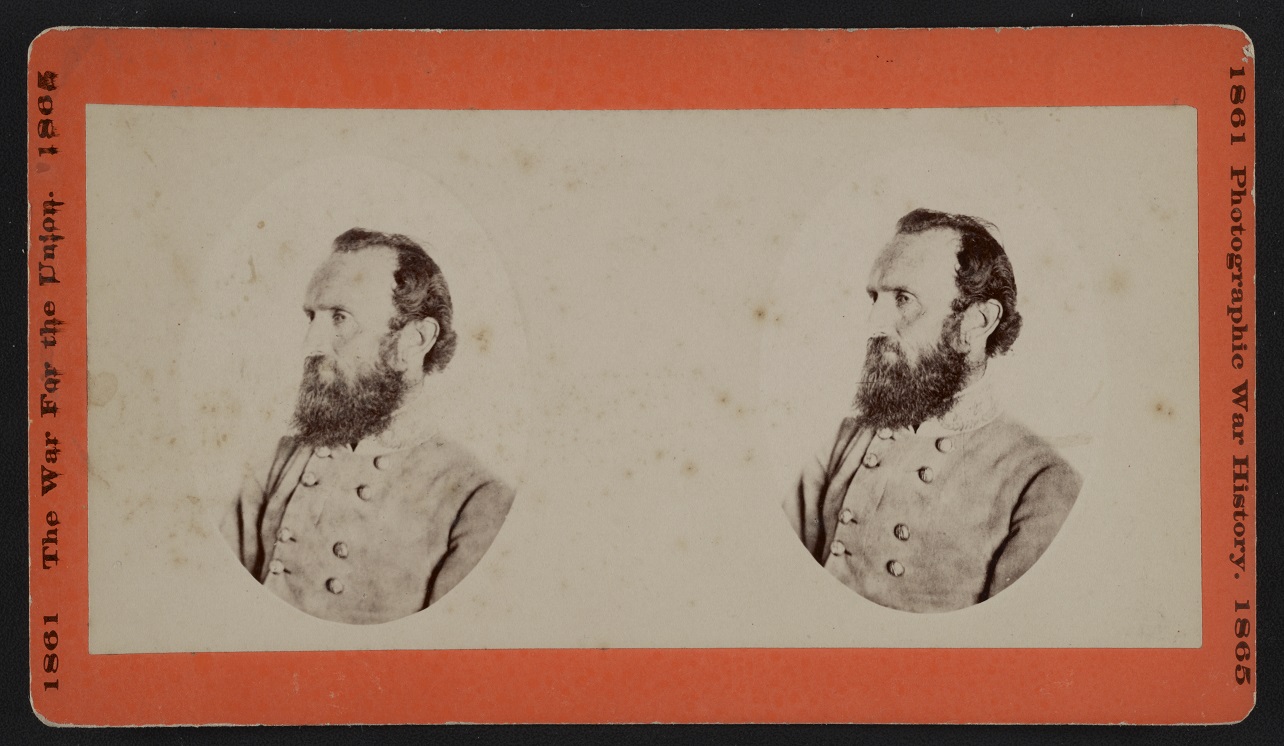
Confederate General Thomas "Stonewall Jackson, who was mortally wounded at Chancellorsville on May 2, 1863 (Library of Congress)

Confederate General Thomas “Stonewall Jackson, who was mortally wounded at Chancellorsville on May 2, 1863 (Library of Congress)

Meade’s short note to his wife, written on May 2, is laced with unintentional irony. Indeed, as he noted, some Union officers did believe that the Confederates were evacuating their positions while the Army of the Potomac waited in the Wilderness around Chancellorsville. However, the rebels they saw moving off in the distance, glimpsed through a gap in the trees, were actually the men under General Thomas “Stonewall” Jackson, making a 17-mile march on their way to fall on the unsuspecting Union right. As I write in Searching for George Gordon Meade: The Forgotten Victor of Gettysburg:

“Lee and Jackson intended to end the Union swaggering, and the battlefield’s driving tour takes me to the Lee-Jackson Bivouac, the place where they determined how they would do it. This quiet spot in the woods at the intersection of the Old Plank and Furnace Roads is holy ground in Southern Civil War lore. On the night of May 1 Lee and Jackson met here to plot the destruction of Joe Hooker’s army. As they consulted their maps and talked with their scouts, they realized the Federals appeared vulnerable on their right, where Howard’s XI Corps rested with its flank “in the air,” meaning it had no solid anchor. All Howard had shielding the right of the Union line was the thick, tangled forest of the Wilderness. Howard thought this was protection enough, but Lee and Jackson, sitting on cracker boxes as they talked into the night, believed otherwise.

“Lee never lacked audacity, and the plan he hatched on the night of May 1 may have been his most audacious move yet. Although badly outnumbered, and with part of his army still confronting Sedgwick behind Fredericksburg, he decided to divide his army even more by sending Jackson and thirty thousand men on a wide swing against the Union right while he remained in place only about fifteen thousand men to distract the rest of the Federals.

“Jackson set out the next morning, his long column of men marching four abreast down narrow trails through the forest. The line stretched for almost ten miles–two hours after the head of the column began marching the tail end had yet to move. It was a huge, gray-clad, and tattered serpent snaking through the Virginia woods, making slow but steady progress to pounce on unsuspecting prey. At the ironworks of Catharine Furnace, of which only a single chimney remains today, the column veered south on its roundabout course. Once it reached the Brock Road it turned north, heading for the Plank Road and the unsuspecting men of the XI Corps.

“Jackson’s movement did not remain a secret from Hooker’s army, though. The marching troops were clearly visible off in the distance as they passed a clearing. Union artillery took the opportunity to send some shells their way. Hooker sent a message to Howard and Slocum. ‘We have good reason to suppose that the enemy is moving to our right,’ it warned. ‘Please advance your pickets for purposes of observation as far as may be safe, in order to obtain timely information of their approach.’ He warned Howard that he was not in position to withstand a flank attack. In response Howard did pretty much nothing.”

Meade’s short note, written from a then-quiet battlefield, is his last communication home before the Battle of Chancellorsville began in earnest.

We have had no great fighting as yet, though Sykes’s division, of my corps, had quite a skirmish yesterday. It is doubtful what the enemy are going to do, but many believe they are evacuating.

Meade’s letter taken from The Life and Letters of George Gordon Meade, Major-General United States Army, Vol. 1, (New York: Charles Scribner’s Sons, 1913), pp. 370. Available via Google Books.

The Campaign Begins (April 30, 1863)

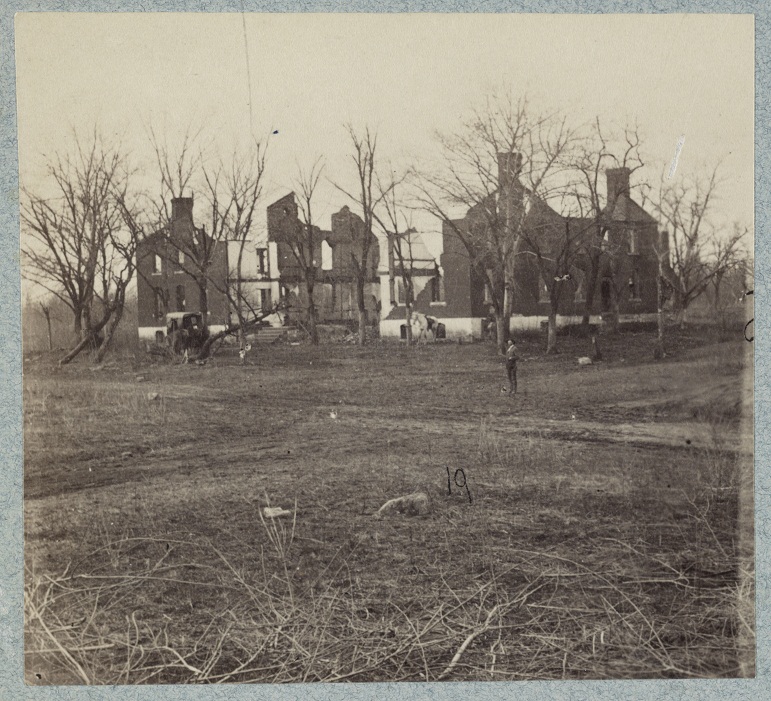
The ruins of the Chancellorsville house as they appeared in 1865 (Library of Congress).

The ruins of the Chancellorsville house as they appeared in 1865 (Library of Congress).

Meade’s letter to his wife is just a short note, but it has big ramifications. Joe Hooker has finally put his army into motion and the Chancellorsville campaign has begun. On April 30 Meade’s V Corps pushed on from Ely’s Ford on the Rapidan; Meade reached the Chancellorsville house  around 11:00. It was at a crossroads in the tangle called the Wilderness and would give its name to the battle fought in the woods and small fields around it. ““It was a large, commodious, two-story brick building, with peaked roof and a wing, and pillared porches on both stories in the centre of the main building,” wrote a member of the 118th Pennsylvania. “Upon the upper porch was quite a bevy of ladies in light, dressy, attractive spring costumes. They were not at all abashed or intimidated, scolded audibly and reviled bitterly.” Before long the young ladies would be fleeing for the lives across a landscape that had been transformed into something that looked like hell.

The papers will of course tell you the army has moved. I write to tell you that there is as yet but a little skirmishing; we are across the river and have out-manceuvered the enemy, but are not yet out of the woods.

Meade’s letter taken from The Life and Letters of George Gordon Meade, Major-General United States Army, Vol. 1, (New York: Charles Scribner’s Sons, 1913), p. 370. Available via Google Books.

Swagger (April 26, 1863)

As Meade points out in his letter from April 26, Joe Hooker did indeed feel confident on the eve of the Chancellorsville campaign. “I have the finest army the sun ever shone on,” he boasted. “I can march this army to New Orleans. My plans are perfect, and when I start to carry them out, may God have mercy on General Lee, for I will have none.”

Brig. Gen. Alpheus Williams, a division commander in the XII Corps, was not pleased by Hooker’s statement. “It was known that Hooker had boastingly declared the night before that ‘God Almighty could not prevent his destroying the Rebel army,’” said Williams. “The blasphemy did not please the most irreligious as appropriate to any, and least of all to an, occasion so momentous, but allowance was made for excitement. Still, there was an uneasiness in the best military minds. There was too much boasting and too little planning; swagger without preparation.”

Hooker seems very confident of success, but lets no one into his secrets. I heard him say that not a human being knew his plans either in the army or at Washington. For my part I am willing to be in ignorance, for it prevents all criticism and faultfinding in advance. All I ask and pray for is to be told explicitly and clearly what I am expected to do, and then I shall try, to the best of my ability, to accomplish the task set before me. This afternoon, while at headquarters, I saw the arrival of Mr. Seward with several ladies, and three or four of the foreign Ministers, from Washington. I was not introduced to them, as I was on business and in a hurry to get home.

I have been riding all day and am a little fatigued.

Meade’s letter taken from The Life and Letters of George Gordon Meade, Major-General United States Army, Vol. 1, (New York: Charles Scribner’s Sons, 1913), pp. 369-70. Available via Google Books.

Rain (April 25, 1863)

The 110th PA on April 24. According to a regimental history, "Due to reduced numbers, the regiment was consolidated early in 1863 into a battalion of six companies. The 110th, now assigned to the 2nd Brigade (Bowman), 3rd Division (Whipple) of the III Corps (Sickles) moved with Hooker's Army to Chancellorsville. Shifted about several times, on May 3, 1863 the 110th found itself engaged in furious battle near the Chancellor House opposing succeeding waves of Rebel troops. Here the division commander (General Whipple) and Colonel Crowther of the 110th were killed, and the regiment lost almost half its strength on this terrible field." (Library of Congress)

The 110th PA on April 24. According to a regimental history, “Due to reduced numbers, the regiment was consolidated early in 1863 into a battalion of six companies. The 110th, now assigned to the 2nd Brigade (Bowman), 3rd Division (Whipple) of the III Corps (Sickles) moved with Hooker’s Army to Chancellorsville. Shifted about several times, on May 3, 1863 the 110th found itself engaged in furious battle near the Chancellor House opposing succeeding waves of Rebel troops. Here the division commander (General Whipple) and Colonel Crowther of the 110th were killed, and the regiment lost almost half its strength on this terrible field.” (Library of Congress)

The rain that would delay the start of Hooker’s Chancellorsville campaign has begun. As I write in the book, “It seems as though it were never to stop
raining; the longer it rains the harder it seems to come down,” noted one of Hooker’s aides on April 24 as the army waited to move. “Could you come into Headquarters at any time during the day you would see that something was wrong; every one is moving around in an aimless, nervous way, looking at the clouds and then at the ground, and in knots trying to convince themselves that it is going to clear off and they will be able to move day after to-morrow.”

George’s panniers arrived yesterday. They are certainly very elegant affairs and I presume Master George got his pay in Washington to enable him to indulge in such luxuries. I have for my use two champagne baskets covered with canvas, but young lieutenants are far ahead of generals now-a-days.

The extraordinarily bad weather continues. It seems as if it would never stop raining, and until it does, we must remain quiet. I cannot hear anything of the movements of the cavalry. The last I heard they were up the Rappahannock, detained by the rains, and I take it for granted they are there still.

I join most heartily with you in prayers and wishes for this terrible war to be brought to a close; but I fear our prayers and wishes will avail but little. If I could only see the country alive to the magnitude of the war, and efforts being made to exert and use the superior resources in the way they should be employed, I might have some hopes that the war might be terminated by our success. Let us hope matters will turn out better than we have a right to expect. War is a game of chances and accidents. A little success on our part will have a great influence to bring things to a right condition, and I think the spirit of this army is to try hard to be successful.

Meade’s letter taken from The Life and Letters of George Gordon Meade, Major-General United States Army, Vol. 1, (New York: Charles Scribner’s Sons, 1913), p. 369. Available via Google Books.

Guide to Gettysburg Battlefield Monuments

Gettysburg Monuments
The Guide to Gettysburg Battlefield Monuments has been released! It’s a cool little book and I think visitors to the battlefield will find it to be very useful (and informative). So why not buy your copy now? It’s available at all your usual outlets, including Civil War and More in Mechanicsburg, Pennylvania, plus Amazon, Barnes & Noble, and Stackpole Books.

The Loyal League (April 22, 1863)

George Meade was essentially conservative politically but he was careful to keep his thoughts on politics close to his vest. In this case he had written a letter to the Loyal League of New-York, in response to its invitation to attend a pro-Union really in the city. New York had strong secessionist tendencies and the city’s Loyal League was one of many similar organizations springing up in major cities to push the Union’s agenda. I don’t know why Margaret objected to her husband’s letter, unless it was because she worried about him being drawn into political controversy or becoming linked to the Republican party. As Meade points out, he didn’t say anything radical. “My views, which you ask for, are very brief and simple,” he had written. “They are, that it is and should be the undoubting and unhesitating duty of every citizen of the Republic to give his whole energies and to contribute all the means in his power to the determined prosecution of the war, until the integrity of the Government is reestablished and its supremacy acknowledged. Deprecating as useless all discussion as to the cause of the war, the fact of its existence and the necessity for its continuance should alone occupy us. For its successful prosecution and termination, I am clearly of the opinion there is only required union and harmony among ourselves, and the bringing to bear men and means proportionate to the power and resources of the country.”

You can find a New York Times article about Meade’s letter here. and even more about the April 1863 event here.

You don’t seem to like my Loyal League letter, or rather you seem to depreciate my writing at all. I could not decline to answer the invitation extended to me, and to decline simply on the ground of public duties would have been refusing to give my views, which undoubtedly was the object of the invitation, as no one could have supposed I could attend. The letter I wrote was carefully worded, to avoid anything like a partisan complexion. I said nothing but what I am willing to stand up to. I am in favor of a vigorous prosecution of the war, and am opposed to any separation of government in what was, is, and should be the, United States. I stated distinctly that I subscribed to the platform because it was national and not partisan. It is impossible to satisfy all parties; the only thing you can do is to give none a reason for claiming you as their own.

Meade’s letter taken from The Life and Letters of George Gordon Meade, Major-General United States Army, Vol. 1, (New York: Charles Scribner’s Sons, 1913), p. 368-9. Available via Google Books.

Flowers from Mrs. Lincoln (April 20, 1863)

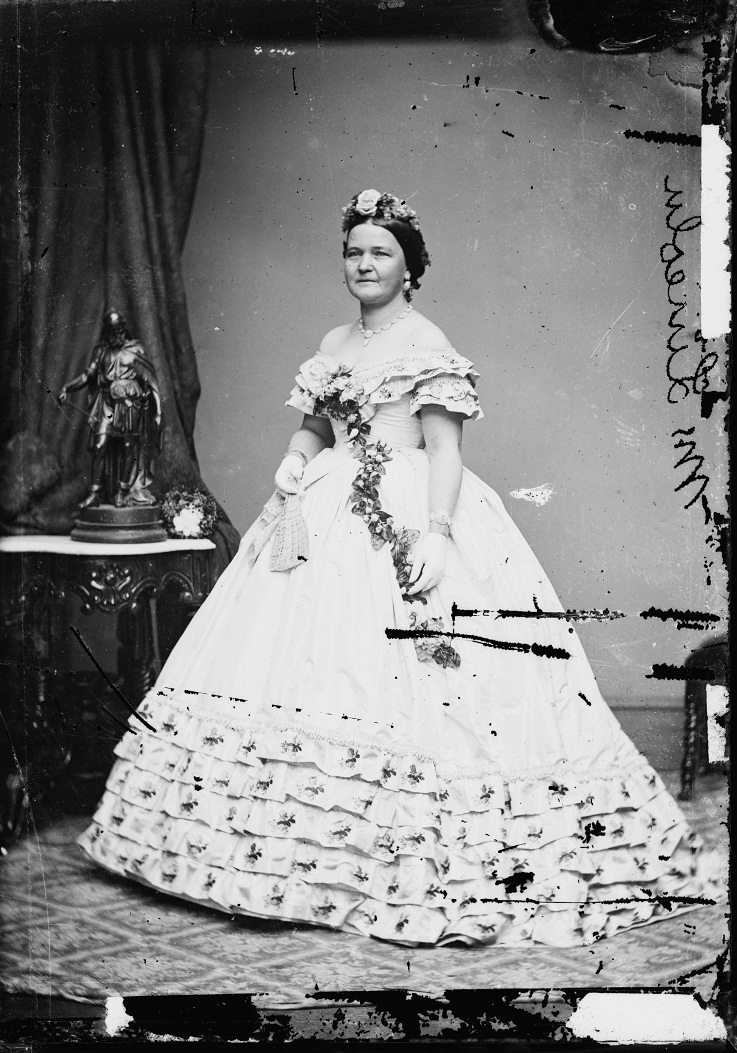
First Lady Mary Todd Lincoln (Library of Congress)

First Lady Mary Todd Lincoln (Library of Congress)

Here Meade continues his discussion of Samuel Du Pont’s failure to subdue Charleston with navy ironclads. The Seymour to whom he refers is Brig. Gen. Truman Seymour, serving as Maj. Gen. David Hunter’s chief of staff in South Carolina. Hunter had hoped he navy would use their ironclads to support a landing by his troops. Meade knew—and disliked—Seymour when they both commanded brigades under John Reynolds. Meade particularly resented the way he thought Seymour was sucking up to Reynolds in hopes of advancement.

Meade’s story about getting flowers from Mary Todd Lincoln displays a fine touch of self-deprecation, which I enjoy.

The note about son George hints at one of the upcoming problems with Hooker’s Chancellorsville campaign. George Stoneman’s cavalry, to which young George Meade’s regiment belonged, was supposed to range behind the Confederate army and disrupt its communications and supplies. Torrential storms raised the rivers and severely delayed Stoneman’s operation, putting an early kink in Hooker’s plans.

I can see by the public journals that the navy are in the affair at Charleston about to imitate the bad example of the army by squabbling among themselves after a battle with greater energy than they display fighting the enemy. DuPont will undoubtedly have to bear the brunt of the failure at Charleston, but as I see the Tribune most warmly and energetically espouses his cause, I presume he is all safe. I never had any idea the ironclads would be able to do much more than they did. They are simply able to stand fire, but have no more offensive power, indeed not as much as ordinary vessels of war.

I see Seymour has been sent by Hunter to endeavor to have countermanded the order sending the ironclads to the Mississippi. This order, if ever given, was in my judgment very injudicious, for these vessels will be of no use on that river in reducing the works of Vicksburg and Port Hudson. The only service they can be put to there would be to patrol the river between the two places, and prevent supplies to the rebels from the Red River Country.

Yesterday the Richmond papers announced the fall of Suffolk, and we were all pretty blue; but this morning we have a telegram from General Peck reporting that he has stormed and carried a battery of six guns that the enemy had built, and had captured a portion of an Alabama regiment that was defending it. This is great news, not so much for the actual amount of the success, as for the facts—first, that it is the reverse of what the rebels had reported, and, second, because it is the first time in this war that our troops have carried a battery in position at the point of the bayonet, an example, I trust, will be speedily and often imitated by us.

Day before yesterday, I was astonished at receiving a very beautiful bouquet of flowers, which had attached to it a card on which was written, “With the compliments of Mrs. A. Lincoln.” At first I was very much tickled, and my vanity insinuated that my fine appearance had taken Mrs. L’s eye and that my fortune was made. This delusion, however, was speedily dissolved by the orderly who brought the bouquet inquiring the road to General Griffin’s and Sykes’s quarters, when I ascertained that all the principal generals had been similarly honored.

I understand George joined his regiment up the river, the day after he arrived. He went up in a violent storm.

Meade’s letter taken from The Life and Letters of George Gordon Meade, Major-General United States Army, Vol. 1, (New York: Charles Scribner’s Sons, 1913), p. 367-8. Available via Google Books.

Ignorance, Not Bliss (April 18, 1863)

In his letter of April 18 Meade complains about Joe Hooker’s tendency to keep his plans to himself. This is something that would increasingly bother Meade. Only three days before he took command of the Army of the Potomac, as Hooker was following Lee towards Pennsylvania, Meade wrote to his wife, “I hear nothing whatever from headquarters, and am as much in the dark as to proposed plans here on the ground as you are in Philadelphia. This is what Joe Hooker thinks profound sagacity—keeping his corps commanders, who are to execute his plans, in total ignorance of them until they are developed in the execution of orders.”

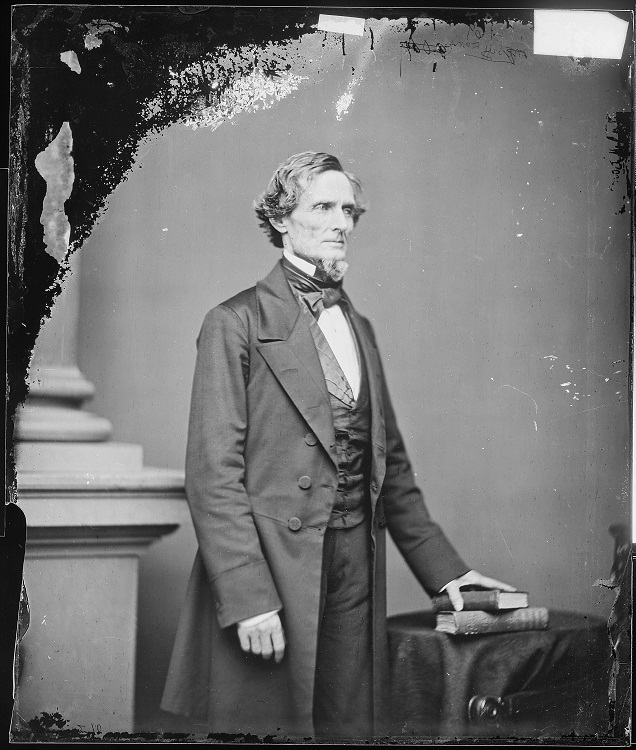
Confederate President Jefferson Davis. As secretary of war under President Franklin Pierce, Davis had signed one of Meade's commissions (National Archives).

Confederate President Jefferson Davis. As secretary of war under President Franklin Pierce, Davis had signed one of Meade’s commissions (National Archives).

On April 2 Richmond citizens had rioted over the lack of bread and Meade mentions Confederate President Jefferson Davis’s proclamation about food, issued on April 10. He asked the Southern people to switch production from cotton and tobacco to foodstuffs and fodder. “Let your fields be devoted exclusively to the production of corn, oats, beans, peas, and other food for man and beast,” asked Davis.

To-day is fine and beautiful, and if we only have a continuance of such weather, we shall soon be on the move. I suppose the sooner we get off the better. General Hooker seems to be very sanguine of success, but is remarkably reticent of his information and plans; I really know nothing of what he intends to do, or when or where he proposes doing anything. This secrecy I presume is advantageous, so far as it prevents the enemy’s becoming aware of our plans. At the same time it may be carried too far, and important plans may be frustrated by subordinates, from their ignorance of how much depended on their share of the work. This was the case at Fredericksburg. Franklin was not properly advised, that is to say, not fully advised, as to Burnside’s plan. I am sure if he had been so advised, his movements would have been different.

I suppose you have seen Jeff Davis’s proclamation on the subject of food. It undoubtedly is a confession of weakness, but we should be very careful how we allow ourselves to be led astray by it. Not a single exertion on our part should be relaxed, not a man less called out than before. We might as well make up our minds to the fact that our only hope of peace is in the complete overpowering of the military force of the South, and to do this we must have immense armies to outnumber them everywhere. I fear, however, that this plain dictate of common sense will never have its proper influence. Already I hear a talk of not enforcing the conscription law. Certainly no such efforts are being made to put the machinery of the law into motion as would indicate an early calling out of the drafted men. In the course of the next month and the one ensuing, all the two-year and nine-month men go out of service. Of the latter class there were called out three hundred thousand. How many are in service I don’t know. I do know, however, that this army loses in the next twenty days nearly twenty-five thousand men, and that I see no indication of their being replaced. Over eight thousand go out of my corps alone. These facts have been well-known at Washington for some time past, and pressed upon the attention of the authorities, and perhaps arrangements unknown to me have been made to meet the difficulty.

Meade’s letter taken from The Life and Letters of George Gordon Meade, Major-General United States Army, Vol. 1, (New York: Charles Scribner’s Sons, 1913), p. 366-7. Available via Google Books.