Letter from Halleck (July 28, 1863)

Major General Henry Halleck, a.k.a. "Old Brains."

Major General Henry Halleck, a.k.a. “Old Brains.” (Library of Congress)

On July 28 general-in-chief Henry Halleck wrote Meade an unofficial letter to clarify his and the president’s reactions to Lee’s escape after Gettysburg.

I take this method of writing you a few words which I could not well communicate in any other way. Your fight at Gettysburg met with universal approbation of all military men here. You handled your troops in that battle as well, if not better, than any general has handled his army during the war. You brought all your forces into action at the right time and place, which no commander of the Army of the Potomac has done before. You may well be proud of that battle. The President’s order of proclamation of July 4th showed how much he appreciated your success. And now a few words in regard to subsequent events. You should not have been surprised or vexed at the President’s disappointment at the escape of Lee’s army. He had examined into all the details of sending you reinforcements to satisfy himself that every man who could possibly be spared from other places had been sent to your army. He thought that Lee’s defeat was so certain that he felt no little impatience at his unexpected escape. I have no doubt, General, that you felt the disappointment as keenly as any one else. Such things sometimes occur to us without any fault of our own. Take it all together, your short campaign has proved your superior generalship, and you merit, as you will receive, the confidence of the Government and the gratitude of the country. I need not assure you, General, that I have lost none of the confidence which I felt in you when I recommended you for the command.

Very respectfully, your obedient servant,
H. W. Halleck.

Halleck’s letter taken from The Life and Letters of George Gordon Meade, Major-General United States Army, Vol. 2, (New York: Charles Scribner’s Sons, 1913), pp. 138-9. Available via Google Books.

Defense (July 21, 1863)

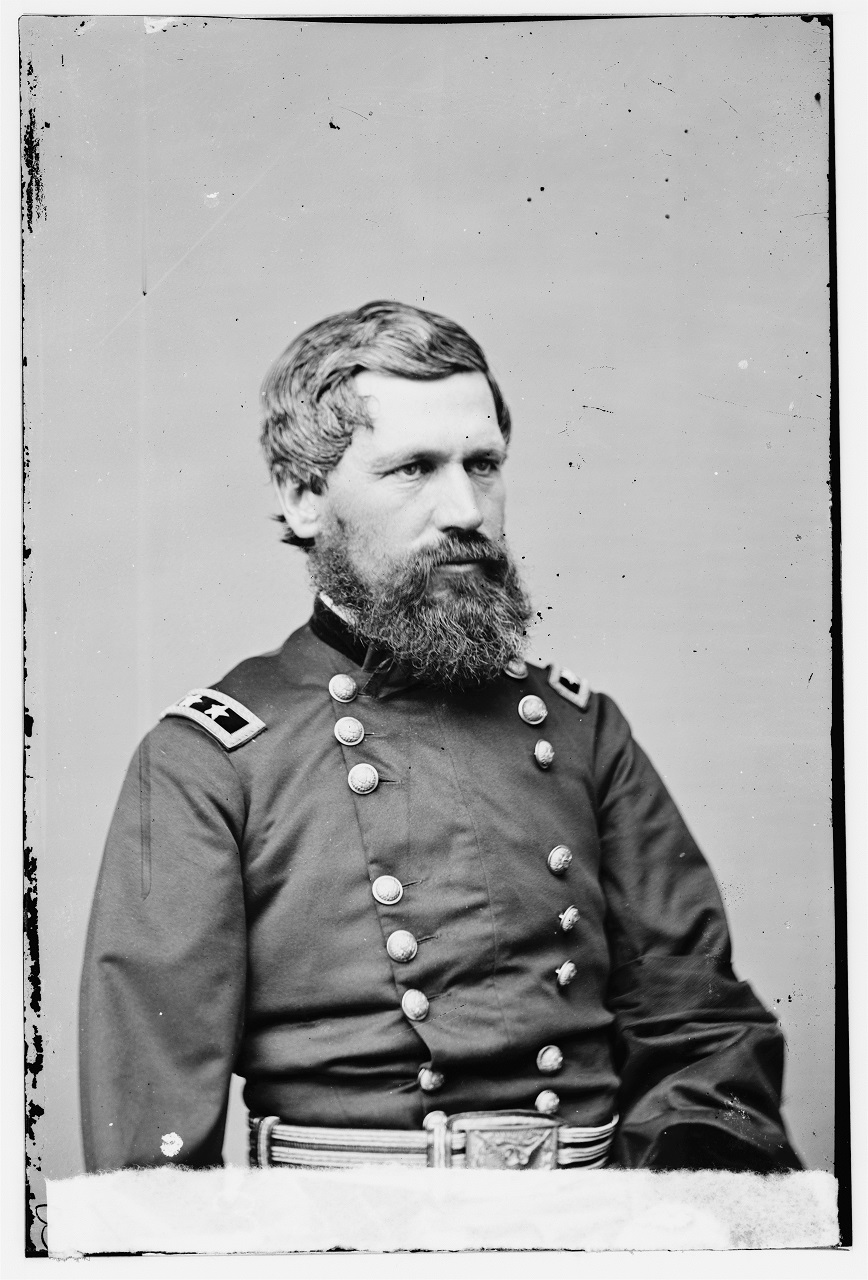
Maj. Gen. Oliver O. Howard. He defended Meade in a letter to President Lincoln (Library of Congress).

Maj. Gen. Oliver O. Howard. He defended Meade in a letter to President Lincoln (Library of Congress).

When Meade wrote to his wife on July 21 he was still steaming over the reaction from Washington to Robert E. Lee’s escape to Virginia. Apparently, President Lincoln’s attitude had softened somewhat over the ensuing week. Maj. Gen. Oliver O. Howard had written a letter to the president defending Meade (for the full text of the letter, scroll down) and on July 21 Lincoln replied. “I was deeply mortified by the escape of Lee across the Potomac, because the substantial destruction of his army would have ended the war, and because I believed such destruction was perfectly easy—believed that General Meade and his noble army had expended all the skill and toil and blood up to the ripe harvest, and then let the crop go to waste,” Lincoln wrote Howard. “A few days having passed I am now profoundly grateful for what was done, without criticism for what was not done. General Meade has my confidence as a brave and skillful officer and a true man.”

Your indignation at the manner in which I was treated on Lee’s escape is not only natural, but was and is fully shared by me. I did think at one time writing frankly to the President, informing him I never desired the command, and would be most glad at any time to be relieved, and that, as he had expressed dissatisfaction at my course, I thought it was his duty, independent of any personal consideration, to remove me. After reflection, however, I came to the conclusion to take no further action in the matter, and leave it entirely with them. I took the command from a sense of duty. I shall continue to exercise it, to the best of my humble capacity, in the same spirit. I have no ambition or ulterior views, and whatever be my fate, I shall try to preserve a clear conscience. I have received very handsome letters, both from Generals McClellan and Pope, which I enclose for your perusal and preservation. I have answered them both in the same spirit as appears to have dictated them.

This is what McClellan wrote to Meade:

My Dear General: I have abstained from writing to you simply because I hear that you have no time to read letters—but I will say a word now, anyhow.

I wish to offer you my sincere and heartfelt congratulations upon the glorious victory you have achieved, and the splendid way in which you assumed control of our noble old army under such trying circumstances.

You have done all that could be done and the Army of the Potomac has supported you nobly. I don’t know that, situated as I am, my opinion is worth much to any of you—but I can trust saying that I feel very proud of you and my old Army. I don’t flatter myself that your work is over—I believe that you have another severe battle to fight, but I am confident that you will win. That God may bless you and your army in its future conflicts is the prayer of

Your sincere friend

CEO. B. McCLELLAN

This is the letter Howard wrote to Lincoln. (From Official Records, Series I, Volume 27, Part 1, p. 700.)

Sir:

Having noticed in the newspapers certain statements bearing upon the battle of Gettysburg and subsequent operations, which I deem calculated to convey a wrong impression to your mind, I wish to submit a few statements.

The successful issue of the battle of Gettysburg was due mainly to the energetic operations of our present commanding general prior to the engagement, and to the manner in which he handled his troops on the field. The reserves have never before during this war been thrown in at just the right moment. In many cases when points were just being carried by the enemy, a regiment or brigade appeared to stop his progress and hurl him back. Moreover, I have never seen a more hearty co-operation on the part of general officers than since General Meade took the command.

As to not attacking the enemy prior to leaving his stronghold beyond the Antietam, it is by no means certain that the repulse of Gettysburg might not have been turned upon us. At any rate, the commanding general was in favor of an immediate attack, but with the evident difficulties in our way, the uncertainty of a success, and the strong conviction of our best military minds against the risk, I must say that I think the general acted wisely. As to my request to make a reconnaissance on the morning of the 14th, which the papers state was refused, the facts are, that the general had required me to reconnoiter the evening before, and give my opinion as to the practicability of making a lodgment on the enemy’s left, and his answer to my subsequent request was that the movements he had already ordered would serve the same purpose. We have, if I may be allowed to say it, a commanding general in whom all the officers with whom I have come in contact express complete confidence.

I have said this much because of the censure and of the misrepresentations which have grown out of the escape of Lee’s army. Very respectfully, your obedient servant.

O. O. HOWARD,
Major- General

Meade’s correspondence taken from The Life and Letters of George Gordon Meade, Major-General United States Army, Vol. 2, (New York: Charles Scribner’s Sons, 1913), pp. 136 and 312. Available via Google Books.

A Most Decided Victory (July 5, 1863)

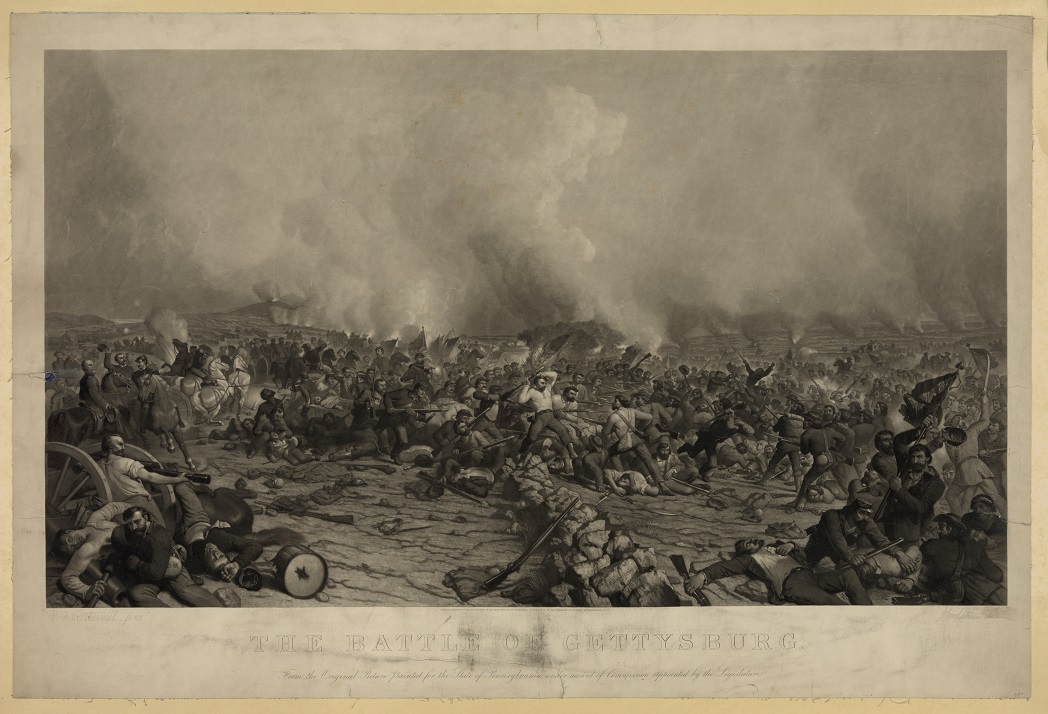
An engraving of Peter Rothermel's 1870 depiction of the fighting on July 3. This shows the climactic struggle at the Angle. Meade appears to the left. When he saw the original painting, Meade complained about the historical inaccuracy of having him on the front lines as his army was repulsing Pickett's charge. Rothermel defended the artistic license Library of Congress).

An engraving of Peter Rothermel’s 1870 depiction of the fighting on July 3. This shows the climactic struggle at the Angle. Meade appears to the left. When he saw the original painting, Meade complained about the historical inaccuracy of having him on the front lines as his army was repulsing Pickett’s charge. Rothermel defended the artistic license (Library of Congress).

The Battle of Gettysburg was over. Now remained the task of pursuing Robert E. Lee’s retreating army. On July 4 Meade issued a circular praising his soldiers for their victory but this seemingly innocuous announcement raised Abraham Lincoln’s ire. This is what Meade issued:

The Commanding General, in behalf of the country, thanks the Army of the Potomac for the glorious result of the recent operations.

An enemy superior in numbers and flushed with the pride of a successful invasion, attempted to overcome and destroy tin’s Army. Utterly baffled and defeated, he has now withdrawn from the contest. The privations and fatigue the Army has endured, and the heroic courage and gallantry it has displayed will be matters of history to be remembered.

Our task is not yet accomplished, and the Commanding General looks to the Army for greater efforts to drive from our soil every vestige of the presence of the invader.

It is right and proper that we should, on all suitable occasions, return our grateful thanks to the Almighty Disposer of events, that in the goodness of His Providence He has thought fit to give victory to the cause of the just.

When President Lincoln read that, he exclaimed, “Drive the invaders from our soil! Great God! Is that all?” To another listener the president complained, “Will our Generals never get that idea out of their heads? The whole country is our soil.”

On July 5 Meade sent this message to Henry Halleck in Washington:

The enemy retired under cover of the night and heavy rain in the direction of Fairfield and Cashtown. All my available Cavalry are in pursuit on the enemy’s left and rear. My movement will be made at once on his flank via Middletown and South Mountain Pass. I cannot give you the details of our capture in prisoners, colors and arms. Upwards of twenty battle flags will be turned in from one Corps. I cannot delay to pick up the debris of the battle field and request that all those arrangements may be made by the Departments. My wounded, with those of the enemy in our hands, will be left at Gettysburg. After burying our own, I am compelled to employ citizens to bury the enemy’s dead. My Head-Quarters will be to-night at Cregerstown. Communication received from Gen. Smith, in command of 3,000 men, on the march from Carlisle towards Cashtown. Field returns last evening give me about 55,000 effectives in the ranks, exclusive of Cavalry, baggage guards, ambulance attendants, etc. Every available reinforcement is required and should be sent to Frederick without delay.

And on July 5 Meade found time to write home to his wife.

I hardly know when I last wrote to you, so many and such stirring events have occurred. I think I have written since the battle, but am not sure. It was a grand battle, and is in my judgment a most decided victory, though I did not annihilate or bag the Confederate Army. This morning they retired in great haste into the mountains, leaving their dead unburied and their wounded on the field. They awaited one day, expecting that, flushed with success, I would attack them when they would play their old game of shooting us from behind breastworks—a game we played this time to their entire satisfaction. The men behaved splendidly; I really think they are becoming soldiers. They endured long marches, short rations, and stood one of the most terrific cannonadings I ever witnessed. Baldy was shot again, and I fear will not get over it. Two horses that George rode were killed, his own and the black mare. I had no time to think of either George or myself, for at one time things looked a little blue; but I managed to get up reinforcements in time to save the day. The army are in the highest spirits, and of course I am a great man. The most difficult part of my work is acting without correct information on which to predicate action.

Meade’s correspondence taken from The Life and Letters of George Gordon Meade, Major-General United States Army, Vol. 2, (New York: Charles Scribner’s Sons, 1913), pp. 122-3 and 125. Available via Google Books.

Straight at Them (June 29, 1863)

This Currier & Ives print from 1863 depicts a very heroic version of the victor of Gettysburg (Library of Congress).

This Currier & Ives print from 1863 depicts a very heroic version of the victor of Gettysburg (Library of Congress).

George Gordon Meade was now in command of the Army of the Potomac. On June 29 he found time to write to his wife and inform her of this fact.

It has pleased Almighty God to place me in the trying position that for some time past we have been talking about. Yesterday morning, at 3 A. M., I was aroused from my sleep by an officer from Washington entering my tent, and after waking me up, saying he had come to give me trouble. At first I thought that it was either to relieve or arrest me, and promptly replied to him, that my conscience was clear, void of offense towards any man; I was prepared for his bad news. He then handed me a communication to read; which I found was an order relieving Hooker from the command and assigning me to it. As, dearest, you know how reluctant we both have been to see me placed in this position, and as it appears to be God’s will for some good purpose—at any rate, as a soldier, I had nothing to do but accept and exert my utmost abilities to command success. This, so help me God, I will do, and trusting to Him, who in his good pleasure has thought it proper to place me where I am, I shall pray for strength and power to get through with the task assigned me. I cannot write you all I would like. I am moving at once against Lee, whom I am in hopes Couch will at least check for a few days; if so, a battle will decide the fate of our country and our cause. Pray earnestly, pray for the success of my country, (for it is my success besides). Love to all. I will try and write often, but must depend on George.

The General Couch Meade mentions is Dairus Couch, the former commander of the XX Corps who had refused to serve any longer under Hooker following Chancellorsville. He now commanded the Department of the Susquehanna, based in Harrisburg.

It was also on this day that the governor of New Jersey, Joel Parker, took it upon himself to write to President Abraham Lincoln. He wrote, “The people of New Jersey are apprehensive that the invasion of the enemy may extend to her soil. We think that the enemy should be driving from Pennsylvania. There is now certainly great apathy under such fearful circumstances. That apathy should be removed. The people of New Jersey want McClellan at the head of the Army of the Potomac. If that cannot be done, then we ask that he may be put at the head of the New Jersey, New York, and Pennsylvania troops now in Pennsylvania, defending these Middle States from invasion. If either appointment be made, the people would raise en masse.”

Needless to say, that did not happen. Lincoln replied the next day and assured the governor that Lee was not likely to reach New Jersey. “I beg you to be assured that no one out of my position can know so well as if he were in it the difficulties and involvements of replacing General McClellan in command, and this aside from any imputations upon him,” the president wrote. Still, rumors circulated within the army at Gettysburg that McClellan had resumed command.

Ambrose Burnside. He and Meade will work together later in the war (Library of Congress).

Ambrose Burnside. He and Meade will work together later in the war (Library of Congress).

Ambrose Burnside, one of Meade’s predecessors in command, took time to send him a message from Cincinnati, where he commanded the Department of the Ohio. He wrote, “I am sure you are quite equal to the position you are called to fill. You are regarded by all who know you as an honest, skillful, and unselfish officer, and a true, disinterested patriot. I will not congratulate you, because I know it is no subject of congratulation to assume such a responsibility at such a time, but I will earnestly pray for your success.”

During the day Meade moved the Army of the Potomac forward towards the enemy. By evening Meade has established his headquarters in Middleburg, Maryland, and he wrote again to Margaret.

We are marching as fast as we can to relieve Harrisburg, but have to keep a sharp lookout that the rebels don’t turn around us and get at Washington and Baltimore in our rear. They have a cavalry force in our rear, destroying railroads, etc., with the view of getting me to turn back; but I shall not do it. I am going straight at them, and will settle this thing one way or the other. The men are in good spirits; we have been reinforced so as to have equal numbers with the enemy, and with God’s blessing I hope to be successful. Good-by!

Meade’s letter taken from The Life and Letters of George Gordon Meade, Major-General United States Army, Vol. 2, (New York: Charles Scribner’s Sons, 1913), pp. 11-12 and 13-14. Available via Google Books. Other correspondence from Official Records of the War of the Rebellion, Series One, Volume XXVII, Part 3, pp. 409 and 410.

Sucking Up (April 11, 1863)

On April 9, 1863, Alfred Waud sketched President Lincoln as he and various Union generals reviewed the Army of the Potomac. Someone has clipped off Joe Hooker's head. Click on the image for a larger version (Library of Congress).

On April 9, 1863, Alfred Waud sketched President Lincoln as he and various Union generals reviewed the Army of the Potomac. Someone has clipped off Joe Hooker’s head. Click on the image for a larger version (Library of Congress).

George Meade was an ambitious man. That’s obvious even in his edited letters, which appeared in print as The Life and Letters of George Gordon Meade, Major-General United States Army in 1913. The unedited versions show even more clearly how much Meade aspired to reach a position to which he felt entitled. He often expressed his ambitions in his letters to his wife. In this one he amusingly details some of his efforts to ingratiate himself with Abraham Lincoln when the president visited the Army of the Potomac. (It’s possible that Meade is the only person to refer to Mary Todd Lincoln as “amiable.)

The Lancers are the cavalry regiment to which Meade’s son, George, belonged. Stoneman was George Stoneman, commander of the army’s cavalry corps.

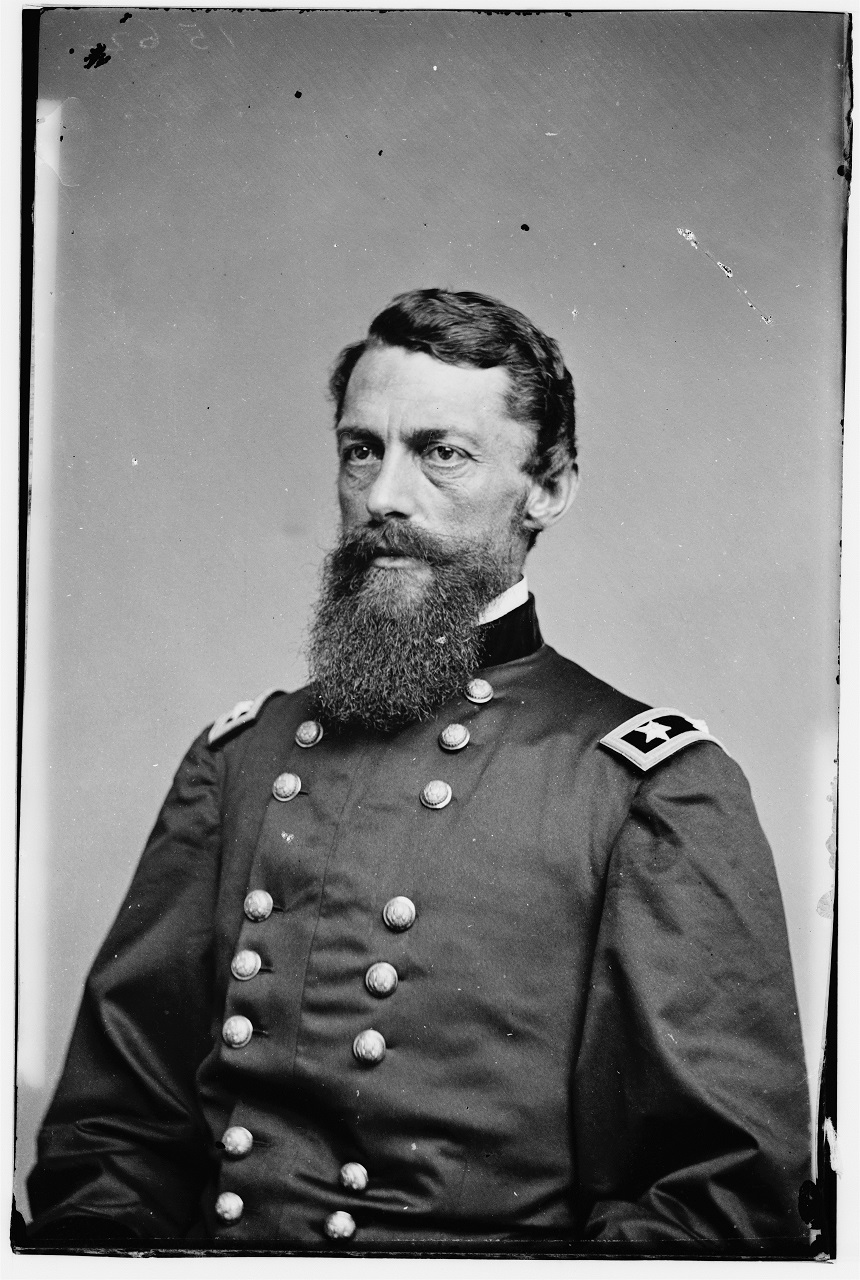
Major General George Stoneman, who commanded the cavalry corps (Library of Congress).

Major General George Stoneman, who commanded the cavalry corps (Library of Congress).

The President has now reviewed the whole army, and expresses himself highly delighted with all he has seen. Since our review, I have attended the other reviews and have been making myself (or at least trying so to do) very agreeable to Mrs. Lincoln, who seems an amiable sort of personage. In view also of the vacant brigadiership in the regular army, I have ventured to tell the President one or two stories, and I think I have made decided progress in his affections. By-the-by, talking of this vacancy, I have been very much gratified at the congratulations I have received from several distinguished general officers on the prominence that has been given my name in connection with this appointment. The other day, Major General Stoneman came up to me and said he was very glad to hear I was so much talked of in connection with this vacancy; that he hoped I would get it, and that he believed the voice of the army would be in my favor. Coming as this does from those who are cognizant of my services, some of whom are themselves candidates, I cannot but regard it as most complimentary and gratifying, and I am sure it will please you. Stoneman also told me that, hearing I had a boy in the Lancers, he had sent for him and introduced him to Mrs. Stoneman. Stoneman also spoke very handsomely of the Lancers, and said he intended they should have full chance to show what they were made of.

Meade’s letter taken from The Life and Letters of George Gordon Meade, Major-General United States Army, Vol. 1, (New York: Charles Scribner’s Sons, 1913), pp. 364-5. Available via Google Books.