A Visit to Gettysburg (June 29, 2013)

DSC_4658I went down to Gettysburg yesterday (June 29). Since I was doing a book signing at the American History Store in town, I figured I would spend the entire day. I’m glad I did. I managed to find a parking space in the lot of the old visitor center and made that my base camp. From there I set out to explore the battlefield.

First I headed down to Meade’s headquarters at the Leister House, past the huge production being set up in the field just north of the building. This will be the site of the big show tonight (June 30). I then headed up to the Meade statue and down Cemetery Ridge to the Pennsylvania Monument. From there I walked down Sedgwick Avenue to the north slope of Little Round Top, skirted the Wheatfield on Wheatfield Road, turned right on Sickles Avenue at the edge of the Peach Orchard, and then followed the Emmitsburg Road into town.

By then I was pretty tired, so I headed up to the National Cemetery and lay down against a huge yellow popular tree at the far northern end. There I could hear the production crew running through the script of the sound-and-light show. It was a pleasantly surreal experience, as I drifted in and out of sleep not too far from the spot where Lincoln made his Gettysburg Address, to hear his words coming from the stage, as though they were being blown to me on the light summer breeze.

I brought with me the new Stackpole book Gettysburg: The Story of the Battlefield with Maps and also my copy of The U.S. Army War College Guide to the Battle of Gettysburg. As I walked about I stopped periodically to dip into both these volumes and profit by their insights. And I brought along a camera. I have included a few photos here.

I was somewhat surprised by the small number of people on the battlefield. Town, however, appeared fairly crowded and by late afternoon a line of cars stretched up Taneytown Road to the cemetery entrance.

I thought it was tremendously exciting to be here on this big anniversary. Since I will be appearing on PCN live on Tuesday and will be doing a Sacred Trust talk at the visitor center on July 6, I felt like I was part of it, in my own small way.
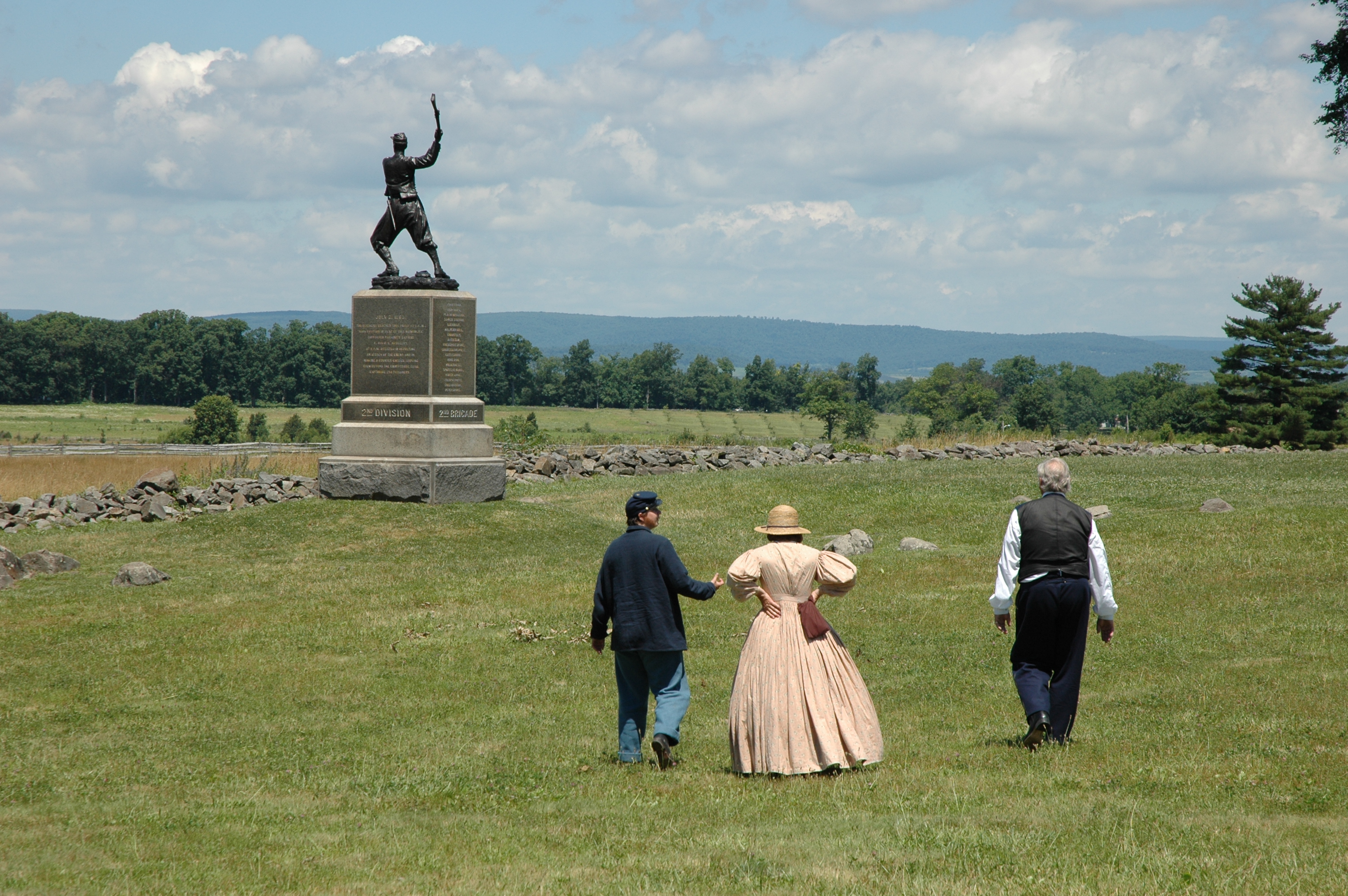
People in period dress approach the 72nd PA monument. Just a few days ago a thunderstorm knocked the statue off its base but park personnel quickly put it back.

People in period dress approach the 72nd PA monument. Just a few days ago a thunderstorm knocked the statue off its base but park personnel quickly put it back.

Who is that? A portrait of Robert E. Lee is projected on a huge screen set up just north of Meade's headquarters.

Who is that? A portrait of Robert E. Lee is projected on a huge screen set up just north of Meade’s headquarters.

The view from the Pennsylvania State Monument, looking towards the 1st MN monument.
The view from the Pennsylvania State Monument, looking towards the 1st MN monument.

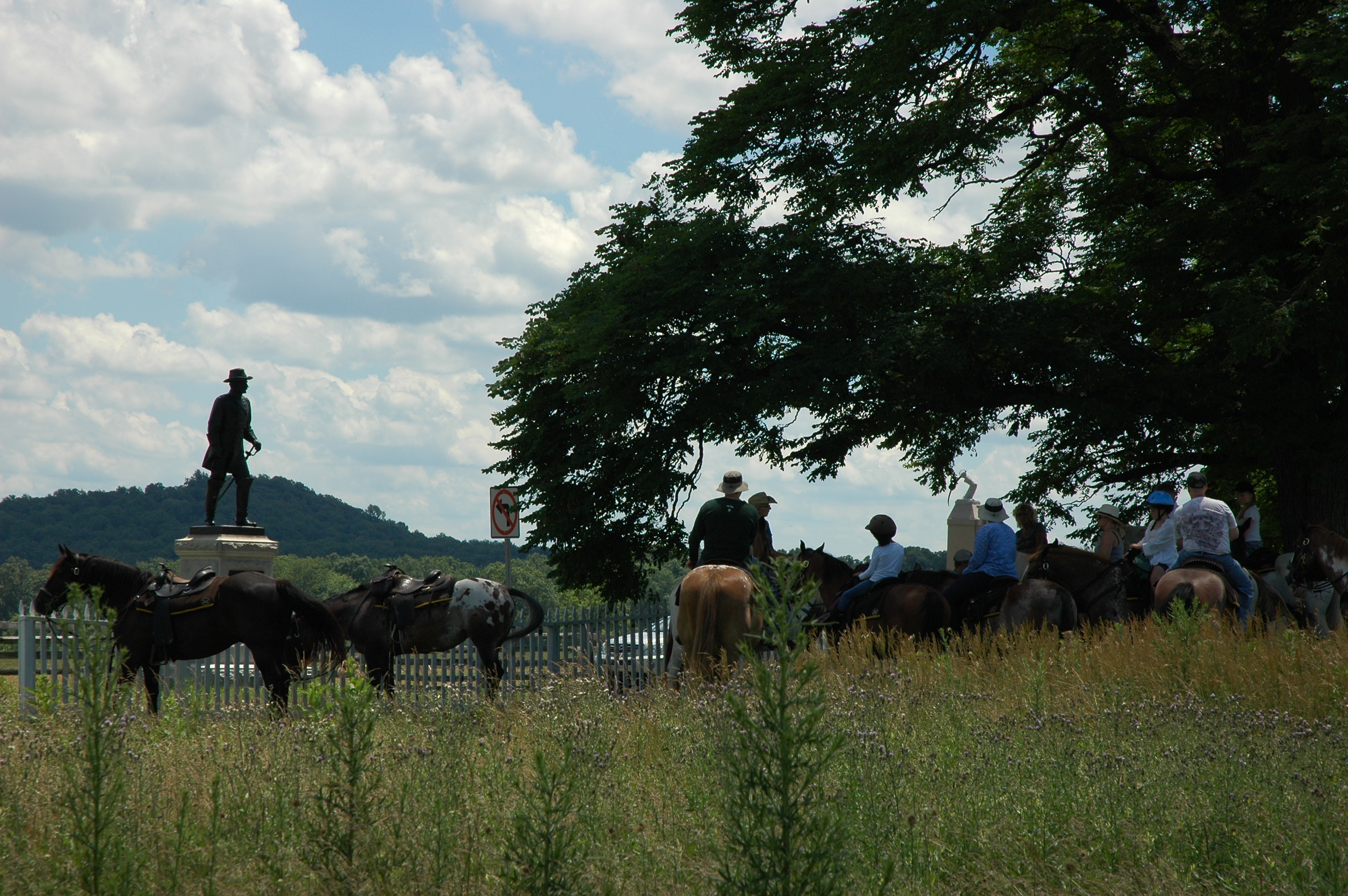
The statue of Gen. Andrew Humphreys overlooks a horseback tour group on the Emmitsburg Road. To the right is the 11th MA. The arm and sword atop it were only recently restored after being torn off by vandals in 2006.

The statue of Gen. Andrew Humphreys overlooks a horseback tour group on the Emmitsburg Road. To the right is the 11th MA. The arm and sword atop it were only recently restored after being torn off by vandals in 2006.

General Lee, is that you? Living historians are a common sight on the streets of Gettysburg. I saw several Lees but nary a Meade.
General Lee, is that you? Living historians are a common sight on the streets of Gettysburg. I saw several Lees but nary a Meade.

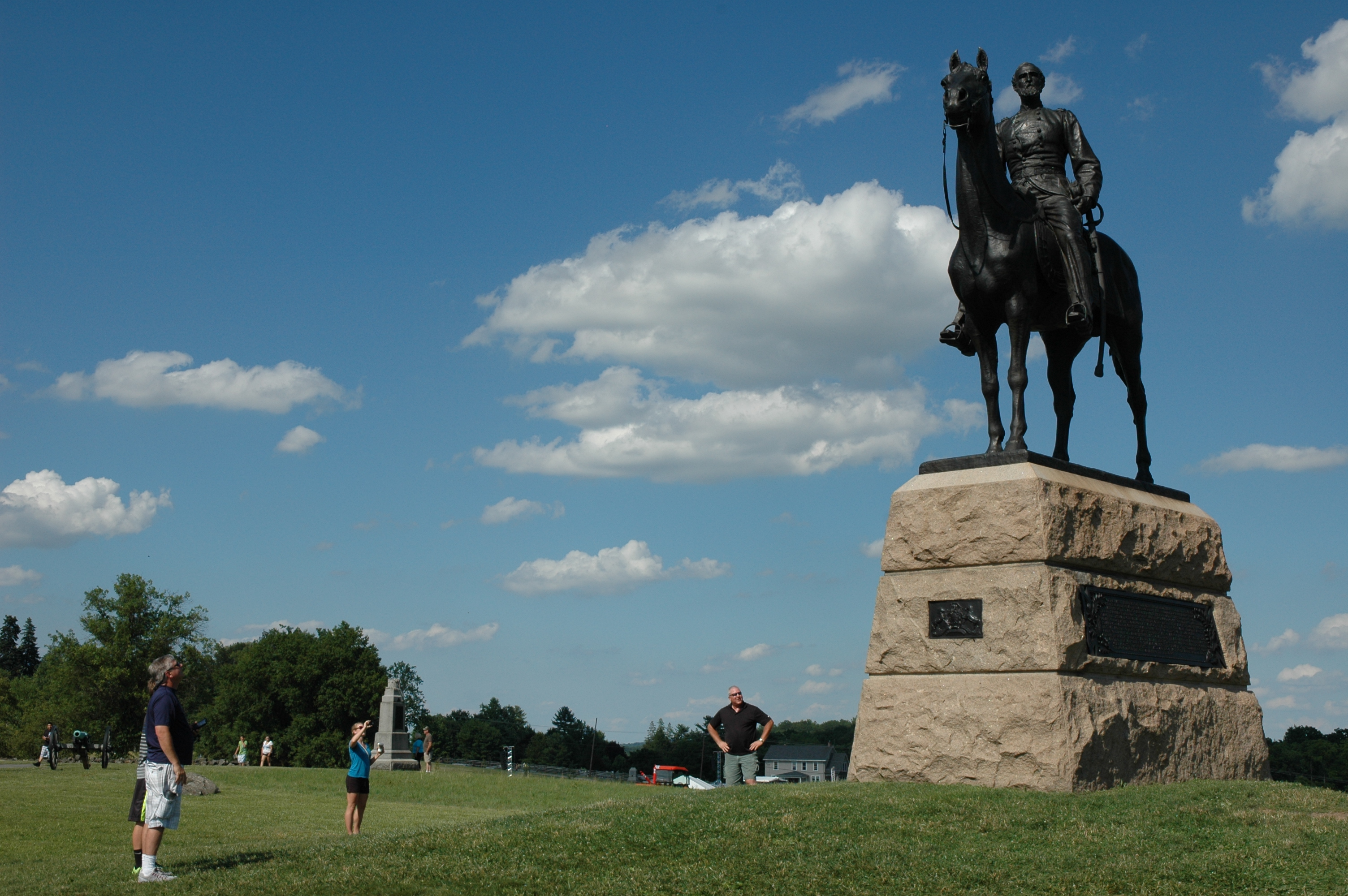
Visitors admire the victor of Gettysburg.

Visitors admire the victor of Gettysburg.

My table at the American History Store.

My table at the American History Store.

“Fighting Joe” Takes Charge (January 28, 1863)

What follows is a letter that Meade wrote to his wife on January 28, 1863. It’s another fascinating look at the rumor and speculation that swirled among the upper echelons of the Army of the Potomac at this tumultuous time. Major General Joseph Hooker had just replaced Ambrose Burnside as the army’s commander. The Gibbon whom Meade mentions is General John Gibbon; Humphreys is Andrew Atkinson Humphreys, who would serve as Meade’s chief of staff after Gettysburg.

hooker standing

A carte de visite taken of Major General Joseph Hooker sometime in 1862. (Library of Congress)

Your anxiety lest I should be placed in command of the army causes me to smile. Still, I must confess when such men as Gibbon say it is talked about, it really does look serious and alarming; yet, when I look back on the good fortune which has thus far attended my career, I cannot believe so sudden a change for the worse can occur as would happen if I were placed in command. I think, therefore, we may for the present dismiss our fears on that score. General Hooker has been two days in Washington. I am looking anxiously for his return to hear what will be the result. Before he was placed in command he was open-mouthed and constant in his assertions that he did not want to command, and that he would not command unless he was perfectly untrammeled and allowed in every respect to do exactly as he pleased. Now, I am quite confident no such conditions will be acceded to in Washington. Hence, either “Fighting Joe” will have to back down or some one else will be sent to take the command. From my knowledge of friend Hooker, I am inclined to surmise the former will be the case. But even supposing they give him carte-blanche, his position is anything but enviable. This army is in a false position, both as regards the enemy and the public. With respect to the enemy, we can literally do nothing, and our numbers are inadequate to the accomplishment of any result even if we go to the James River. On the other hand, the wise public are under the delusion that we are omnipotent, and that it is only necessary to go ahead to achieve unheard-of success. Of course, under such circumstances, neither Csesar, Napoleon nor any other mighty genius could fail to meet with condemnation, never mind what he did, and Hooker, I fancy, will find in time his fate in the fate of his predecessors, namely, undue and exaggerated praise before he does anything, and a total absence of reason and intelligence in the discussion of his acts when he does attempt anything, and a denial of even ordinary military qualifications unless he achieves impossibilities. Such being the case, he certainly is not to be envied. I think when his head is cut off, the Administration will try a general of their own kidney, either Fremont, Hunter or some other. Of course, so long as Hooker is absent, I continue in command of the Centre Grand Division, but I am more and more inclined to believe that his visit to Washington will result in the abolition of the grand-division system altogether, and the return to corps alone. I hope I shall retain the Fifth Corps, as it is one of the best, including as it does the regulars.

General Andrew Atkinson Humphreys. (Library of Congress)

General Andrew Atkinson Humphreys. (Library of Congress)

Humphreys has gone to Washington. I believe I wrote you he behaved with distinguished gallantry at Fredericksburg. It appears that soon after the battle, Burnside told him both the President and Secretary assured him solemnly that Humphreys should be immediately promoted. He now finds a long list sent to the Senate, including such names as Butterfield, Sickles, Berry and others, who have really done nothing, while his name is omitted, and he cannot hear that there is any record in the Department going to show he has ever even been thought of. Under these circumstances he is naturally very indignant. This is all entre nous. Just as I had gotten thus far, I heard Hooker had returned, and notwithstanding it is storming and snowing violently, I rode three miles to his headquarters to see him, and have just returned. He seemed in excellent spirits, said they had treated him “en prince” in Washington, and told him he had only to ask and he should have what he wanted. He did not tell me his plans, but intimated that as soon as the weather and the roads permitted he was prepared to try something.

Meade’s letters taken from The Life and Letters of George Gordon Meade, Major-General United States Army, Vol. 1, (New York: Charles Scribner’s Sons, 1913), pp. 351-353. Available via Google Books.