No Ordinary Man (March 16, 1864)

Meade’s battles have shifted from Congress to the press, specifically an article, signed “Historicus,” that appeared in the New York Herald. You can read the Historicus article and its follow-ups here.


Daniel Sickles (Library of Congress).

Daniel Sickles (Library of Congress).

My Gettysburg fight is at present in statu quo, except that I have enclosed to the War Department the letter from the New York Herald, of the 12th, signed Historicus, saying I believed it was written, or dictated, by General Sickles, and that I desire he may be called on to state whether he authorized it, or endorses it; and should he reply in the affirmative, I then ask for a court of inquiry. If the department is not disposed to accede to this, I then ask permission to make public such official documents as I deem necessary to my defense.

George has gone to a ball to-night, given in the Fifth Corps. I thought I had better keep quiet at home, and not expose myself, as my cold, though better, still hangs about me. These balls were always against my judgment, and I see they are beginning to be animadverted on by those who are unfriendly to this army, and who are ready to catch at anything to find fault with.

As I told you, I was much pleased with Grant, and most agreeably disappointed in his evidence of mind and character. You may rest assured he is not an ordinary man.

Meade’s correspondence taken from The Life and Letters of George Gordon Meade, Major-General United States Army, Vol. 2, (New York: Charles Scribner’s Sons, 1913), pp. 180-1. Available via Google Books.

Weighing Grant (March 14, 1864)

This print, titled "Lincoln and His Generals," shows the president with Admirals Porter and Farragut and Generals Sherman, Thomas, Grant and Sheridan. In typical fashion, Meade is not included (Library of Congress).

This print, titled “Lincoln and His Generals,” shows the president with Admirals Porter and Farragut and Generals Sherman, Thomas, Grant and Sheridan. In typical fashion, Meade is not included (Library of Congress).

As of March 14 George Meade may think the tempest raised by the Joint Committee on the Conduct of the War is over, but there are more storm clouds ahead, including repercussions from an account of Gettysburg published on March 12 in the New York Herald by an anonymous correspondent calling himself Historicus. In a broader sense, though, Meade was correct that his position was secure, but that was due less to his own forceful testimony than to the fact that Ulysses S. Grant had become general-in-chief. Grant’s presence essentially derailed the efforts to get either Joe Hooker or Dan Sickles assigned as Meade’s replacement. As David Bell Birney, one of the generals backing Hooker, will write in a letter on April 5, “Grant killed the demonstration for Hooker, that was assuming shape, and would have ended in the decapitation of Meade.” In this letter Meade also continues the story of his letter to Senator Reverdy Johnson, which me mentioned in his letter of March 10.

I wrote you, I think, on the evening of the 10th, the day Grant was here. It rained all that day, and as he could not see anything, he determined to return to Washington the next day. The President having invited both General Grant and myself to dinner on Saturday, the 12th, I had of course to go up to Washington, and as I wanted to add to my testimony to the committee, I concluded to go up with General Grant. When I arrived, I immediately went before the committee and filed documentary evidence to prove the correctness of my previous assertion that I never for an instant had any idea of fighting anywhere but at Gettysburg, as soon as I learned of Reynolds’s collision and obtained information that the ground was suitable. Mr. Wade was the only member present. He took great pains to endeavor to convince me the committee were not responsible for the newspaper attacks on me, and I might rest assured there was no disposition on their part to do me injustice. Afterwards I saw Mr. Stanton, who told me Mr. Wade had been to see him, and said my testimony was the clearest statement that had ever been made to the committee, and that, as far as he could see, it was perfectly satisfactory in explanation of all charges against me. I soon found the tide had turned in my favor, and that Sickles had overreached himself. I also ascertained that Chandler and Wilkinson were my foes on the committee, that Wade was rather friendly, and that Harding, of the Senate, Gooch and Odell, of the House, were my warm friends.

I think I wrote to you that the Secretary had officially inquired of me by what authority I had written to Hon. Reverdy Johnston, a Senator, about military affairs, and that I had replied to him I did not require any authority to write a private letter to a friend, defending myself from slanders. When I saw Mr. Stanton I referred to this matter, when he told me his letter had been written in my interest; that I had made a great mistake in writing to Mr. Johnston, who was showing it to everybody, and making it appear he was my chosen champion; and that his political status was such that any identification with him could not fail to damage me and my cause. He said he was aware of how I had been led into the step, and all he wanted was just such a reply as I had made, which he would now show to Senators and Representatives when they called on him to know what my relations were with Reverdy Johnston. I fortunately met Mr. Johnston in the street, begged him to consider my letter strictly private, and borrowed it to copy for file in the War Department.

I think I told you I was very much pleased with General Grant. In the views he expressed to me he showed much more capacity and character than I had expected. I spoke to him very plainly about my position, offered to vacate the command of the Army of the Potomac, in case he had a preference for any other. This he declined in a complimentary speech, but indicated to me his intention, when in this part of the country, of being with my army. So that you may look now for the Army of the Potomac putting laurels on the brows of another rather than your husband.

Meade’s correspondence taken from The Life and Letters of George Gordon Meade, Major-General United States Army, Vol. 2, (New York: Charles Scribner’s Sons, 1913), pp. 177-8. Available via Google Books.

The Storm Subsides (March 10, 1864)

Meade appears upbeat about his battles in Congress on March 10. At the end of the letter he mentions Grant’s arrival for a visit, which is even bigger news. This is how Grant himself recalled the meeting in his memoirs:

A sketch of Ulysses S. Grant by Alden Finney Brooks (Library of Congress).

A sketch of Ulysses S. Grant by Alden Finney Brooks (Library of Congress).

My commission as lieutenant-general was given to me on the 9th of March, 1864. On the following day, as already stated, I visited General Meade, commanding the Army of the Potomac, at his headquarters at Brandy Station, north of the Rapidan. I had known General Meade slightly in the Mexican war, but had not met him since until this visit. I was a stranger to most of the Army of the Potomac, I might say to all except the officers of the regular army who had served in the Mexican war. There had been some changes ordered in the organization of that army before my promotion. One was the consolidation of five corps into three, thus throwing some officers of rank out of important commands. Meade evidently thought that I might want to make still one more change not yet ordered. He said to me that I might want an officer who had served with me in the West, mentioning Sherman specially, to take his place. If so, he begged me not to hesitate about making the change. He urged that the work before us was of such vast importance to the whole nation that the feeling or wishes of no one person should stand in the way of selecting the right men for all positions. For himself, he would serve to the best of his ability wherever placed. I assured him that I had no thought of substituting any one for him. As to Sherman, he could not be spared from the West.

This incident gave me even a more favorable opinion of Meade than did his great victory at Gettysburg the July before. It is men who wait to be selected, and not those who seek, from whom we may always expect the most efficient service.

Meade’s position afterwards proved embarrassing to me if not to him. He was commanding an army and, for nearly a year previous to my taking command of all the armies, was in supreme command of the Army of the Potomac—except from the authorities at Washington. All other general officers occupying similar positions were independent in their commands so far as any one present with them was concerned. I tried to make General Meade’s position as nearly as possible what it would have been if I had been in Washington or any other place away from his command. I therefore gave all orders for the movements of the Army of the Potomac to Meade to have them executed. To avoid the necessity of having to give orders direct, I established my headquarters near his, unless there were reasons for locating them elsewhere. This sometimes happened, and I had on occasions to give orders direct to the troops affected.

In that excerpt Grant mentions the changes in the Army of the Potomac. Meade had requested that the army be consolidated from five corps to three, and the War Department issued the official orders on March 23. The I and III Corps, both terribly battered at Gettysburg, were broken up, their units distributed to the II, V, and VI Corps. That meant the departures of John Newton and William French, moves that created little regret. George Sykes was also removed from command of the V Corps; prickly, perfectionistic Gouverneur Warren now filled that post. Alfred Pleasonton, the dapper self-promoter who commanded the cavalry, had departed, too. His replacement was the short, pugnacious, and eager-for-glory Philip Sheridan. The General Gibbon whom Meade mentions is John Gibbon, who commanded a division of the II Corps. Reverdy Johnson is the conservative Democratic Senator from Maryland.

Brigadier General John Gibbon as he appeared during the war.

Brigadier General John Gibbon as he appeared during the war.

The storm in which I have been involved seems to be subsiding, as I note the Tribune now says that no charges were preferred against me by General Sickles or Doubleday. Tell General Gibbon that I have received his letter, and am greatly obliged to him for his gallantry and daring in coming out so boldly in my defense; but I do not wish him to compromise himself, and affairs are becoming complicated.

I think I wrote you on my return from Washington I found a polite note from Reverdy Johnston, saying he had assumed the responsibility of denying Mr. Wilkinson’s statement, and asking me if he was not right. This act of courtesy I considered entitled to an acknowledgment, so I replied to Mr. Johnston, and explained to him wherein I thought Mr. Wilkinson had been misled. This letter, it appears, Mr. Johnston showed to his friends, and its receipt was announced in Forney’s Chronicle. To-day I got a sharp letter from the Secretary of War, asking by what authority I wrote to Senators on military operations. I have replied my note was private and not intended for publication or circulation, and that I was not aware I required any authority to write private letters defending myself from the false and slanderous reports with which the public press has been filled for a week, particularly as the military operations referred to took place nine months ago, and the official reports have been published. This may involve me in trouble with the Secretary, but I cannot help it; I will not yield my right to defend myself.

To-day Lieutenant General Grant arrived here. He has been very civil, and said nothing about superseding me.

I go to-morrow to Washington, and shall go again before the committee, to add to my testimony.

Meade’s correspondence taken from The Life and Letters of George Gordon Meade, Major-General United States Army, Vol. 2, (New York: Charles Scribner’s Sons, 1913), pp. 176-7. Available via Google Books.

Conspiracy (March 8, 1864)

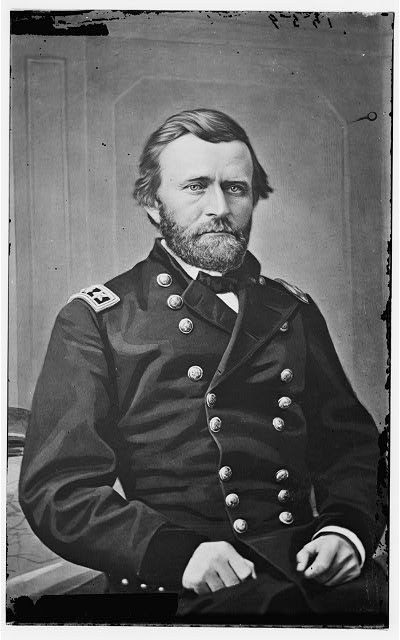
On March 9 Ulysses S. Grant will become general in chief of the Union armies (Library of Congress).

On March 9 Ulysses S. Grant will become general in chief of the Union armies (Library of Congress).

I am curious to see how you take the explosion of the conspiracy to have me relieved, for it is nothing less than a conspiracy, in which the Committee on the Conduct of the War, with Generals Doubleday and Sickles, are the agents. Grant is to be in Washington tonight, and as he is to be commander in chief and responsible for the doings of the Army of the Potomac, he may desire to have his own man in command, particularly as I understand he is indoctrinated with the notion of the superiority of the Western armies, and that the failure of the Army of the Potomac to accomplish anything is due to their commanders.

Meade’s correspondence taken from The Life and Letters of George Gordon Meade, Major-General United States Army, Vol. 2, (New York: Charles Scribner’s Sons, 1913), p. 176. Available via Google Books.

Leap Year (February 29, 1864)

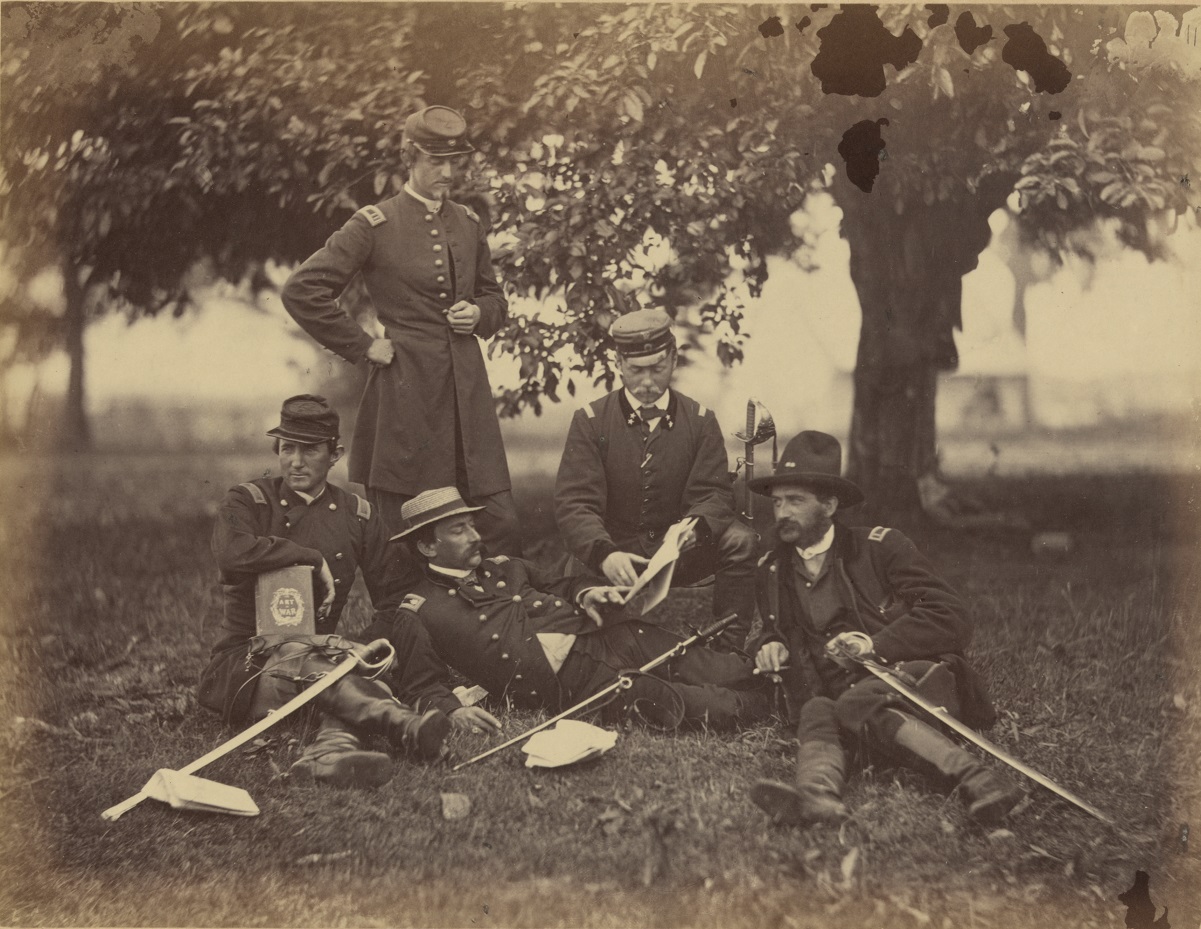
Alexander Gardner took this photograph at Fairfax Court House in June 1863, just before the start of the Gettysburg Campaign. He called it "Studying the Art of War." Ulric Dahlgren is the man standing. The man in the center is Count Ferdinand von Zeppelin, in the United States to observer. He will later become famous for the airships he develops. At the far right is Lt. Rosencranz, who will later serve on Meade's staff. Theodore Lyman mentions him often in his writings. To read Gardner's extensive caption for this photo, see below (Library of Congress).

Alexander Gardner took this photograph at Fairfax Court House in June 1863, just before the start of the Gettysburg Campaign. He called it “Studying the Art of War.” Ulric Dahlgren is the man standing. The man crouching  in the center is Count Ferdinand von Zeppelin, in the United States to observe the war. He will become known for the airships he later develops. Reclining is Joseph Dickinson. At the far right is Lt. Frederick Rosencrantz, who will later serve on Meade’s staff. Theodore Lyman mentions him often in his writings. Benjamin Ludlow, at left, was another Meade staffer. To read Gardner’s extensive caption for this photo, see below (Library of Congress).

1864 was a leap year, hence this letter from February 29. It is Meade’s last letter from February. March will be an eventful month, marking the arrival of Ulysses S. Grant, the investigations by the Joint Committee on the Conduct of the War, the reorganization of the Army of the Potomac, and the fallout from the Kilpatrick/Dahlgren raid on Richmond. As the last paragraph of Meade’s letter points out, March will also bring Ulysses S. Grant, the new general-in-chief of the Union armies, a post held until now by Henry Halleck.

Yesterday Mr. Dorr, from Christ Church, preached for us, and afterwards dined and spent the evening with me. During the evening one of the escaped prisoners from Libby prison, who had made his way from Richmond right through the main body of Lee’s army and into our lines, came to see me, and Mr. Dorr seemed very much interested in the narrative of his adventures. He returned home this morning, delighted with his visit to the army and all he had seen. He has a son who is a captain in Chapman Biddle’s regiment, the One Hundred and Twenty-first Pennsylvania Volunteers.
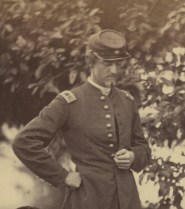
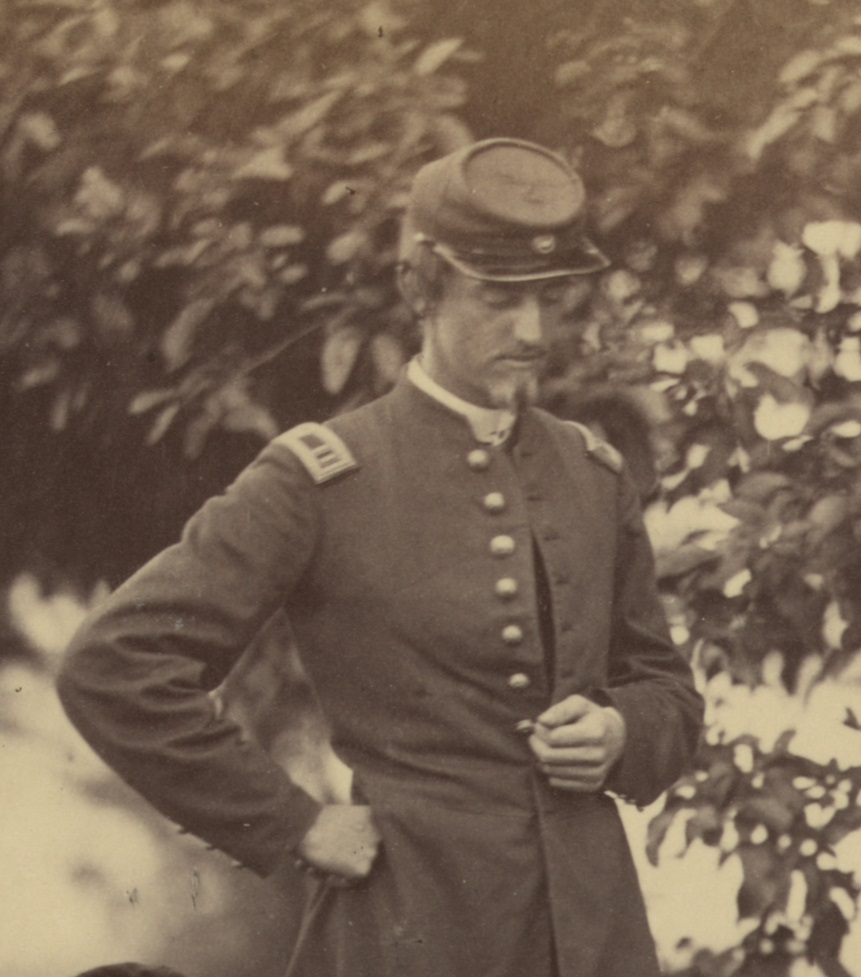
Ulric Dahlgren, in a close-up from Gardner's photograph (Library of Congress).

Ulric Dahlgren, in a close-up from Gardner’s photograph (Library of Congress).

My cavalry expedition for Richmond got off last night, and at 2 a.m., the last I heard from them, they were getting on famously, not having met any one or being, as far as they could tell, discovered by the enemy. I trust they will be successful; it will be the greatest feat of the war, if they do succeed, and will immortalize them all. Young Dahlgren, with his one leg, went along with them. The weather from having been most favorable, now that the expedition has gone, begins to look suspicious, and to-night we have a little rain.

I see Congress has passed the Lieutenant General bill. This will make Grant Commander-in-Chief; what will become of Halleck I can’t tell, and possibly when Grant is responsible for all military operations, he may want some one else whom he knows better in command of this army.

Meade’s correspondence taken from The Life and Letters of George Gordon Meade, Major-General United States Army, Vol. 2, (New York: Charles Scribner’s Sons, 1913), p. 168. Available via Google Books.

This is what Gardner wrote about “Studying the Art of War,” in a caption that appeared in Gardner’s Photographic Sketchbook of the War:

A group at the headquarters, near Fairfax Court-House, taken in June, 1863. Thoughtful and erect, the most prominent figure is Colonel Ulric Dahigren, then a Captain on the Staff of General Meade. Handsome, chivalric, one of the bravest of the brave, his character was fitly compared to that of the good knight, the Chevalier Bayard, and like him, he was truly “sans peur et sans reproche.” So noble a man, that of all the heroes who have perished for the nation, his loss is the hardest to realize. The story of his short but brilliant career has been written by abler hands, and is now a “household word.” Of its closing scenes, the writer narrowly escaped being a witness, having been invited to accompany the Colonel on that ill-starred expedition by which his life was sacrificed. Just recovering from the loss of his leg, and suffering acutely from any physical exertion, his active spirit could not be controlled, when he thought of his brothers in arms pining under the cruelties of Libby and Belle Isle. No ruthless raid was his, but a Christian effort to help the despairing Union Prisoners. None, who knew him, need be told how false was the document, claimed to have been found upon his person. General Meade, suspecting his inability to undergo the fatigues of an expedition in the inclement weather of February, was disinclined to give him permission; but Dahlgren, determined on his purpose, mounted his horse, and proceeding to a review of the Second Corps, rode so fearlessly over the fields, and under his frank smile, so well hid all traces of bodily suffering, that the General reluctantly permitted him to depart. After the review, when he came over (for the retirement it offered) to the writer’s tent, it was too evident how fearful had been the effort of his will.

The officer upon the ground, wearing a straw hat, is Lieutenant-Colonel [Joseph] Dickinson, Assistant Adjutant General to General Hooker a position he held from the time that General first commanded a brigade, until the battle of Gettysburg. In that action the Colonel was hit in the arm with a link of a chain, thrown with other misiles from a rebel shell. On the recovery of his wound he retired from the service, The gentleman in foreign uniform is Count Zeppelin, of the Prussian army, then on a visit to this country. On the left is the figure of Major [Benjamin] Ludlow, since better known as the General in Command of the Colored Brigade, which excavated, under a continual and heavy fire, the canal on the James, called Dutch Gap. The perils of that undertaking he faithfully shared, from first to last, doing much, by his cheerful bearing and example, to support his troops in their perilous work. The last of the group is Lieutenant (since Lieutenant Colonel) Rosencranz, a Swedish officer, on leave of absence, and occupying successively the position of Personal Aid upon the Staff of Generals McClellan, Burnside, Hooker, and Meade. A very reliable soldier, and one of the best Aids on the Staff, his genial disposition, unfailing amiability, and keen appreciation of humor, made him acceptable everywhere. He was probably as well known as any officer in the field.

Grant (December 20, 1863)

Christmas is coming—and in a few short months, so will Ulysses S. Grant. Obviously the papers in late 1863 had much to say about Grant, who had captured Vicksburg back in July and had relieved Chattanooga in November. It is very interesting to read Meade’s take on his fellow general at this stage.

Greeley is Horace Greeley, the activist and somewhat erratic editor of the New York Tribune. It sounds as though the Tribune had attacked Meade for his ties to George McClellan before being forced to retreat from its criticism.

As to the Christmas box you ask about, it is hardly necessary to send it, as the Frenchman who messes me provides me liberally with everything, and these boxes are very expensive. I expect you will have your hands full with the children at Christmas, and I think you had better throw into this fund the amount you would expend on me for a box and mufti.

I have had several visitors recently. One was the Chevalier Danesi, a young Sardinian officer, who has come to this country with a view of serving in our army. The other was an English gentleman, from Liverpool, an original Union man, who desired to see our army in the field. Danesi brought me a letter from McClellan, and the Englishman one from Mr. Seward, Secretary of State. They both spent a day very pleasantly, and I endeavored to be civil to them.

I suppose you have seen Greeley’s apology about the New Jersey letter. After he found it was written to a loyal Republican, he changed his tune about the character of its contents. I wonder what these people want if they are not satisfied with my services and my practical devotion to their cause?

In March Ulysses S. Grant will travel east and become general in chief of the Union armies (Library of Congress).

In March Ulysses S. Grant will travel east and become general in chief of the Union armies (Library of Congress).

You ask me about Grant. It is difficult for me to reply. I knew him as a young man in the Mexican war, at which time he was considered a clever young officer, but nothing extraordinary. He was compelled to resign some years before the present war, owing to his irregular habits. I think his great characteristic is indomitable energy and great tenacity of purpose. He certainly has been very successful, and that is nowadays the measure of reputation. The enemy, however, have never had in any of their Western armies either the generals or the troops they have had in Virginia, nor has the country been so favorable for them there as here. Grant has undoubtedly shown very superior abilities, and is I think justly entitled to all the honors they propose to bestow upon him.

Meade’s correspondence taken from The Life and Letters of George Gordon Meade, Major-General United States Army, Vol. 2, (New York: Charles Scribner’s Sons, 1913), pp. 162-3. Available via Google Books.

Disappointed Again (July 26, 1863)

From Searching for George Gordon Meade: The Forgotten Victor of Gettysburg:

Maj. Gen. William French, who had command of the III Corps following Sickles' wounding. He did not demonstrate any particular ability (Library of Congress).

Maj. Gen. William French, who had command of the III Corps following Sickles’ wounding. He did not demonstrate any particular ability (Library of Congress).

On July 22 Meade sensed an opportunity and sent a force, with William French and the III Corps in advance, through Manassas Gap with the design of slicing the long serpent of Lee’s army in half. Unfortunately, French made only a half-hearted push through the gap and didn’t reach the vicinity of Front Royal until near evening, much too late to surprise the rebels. It must have been with a heavy heart that Meade telegraphed Halleck the next day: “I regret to inform you that, on advancing this morning at daylight, the enemy had again disappeared, declining battle, and though an immediate advance was made and Front Royal occupied, nothing was seen of him but a rear guard of cavalry with a battery of artillery.”

I think my last letter to you was about the 21st or 22d, when I was embarrassed at not ascertaining anything definite in regard to Lee’s movements. The next day, the 22d, I had positive information he was moving up the Valley of the Shenandoah. I immediately put my army in motion and pushed through Manassas Gap, where I met a part of his force. By the evening of the 24th I drove his force through Manassas Gap, and debouched with the head of my army into the open country beyond, in the vicinity of Front Royal, and having collected five corps together, expected to get a fight out of him on the 25th; but on advancing on that day he was again gone, having moved his whole army and trains (principally through Strasburg), day and night, on the 23d and 24th. Of course I was again disappointed, and I presume the President will be again dissatisfied. It is evident Lee is determined not to fight me till he gets me as far away from Washington as possible and in a position where all the advantages will be on his side. I hear from officers who have been in Washington that the President offered the command of this army to Grant, who declined it, but recommended Sherman. I consider I have done a great deal in compelling Lee to abandon the Valley of Virginia, where, but for my movements, he undoubtedly would have stayed, as he did last year, employing his army in gathering in the bountiful crops of that region, and sending them to his depots at Staunton and Gordonsville for use in the winter. As soon as I can get ready I shall move on again, and it remains to be seen whether he will make a stand on the Rappahannock or behind the Rapidan. Some people think they are preparing to abandon Virginia altogether, but I doubt this.

Meade’s correspondence taken from The Life and Letters of George Gordon Meade, Major-General United States Army, Vol. 2, (New York: Charles Scribner’s Sons, 1913), p. 137. Available via Google Books.